Back to Home

What is a Generative Engine? The Infrastructure of 2026 Search

Written by

Mingxiong Guan

SEO / GEO Manager

Jan 15, 2026

Commercial

Back to Home

What is a Generative Engine? The Infrastructure of 2026 Search

Written by

Mingxiong Guan

SEO / GEO Manager

Jan 15, 2026

Commercial

Back to Home

What is a Generative Engine? The Infrastructure of 2026 Search

Written by

Mingxiong Guan

SEO / GEO Manager

Jan 15, 2026

Commercial

The term "Search Engine" is becoming a misnomer. We are entering the era of the Generative Engine—a probabilistic system that creates answers rather than retrieving links. This guide dissects the technical architecture of 2026 search, from Vector Databases to Inference Costs, and explains why you need new tools like Topify to navigate this infrastructure shift.

The term "Search Engine" is becoming a misnomer. We are entering the era of the Generative Engine—a probabilistic system that creates answers rather than retrieving links. This guide dissects the technical architecture of 2026 search, from Vector Databases to Inference Costs, and explains why you need new tools like Topify to navigate this infrastructure shift.

Win the #1 Answer in the AI Search Era

Win the #1 Answer in the AI Search Era

The Death of the Index and the Birth of the Brain

For thirty years, the internet was built on a simple architectural metaphor: The Library.

Google was the librarian. It crawled the web, indexed pages (books), and when you asked a question, it pointed you to the shelf where the answer might be. This is a Retrieval-Based System. It is deterministic, static, and based on keywords.

In 2026, the metaphor has changed. The internet is no longer a library; it is a Brain.

Models like GPT-5 and Gemini do not just "store" information; they "learn" concepts. When you ask a question, they don't look up a pre-written document; they think. They predict the next word in a sequence to synthesize a completely new answer that has never existed before.

This is a Generative Engine.

Understanding this distinction is not just academic; it is the difference between survival and obsolescence. You cannot optimize for a Brain using the same tactics you used for a Library.

In this deep dive, we will unpack the technical infrastructure of the Generative Engine. We will explore how it processes information, why it hallucinates, and how platforms like Topify act as the essential interface for marketers trying to influence the machine.

For a strategic overview of how to adapt, refer to our comprehensive generative engine optimization guide.

What is a Generative Engine? The Infrastructure of 2026 Search

Defining the Generative Engine

A Generative Engine is a computational system that uses Large Language Models (LLMs) and Retrieval-Augmented Generation (RAG) to satisfy user intent through synthesized text, code, or media, rather than a list of external links.

The Core Difference: Inference vs. Retrieval

  • Search Engine (Old): Uses Retrieval. It matches your query string to a database of strings. The cost is low (milliseconds).

  • Generative Engine (New): Uses Inference. It maps your query concept to a multi-dimensional vector space and calculates the most probable response. The cost is high (GPU compute).

This shift from cheap retrieval to expensive inference is why Google AI Overviews are shaking up the search marketing visibility landscape—platforms want to answer you quickly and keep you on-site to justify the compute cost.

The Architecture: Under the Hood of a Generative Engine

To optimize for it, you must know how it is built. A Generative Engine consists of three primary layers.

Layer 1: The Vector Database (The Memory)

Traditional search engines use an "Inverted Index" (Keyword -> List of Pages). Generative Engines use a Vector Database.

They convert your content into Embeddings—lists of numbers that represent the semantic meaning of your text.

  • Example: In vector space, "Apple" is mathematically close to "iPhone" and "Fruit," depending on context.

  • Optimization Implication: You stop optimizing for keywords and start optimizing for generative search optimization beyond keywords. You need to reduce the "semantic distance" between your brand entity and the user's problem.

Layer 2: The RAG Pipeline (The Research)


LLMs have a "Knowledge Cutoff." They don't know what happened today. To fix this, they use RAG (Retrieval-Augmented Generation).

  1. User asks: "What is the price of Topify?"

  2. Retriever: Searches the live web for the "Topify Pricing Page."

  3. Augmenter: Feeds that page content into the LLM's context window.

  4. Generator: The LLM writes the answer based on that fresh data.

Strategic Note: If your content is not structured for machine readability (tables, schema), the "Retriever" will fail to fetch it, and the "Generator" will ignore you. Learn how to fix this in our guide on proven content strategies for AI Overviews.

Layer 3: The Transformer Model (The Voice)

This is the "Brain" (e.g., GPT-4o, Claude 3.5 Sonnet). It takes the retrieved data and turns it into natural language.

  • Critical Factor: Sentiment. The Transformer has been trained on billions of human conversations. It has biases. If the training data says "SaaS is expensive," the model will likely describe your SaaS tool as expensive unless you actively manage your AI brand visibility.

Comparison: Search Engine vs. Generative Engine

Here is the technical breakdown of the two infrastructures.


Feature

Search Engine (e.g., Google 2020)

Generative Engine (e.g., Perplexity 2026)

Core Unit

URL (The Webpage)

Token (The Word Fragment)

Ranking Logic

Backlinks & Keywords

Probability & Information Gain

User Interface

List of Blue Links

Natural Language Conversation

Processing

Indexing (Pre-calculated)

Inference (Real-time calculation)

Personalization

Low (Location/Device)

High (Context/Chat History)

Metrics

Rank, CTR, Bounce Rate

Share of Model, Sentiment

Analytics Tool

Google Search Console

Topify

The Economic Consequence: The "Zero-Click" Mandate

Why are engines doing this? It isn't just user experience; it's economics.

Running a Generative Engine is 10x-100x more expensive per query than a Search Engine. To make the economics work, the engine must satisfy the user immediately. Sending a user away to a third-party website (a click) is a failure of the engine's value proposition.

The Result: Traffic volume will drop, but traffic intent will rise.

  • Navigational Queries ("Facebook login") will stay Zero-Click.

  • Informational Queries ("How to tie a tie") will be answered by the AI.

  • Transactional Queries ("Best CRM") will generate high-value citations.

Your goal is to win the citation. Read how to calculate the value of this new traffic in our guide on the ROI of generative engine optimization services.

Measurement: Tracking the Invisible Engine

Because Generative Engines generate answers dynamically, there is no "static SERP" to track.

  • User A might see an answer praising your brand.

  • User B might see an answer ignoring your brand.

  • User C might see an answer hallucinating your bankruptcy.

Legacy tools cannot see this. They only track the "Index."

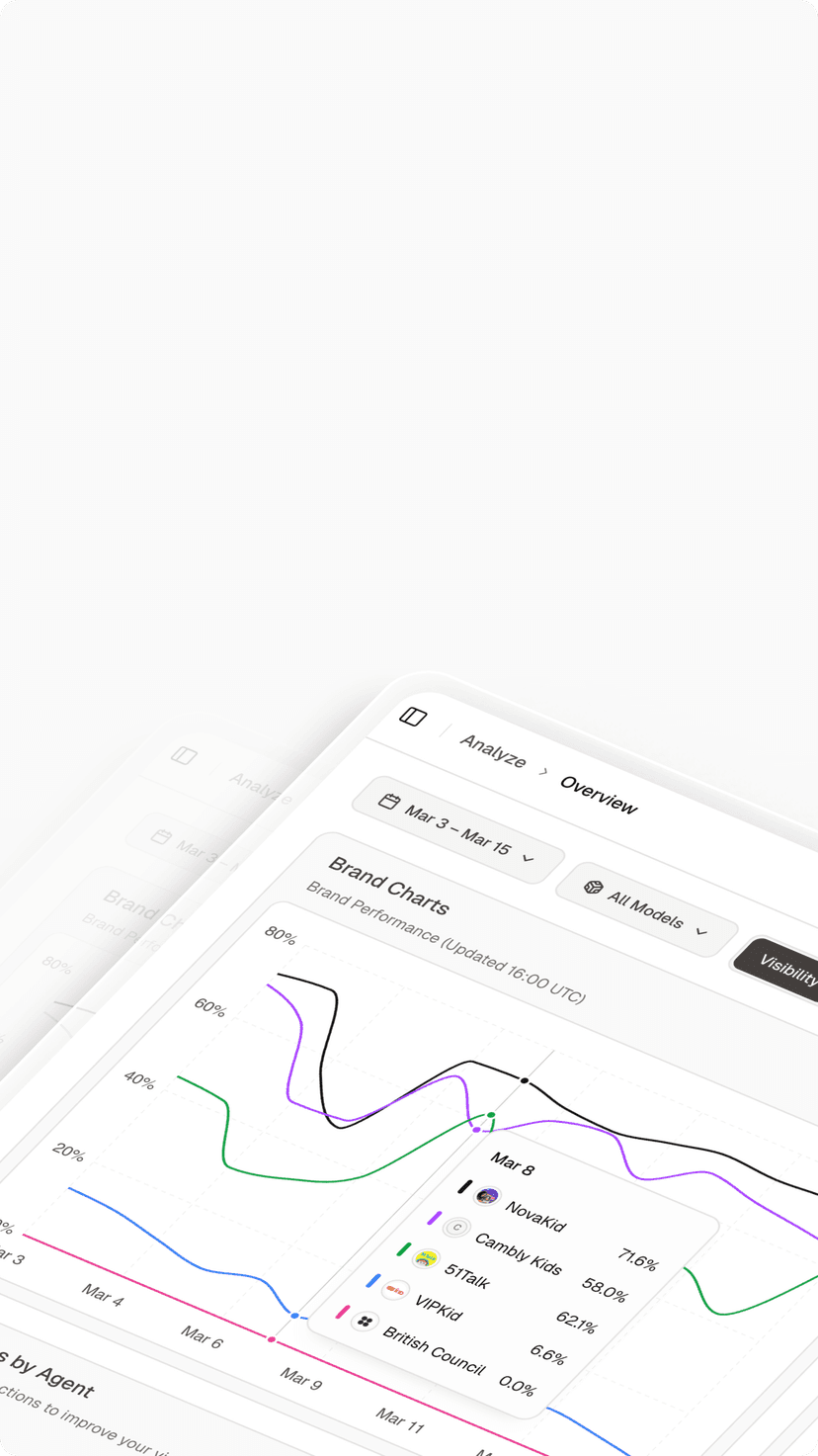
Topify acts as a "Generative Probe." It sends thousands of synthetic prompts into the engine's API to map out the probabilistic landscape.

  1. Probability Mapping: It tells you, "In 80% of simulations, the Generative Engine cites your brand."

  2. Source Tracing: It identifies exactly which piece of content in the RAG pipeline triggered the citation.

Without a tool like Topify, you are effectively blind to the infrastructure that drives your revenue.

Future Evolution: The "Agentic" Engine

We are currently in Phase 1 of Generative Engines (Chatbots). Phase 2 is Agentic Engines.

In 2027, the engine won't just answer; it will do.

  • Phase 1: "Here is a flight to London."

  • Phase 2: "I have booked your flight to London."

Optimizing for Agentic Engines requires rigorous API documentation and "Action Schema." Brands that prepare their infrastructure now will be the default choice for autonomous agents.

Stay ahead of this curve with our predictions on the future of AI search optimization.

Conclusion

The shift from Search Engine to Generative Engine is not a feature update; it is a platform migration. You are moving from a platform of Links to a platform of Logic.

To succeed, you must stop treating your website as a billboard and start treating it as a structured dataset. You must optimize for the machine's ability to understand, ingest, and regenerate your value proposition.

Use Topify to audit your compatibility with this new infrastructure. If the engine can't read you, it can't recommend you.

FAQ

  1. Is Google still a Search Engine?


    Google is now a hybrid. It is transitioning into a Generative Engine with AI Overviews (Gemini) sitting on top of its traditional index. You must optimize for both simultaneously. See our guide on GEO vs SEO.


  2. Can I block Generative Engines from reading my content?

    Yes, via robots.txt (blocking GPTBot, etc.). However, this is usually a strategic error. If you block the engine, you remove yourself from the conversation, ceding 100% of the AI Share of Voice to your competitors.


  3. What is "Vector Search"?

    Vector Search is the method Generative Engines use to find relevant info. It turns text into numbers (vectors). If your content's "numbers" are mathematically close to the user's query "numbers," you get retrieved.


  4. Why does the Generative Engine "Hallucinate"?

    Hallucinations happen when the engine's "Memory" (Training Data) conflicts with its "Research" (RAG). Or when there is a "Data Void" (no good info available), so it guesses. Using AI brand visibility tracking software helps you detect and fix these data voids.


  5. How does Topify interact with the Generative Engine?

    Topify mimics a human user. It sends prompts to the engine's API and analyzes the text it receives back. It creates a statistical model of how the engine views your brand.

Ready to Boost Your AI Visibility?

Ready to Boost Your AI Visibility?

Previous

Next Article

More Articles

Written by

TIAN YUAN

Feb 25, 2026

Informational

SOC 2 ISO 27001 for GEO Platforms: What Buyers Should Verify (Not Just Ask)

Many GEO vendors claim they are “secure,” but enterprise procurement usually needs evidence—SOC 2 reports, ISO 27001 certificates, and documented controls. This guide explains what SOC 2 and ISO 27001 mean in practice for AI visibility platforms, what questions to ask, and what proof to request so you can evaluate vendors quickly and consistently.

Written by

TIAN YUAN

Feb 25, 2026

Informational

SOC 2 ISO 27001 for GEO Platforms: What Buyers Should Verify (Not Just Ask)

Many GEO vendors claim they are “secure,” but enterprise procurement usually needs evidence—SOC 2 reports, ISO 27001 certificates, and documented controls. This guide explains what SOC 2 and ISO 27001 mean in practice for AI visibility platforms, what questions to ask, and what proof to request so you can evaluate vendors quickly and consistently.

Written by

TIAN YUAN

Feb 25, 2026

Informational

SOC 2 ISO 27001 for GEO Platforms: What Buyers Should Verify (Not Just Ask)

Many GEO vendors claim they are “secure,” but enterprise procurement usually needs evidence—SOC 2 reports, ISO 27001 certificates, and documented controls. This guide explains what SOC 2 and ISO 27001 mean in practice for AI visibility platforms, what questions to ask, and what proof to request so you can evaluate vendors quickly and consistently.

Written by

TIAN YUAN

Feb 25, 2026

Informational

GEO Platform Data Storage Location: What Buyers Should Ask (and Why It Matters for AI Visibility Tracking)

GEO platforms generate large datasets: prompts, AI outputs, citations, dashboards, and exports. Where that data is stored—and how you can control retention and deletion—can determine whether a vendor passes procurement. This guide explains what “data storage location” means for GEO tools, what to ask vendors, and how to align data residency with your org’s risk posture.

Written by

TIAN YUAN

Feb 25, 2026

Informational

GEO Platform Data Storage Location: What Buyers Should Ask (and Why It Matters for AI Visibility Tracking)

GEO platforms generate large datasets: prompts, AI outputs, citations, dashboards, and exports. Where that data is stored—and how you can control retention and deletion—can determine whether a vendor passes procurement. This guide explains what “data storage location” means for GEO tools, what to ask vendors, and how to align data residency with your org’s risk posture.

Written by

TIAN YUAN

Feb 25, 2026

Informational

GEO Platform Data Storage Location: What Buyers Should Ask (and Why It Matters for AI Visibility Tracking)

GEO platforms generate large datasets: prompts, AI outputs, citations, dashboards, and exports. Where that data is stored—and how you can control retention and deletion—can determine whether a vendor passes procurement. This guide explains what “data storage location” means for GEO tools, what to ask vendors, and how to align data residency with your org’s risk posture.

Written by

TIAN YUAN

Feb 25, 2026

Informational

GEO Platforms That Track AI Responses: What to Look for in Model-Version Region Language Monitoring (2026)

Tracking “AI search visibility” only works if you can reproduce results over time. But AI answers change with model versions, regional deployment, language, and even platform UI triggers (like Google AI Overviews). This guide explains what it really means for GEO platforms to “track AI responses,” and provides a checklist to evaluate vendors on model-version tracking, regional sampling, and funnel-stage insights.

Written by

TIAN YUAN

Feb 25, 2026

Informational

GEO Platforms That Track AI Responses: What to Look for in Model-Version Region Language Monitoring (2026)

Tracking “AI search visibility” only works if you can reproduce results over time. But AI answers change with model versions, regional deployment, language, and even platform UI triggers (like Google AI Overviews). This guide explains what it really means for GEO platforms to “track AI responses,” and provides a checklist to evaluate vendors on model-version tracking, regional sampling, and funnel-stage insights.

Written by

TIAN YUAN

Feb 25, 2026

Informational

GEO Platforms That Track AI Responses: What to Look for in Model-Version Region Language Monitoring (2026)

Tracking “AI search visibility” only works if you can reproduce results over time. But AI answers change with model versions, regional deployment, language, and even platform UI triggers (like Google AI Overviews). This guide explains what it really means for GEO platforms to “track AI responses,” and provides a checklist to evaluate vendors on model-version tracking, regional sampling, and funnel-stage insights.

Written by

TIAN YUAN

Feb 25, 2026

Informational

AI Search Optimization GEO Platform Security: A Buyer’s Checklist for 2026

Choosing a GEO platform isn’t just about tracking citations and share of voice—you’re also sending sensitive prompt libraries, competitive queries, and sometimes internal brand facts into a third-party system. This guide explains what “GEO platform security” should mean in practice, what controls to ask vendors for, and includes a checklist you can reuse in procurement.

Written by

TIAN YUAN

Feb 25, 2026

Informational

AI Search Optimization GEO Platform Security: A Buyer’s Checklist for 2026

Choosing a GEO platform isn’t just about tracking citations and share of voice—you’re also sending sensitive prompt libraries, competitive queries, and sometimes internal brand facts into a third-party system. This guide explains what “GEO platform security” should mean in practice, what controls to ask vendors for, and includes a checklist you can reuse in procurement.

Written by

TIAN YUAN

Feb 25, 2026

Informational

AI Search Optimization GEO Platform Security: A Buyer’s Checklist for 2026

Choosing a GEO platform isn’t just about tracking citations and share of voice—you’re also sending sensitive prompt libraries, competitive queries, and sometimes internal brand facts into a third-party system. This guide explains what “GEO platform security” should mean in practice, what controls to ask vendors for, and includes a checklist you can reuse in procurement.