AI Overviews Optimization Featured Answer

How to Measure Success with Topify
The biggest challenge with AI for search is measurement. Google Search Console (GSC) treats AI Overview impressions differently, often obscuring the data.
You need a tool that specifically tracks the “Snapshot.” This is where Topify becomes essential.
1. Tracking “Snapshot Presence”
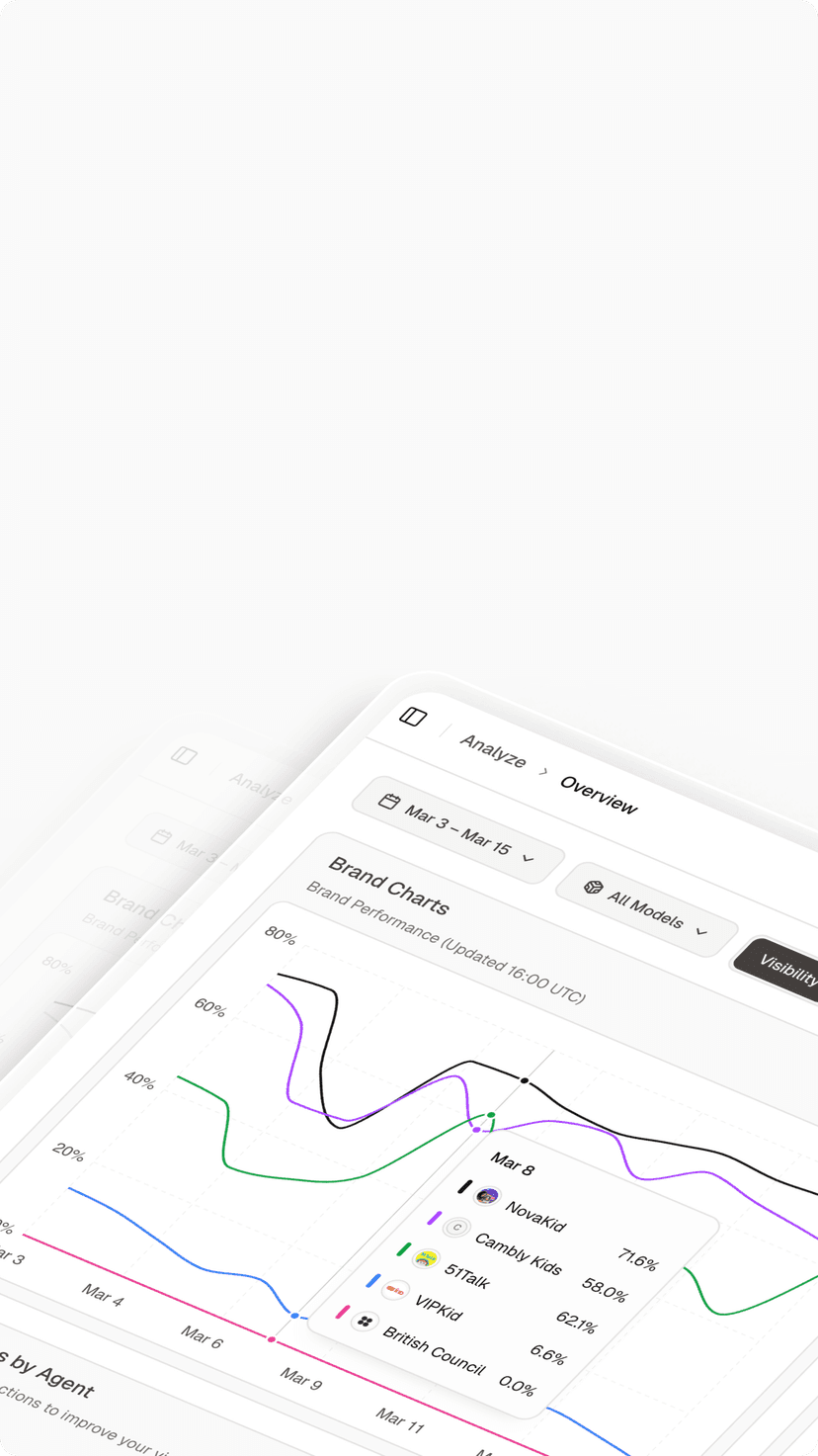
Topify monitors your target keywords and reports whether an AI Overview was triggered and whether your brand was cited in it.
Metric: AIO Coverage Rate. (e.g., “AI Overviews appear for 60% of your keywords, and you are cited in 40% of them.”)
2. Carousel Position Tracking
Google often includes a carousel of links within the AI Overview. Topify tracks your position in this carousel. Being the first link in the AI carousel is the new Rank #1.
3. Sentiment Analysis
Is Google’s summary of your product positive? Topify reads the generated text and flags any negative hallucinations, allowing you to update your source content to correct the record.
Learn more about auditing your current standing in our guide on how to track AI Overviews rankings.
7 Actionable Tips to Secure the Featured Answer
Here is a checklist to implement immediately.
Target “Zero-Volume” Long-Tail Keywords: AI Overviews trigger most often for complex questions (e.g., “how to fix a leaky faucet without tools”). These are easier to win than “plumber new york.”
Use the “Inverted Pyramid” Style: Put the most important information (the answer) at the very top of your article. Explanation comes second.
Optimize for “People Also Ask”: The questions in Google’s PAA box are often the headers used in the AI Overview. Answer them explicitly in your content.
Add “Key Takeaways” Summaries: Summarize your long-form content in bullet points at the top. This gives the AI a pre-packaged summary to use.
Cite Primary Sources: Linking to authoritative research increases your own trust score, making you a safer bet for the AI to cite.
Refresh Content Quarterly: Google’s AI biases towards freshness. A “2026 Update” tag isn’t enough; the data inside must be new.
Monitor Competitors: Use Topify to see whose content is displacing yours in the AI Overview and reverse-engineer their structure.
For a deeper dive into content engineering, read our upcoming guide on how to rank in AI Overviews: content strategies.
The Future of AI for Search
Google is not stopping here. We expect AI Overviews to become personalized (My AI Overview looks different from yours) and multimodal (including video and shopping graphs).
Brands that master AI Overviews optimization today are building a moat for the future. Those who stick to “keyword density” and “backlink buying” will find their traffic eroding quarter by quarter.
Conclusion: Adapt or Disappear
The Featured Answer is the only answer that matters for a growing percentage of queries. It captures the user’s attention before they ever scroll down to the organic results.
Securing this spot requires precision, structure, and original insight. But most importantly, it requires visibility. You cannot win a game you aren’t watching.
Use Topify to monitor your AI Overview performance, refine your content strategy, and secure your place as the featured authority in 2026.
FAQs:
1. Does “AI Overviews Optimization” hurt my traditional SEO?
No. In fact, it helps. The principles of GEO—structure, authority, and user intent satisfaction—are exactly what Google’s traditional algorithms reward. Optimizing for the AI usually lifts your organic rankings as well.
2. How do I know if I am in the AI Overview?
Google Search Console provides some data, but it is aggregated and often delayed. A dedicated tool like Topify provides real-time verification of your presence in the AI snapshot and the carousel.
3. Can I opt out of AI Overviews?
You can use the nosnippet tag to prevent Google from showing snippets of your content, but this is generally not recommended as it removes you from the most visible part of the search page.
4. Why does Google cite my competitor but not me?
Usually, this is due to “Information Gain.” If your competitor provides a unique stat or a more concise definition, the AI prefers them. Use Topify to analyze the “content gap” between you and the winner.
5. Is AI Overview traffic valuable?
Yes. While click-through rates (CTR) might be lower than the old Rank #1, the traffic is higher intent. Users who click a citation in an AI Overview are looking for deep verification or specific details, meaning they are more likely to convert.