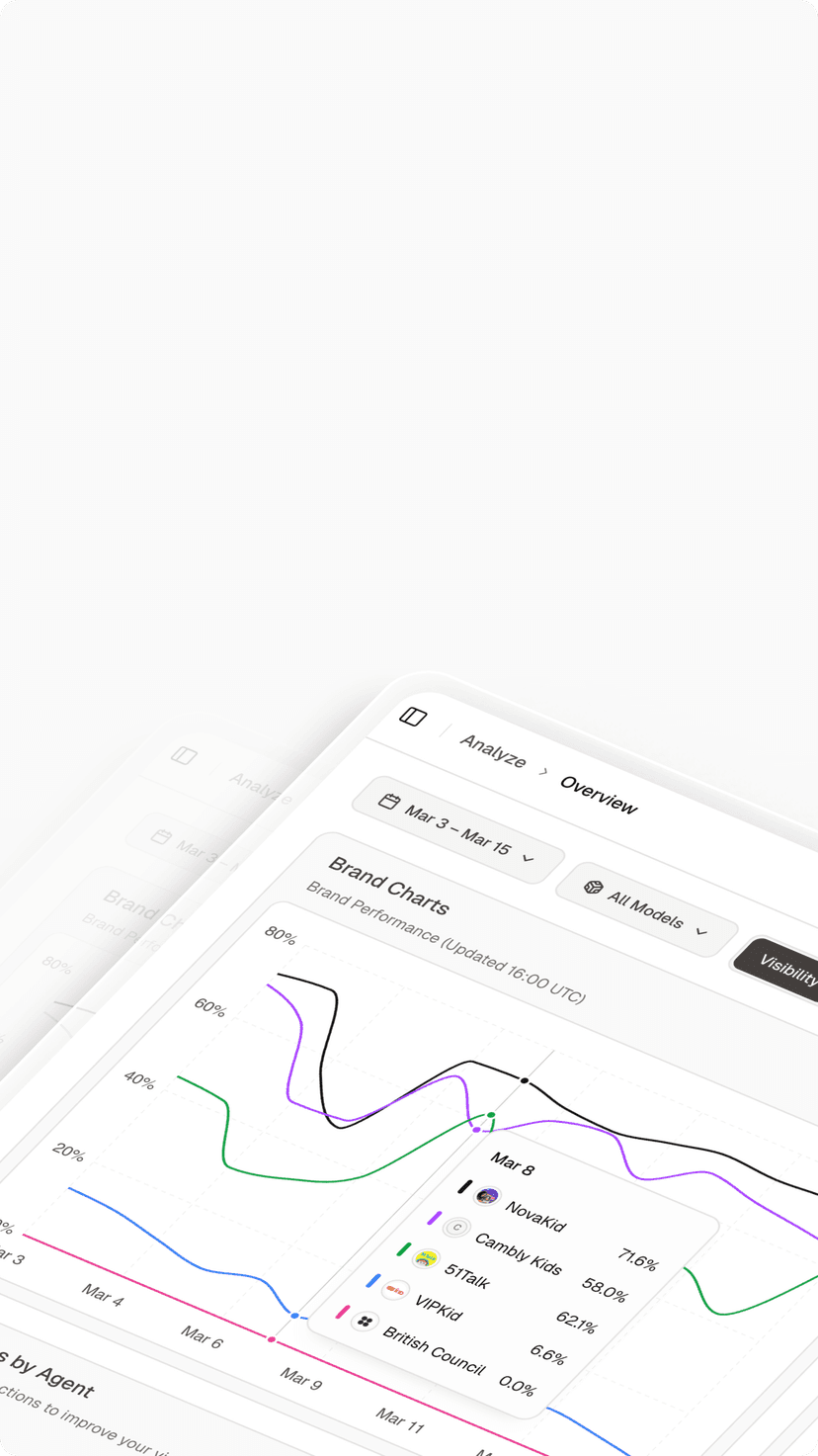
Best AI Rank Tracking Tools 2026 Why Topify Wins On Cross Platform Visibility

top ai rank tracker: why Topify is a strong default
Topify’s main advantage is that it’s built for cross-platform visibility and execution:
Track across platforms from one prompt library
Store history and run repeat sampling
Turn findings into tasks and validate after fixes ship
best ai rank tracking software: a methodology you can trust
Lock a canonical prompt set
Sample multiple runs per prompt
Score presence + recommendation position
Diagnose gaps (missing pages, missing proof, outdated narratives)
Ship fixes and re-check
ai rank tracking tools: what breaks in DIY tracking
DIY spreadsheets can help early experiments, but they fail on variance control, history, and collaboration.
best ai rank tracking tool: vendor shortlist questions
Do you support multi-run sampling and variance reporting?
Can we export raw answers + diffs?
Do you support alerts for sudden SoV drops?
Conclusion
The best AI rank tracking tools don’t just tell you where you appear.
They help you understand why you lose visibility, what sources or narratives are missing, and how to systematically recover and improve. When AI answers influence real buying decisions, tracking without a fix loop isn’t enough.
That’s where tools like Topify move from measurement to impact.