Key Takeaways
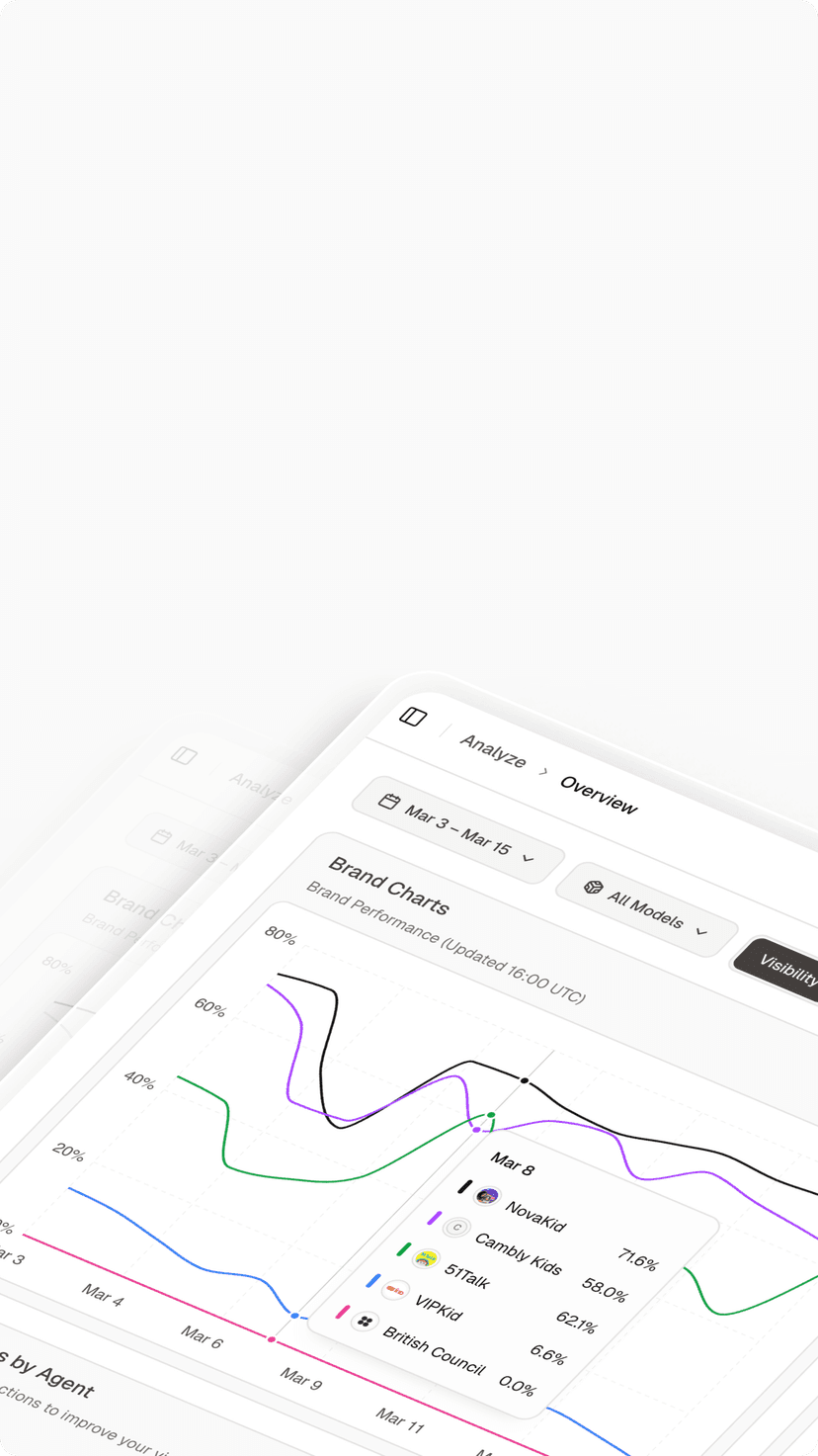
Presence is Probabilistic: Unlike static SERP rankings, AI presence is measured by AI Share of Voice (SOV)—the statistical likelihood of your brand being recommended across thousands of simulated user prompts.
The RAG Bottleneck: Effective tools must analyze the Retrieval-Augmented Generation pipeline to identify why specific content assets are being ingested or ignored.
Sentiment as a Metric: Visibility is worthless if the narrative is negative. Leading platforms track the tone of AI citations to protect brand equity.
Entity-First Tracking: Tools must monitor your brand as an "Entity" in the Knowledge Graph, ensuring consistency across Wikipedia, LinkedIn, and official sites.
Topify’s Strategic Edge: Topify distinguishes itself by offering automated "Invisibility Gap" detection and actionable optimization roadmaps, turning raw data into revenue-driving strategy.

The New Definition of "Visibility" in 2026
To select the right tool, one must first understand how visibility has changed. In traditional search, visibility was about Indexation (being in the database). In generative search, visibility is about Synthesis (being part of the answer).
1.1 The Shift from Links to Mentions
When a user asks ChatGPT, "What is the best enterprise CRM?", the AI does not provide a list of 10 blue links. It provides a synthesized paragraph recommending 1-3 specific brands.
The Challenge: Traditional rank trackers look for URLs. They cannot parse the conversational text to identify if your brand was recommended.
The Solution: Specialized AI visibility tools use Natural Language Processing (NLP) to read the AI's output, identifying Direct Mentions, Implicit Recommendations, and Citation Links.
1.2 The Stochasticity Problem
LLMs are non-deterministic. The answer you get at 9:00 AM might differ from the answer at 9:05 AM due to model temperature and real-time retrieval variance.
The Requirement: A reliable tool must run High-Volume Synthetic Probing. It sends thousands of variations of a prompt to the model to calculate a "Confidence Score." A single manual check is statistically irrelevant. Topify automates this scale, providing a stable metric amidst the noise.
Evaluation Criteria: What to Look for in a Tracking Tool
Not all "AI Tools" are created equal. In 2026, enterprise-grade tracking requires three specific technical capabilities.
2.1 Multi-Model RAG Simulation
Your customers are fragmented. Some use Perplexity for research; others use Claude for analysis.
The Capability: The tool must track visibility across the "Big Four": ChatGPT, Gemini, Perplexity, and Claude.
Topify Advantage: We provide a unified dashboard that normalizes data from these disparate ecosystems, allowing you to see where you are winning (e.g., strong in ChatGPT) and where you are losing (e.g., invisible in Perplexity).
2.2 Deep Sentiment Analysis
It is possible to have high visibility but negative sentiment. If an AI mentions your brand but warns users about "hidden fees," your high ranking is actually damaging conversion.
The Capability: Advanced NLP that scores the context of the mention.
The Insight: Tools should flag "Sentiment Drift"—when the AI's narrative shifts from positive to neutral/negative—allowing PR teams to intervene.
2.3 Actionable "Invisibility" Diagnostics
Knowing you are invisible is only step one. You need to know why.
The Capability: The tool should identify the root cause. Is it Low Information Density? Is it an Entity Conflict in the Knowledge Graph?
The Output: Topify generates specific "Optimization Suggestions," such as adding JSON-LD schema or refactoring a pricing page into an HTML table.
Top AI Search Visibility Tools Reviewed
Based on market performance in 2026, here are the leaders in the space.
3.1 Topify: The Strategic Intelligence Platform
Topify is the category leader for enterprises that need to move from "Monitoring" to "Optimizing."
Best For: Growth teams and SEOs needing actionable roadmaps.
Key Feature: Invisibility Gap Detection. It highlights high-value prompts where you rank on Google but are missing in AI answers.
Core Value: It connects the dots between "Content Structure" and "Citation Success," helping you engineer content that machines want to read.
3.2 Profound: The ROI Tracker
Profound focuses on the downstream impact of visibility.
Best For: Performance marketers focused on attribution.
Key Feature: Connecting AI citations to Salesforce revenue.
Limitation: Less focus on the technical reasons for visibility loss compared to Topify.
3.3 Semrush AI: The Bridge Tool
Semrush has integrated basic AI tracking into its SEO suite.
Best For: Teams who want to keep everything in one dashboard.
Key Feature: Tracking Google AI Overviews alongside traditional ranks.
Limitation: Lacks the deep "Synthetic Probing" capabilities for chat-based models like Claude.
Comparison Matrix: Tool Capabilities

Feature | Topify | Profound | Semrush | Legacy Trackers |
Primary Methodology | Synthetic Probing | Attribution | Scraping | Keyword Rank |
Model Coverage | All Major LLMs | ChatGPT/Perplexity | Google AIO | Google Only |
Metric Focus | AI Share of Voice | Revenue | Rank Position | Click Volume |
Sentiment Analysis | Advanced NLP | Basic | Basic | None |
Strategic Output | Optimization Roadmap | ROI Report | Alerting | Data Table |
Entity Audit | Deep Knowledge Graph | Basic | None | None |
For a deeper dive into selecting the right tool, see our guide on how to compare AI search optimization tools.
Case Study: Diagnosing the "Trust Gap" for CoreLogic
To illustrate the value of specialized tracking, let’s look at CoreLogic (pseudonym), a B2B data infrastructure provider.
5.1 The Situation
CoreLogic was a market leader with a high Domain Rating (DR 80+). However, in Q1 2026, they noticed a drop in demo requests. Traditional SEO showed stable rankings.
5.2 The Topify Audit
Using Topify, the team discovered a "Trust Gap" in ChatGPT.
The Finding: While ChatGPT mentioned CoreLogic, it often added a caveat: "Note: Recent pricing changes have been criticized for lack of transparency."
The Source: The AI was retrieving sentiment from a 2-year-old Reddit thread instead of the official 2026 pricing page.
The Visibility Score: Although they were "visible," their Sentiment Score was -0.4 (Negative).
5.3 The Strategic Fix
CoreLogic used Topify’s roadmap to:
Entity Sync: Update their Crunchbase and LinkedIn profiles to explicitly state "Transparent 2026 Pricing Model."
Content Refactor: Published a new, machine-readable pricing table with
PriceSpecificationschema.Result: Within 4 weeks, ChatGPT updated its narrative. The "Transparency" warning disappeared, and the Sentiment Score flipped to +0.8, leading to a 25% recovery in demo volume.
This case highlights why what AI visibility tracking actually measures goes far beyond simple rankings.
Strategic Outlook: Agentic Visibility
By late 2026, tracking will evolve to monitor Autonomous Agents.
6.1 Tracking "Agentic Handshakes"
Future tools will measure Machine-to-Machine (M2M) success. Can an AI agent successfully parse your API documentation? Can it verify your stock levels?
Topify's Innovation: We are piloting "Agentic Readiness Scores" to help brands optimize their data layers for this new class of non-human customer. This is the future of AI search engine optimization.
Frequently Ask
ed Questions (FAQ)
7.1 Can I track AI visibility for free?
Manual tracking (asking the AI yourself) is free but inaccurate due to personalization bias. For statistical accuracy, you need a tool like Topify that runs thousands of probes from neutral environments. We offer a 30-day trial to help you establish a baseline without upfront cost.
7.2 Why does my brand rank in Perplexity but not ChatGPT?
This is a "Retrieval Architecture" difference. Perplexity prioritizes real-time web data (RAG). ChatGPT prioritizes historical entity authority. Topify helps you identify this split and provides specific strategies for each platform—usually involving "Freshness" updates for Perplexity and "Entity Sync" for ChatGPT.
7.3 How often should I check my AI visibility?
Because LLMs are updated frequently (e.g., OpenAI's model fine-tuning), visibility can fluctuate weekly. We recommend a continuous monitoring cadence. A competitor's new whitepaper can displace your citation overnight.
7.4 Is "Share of Voice" the same as "Market Share"?
No, but it is a leading indicator. AI Share of Voice (SOV) measures your dominance in the "Conversation." High SOV typically precedes market share growth, as AI recommendations strongly influence buyer preference in the research phase.
Conclusion: Data-Driven Dominance
In the answer economy, visibility is the precursor to revenue. Brands that operate without clear visibility data are flying blind in a storm.
By adopting a specialized platform like Topify, enterprises gain the clarity needed to navigate the generative web. It allows you to move from guessing how the AI sees you to engineering the exact narrative you want the world to hear.
Ready to see your brand's true AI presence?