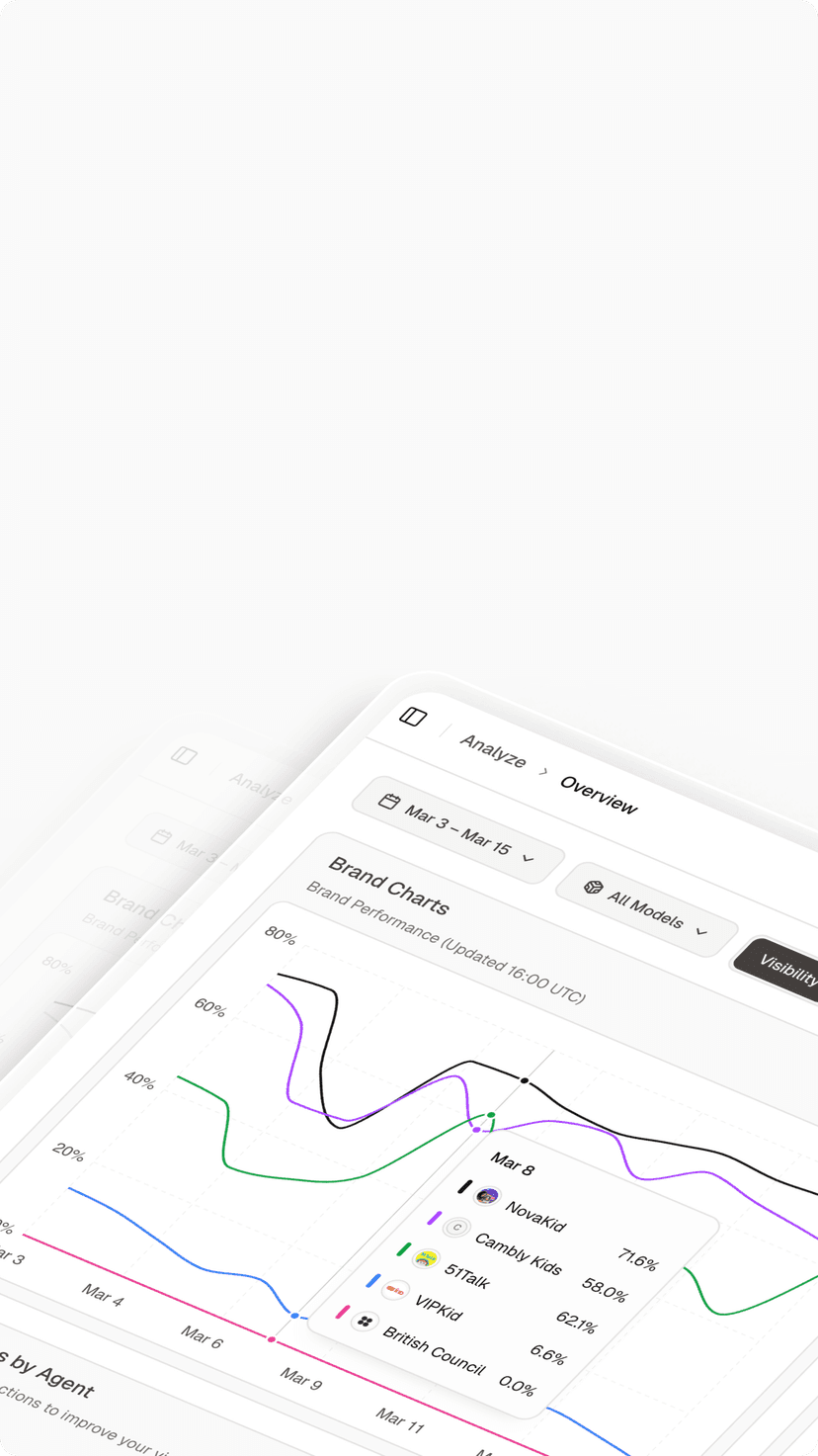
Best ChatGPT Online Rank Tracking Tools 2026

What Is “Online Rank Tracking” for LLMs?
For LLMs, “rank tracking” usually means measuring:
presence rate (how often you appear)
recommendation weight (are you the primary recommendation?)
citations (where applicable)
context accuracy (correct features/pricing/positioning)
If a tool only reports “mentions” without context and sources, it’s not enough for growth decisions.
Buying Checklist: Features That Matter for ChatGPT Rank Tracking
1) Prompt library + query expansion
You need prompt sets that match real buyer intent:
“best”, “top”, “alternatives”, “vs”
feature-specific prompts
industry and persona variations
2) Repeat sampling (variance smoothing)
Look for:
multiple runs per prompt
confidence scores or variance flags
3) Cross-model coverage
At minimum, decide whether you need:
ChatGPT only
or ChatGPT + Perplexity + Claude + Google AIO
4) Metrics: SoV + accuracy
Good tools provide:
SoV/presence rate
sentiment/context scoring
hallucination detection (wrong facts)
5) Reporting + workflow
Especially for agencies and enterprise:
scheduled exports
alerts for drops
collaboration/tasking
Best ChatGPT Online Rank Tracking Tools (2026)
1) Topify (cross-platform AI visibility + optimization loop)
Best for: teams that need unified visibility across LLMs and answer engines, plus workflows to improve outcomes.
2) Profound (trend reporting)
Best for: organizations that prioritize historical tracking and stakeholder reporting.
3) Specialist tools (narrow LLM tracking)
Best for: monitoring a single ecosystem with simpler requirements.
4) DIY baseline
Useful for proof-of-concept, but not reliable at scale due to variance and long-tail coverage.
Comparison Table (Quick View)
Capability
Topify
Profound
Specialist tools
ChatGPT tracking
Manual
Perplexity citations
Varies
Manual
Claude tracking
Varies
Varies
Google AIO monitoring
Limited
Repeat sampling
Varies
Varies
SoV-style metrics
Limited
Reporting + workflow
Strong
Basic
Manual
How to Choose (Scenarios)
SaaS growth teams: choose cross-platform coverage + normalized metrics.
SEO/GEO teams: choose citation/source workflows + content feedback loops.
Agencies: choose multi-client prompt libraries + fast exports.
Can I track ChatGPT “rankings” with Google tools?
No. You need tools that query LLM/answer engines and store outputs for analysis.
How often should we monitor?
Weekly is minimum. For competitive categories or volatile topics, daily monitoring can be justified.
Conclusion
ChatGPT online rank tracking is moving toward a unified AI visibility discipline. The right tool helps you measure presence, compare platforms, and turn insights into action—not just produce screenshots.