What Is AI Visibility Software?
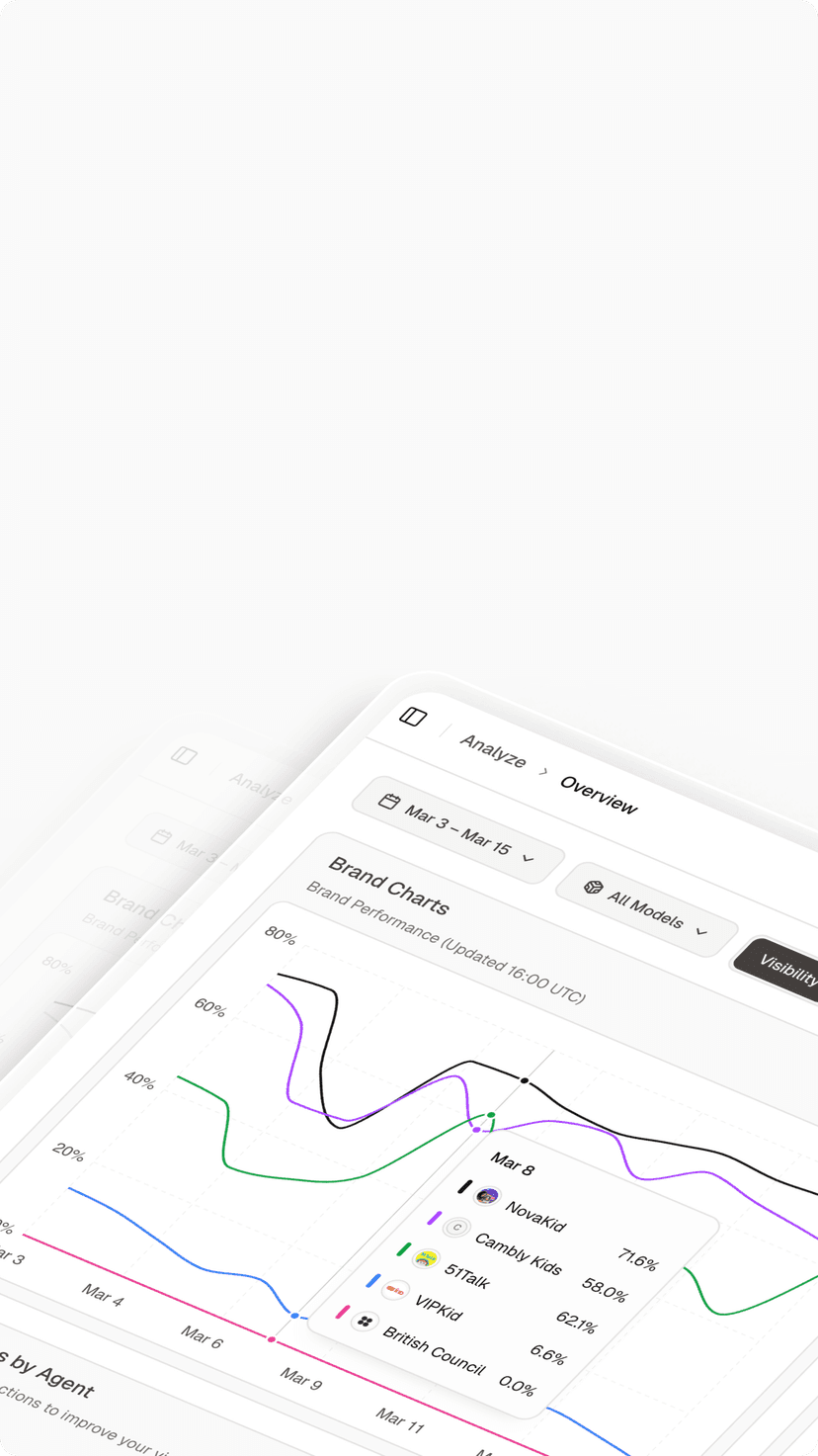
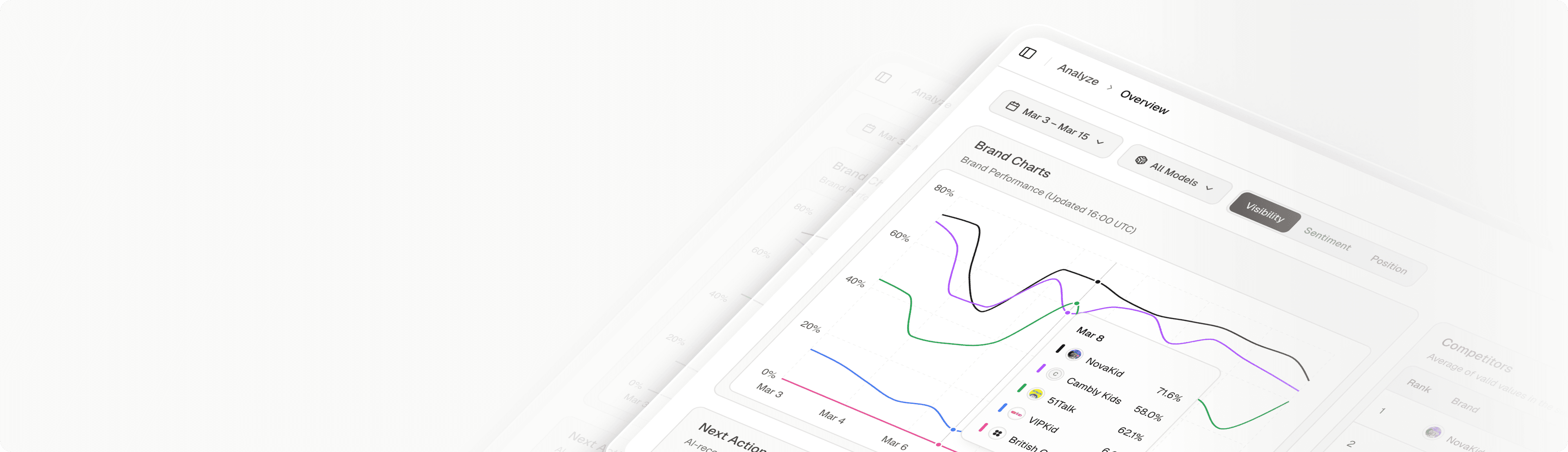
AI visibility software helps brands measure and improve how they appear in AI-generated answers across major platforms.
Core outputs typically include:
Presence rate / SoV (how often you’re mentioned or recommended)
Citation analysis (which URLs/domains are cited, especially in Perplexity/AIO)
Context accuracy (wrong pricing/features/positioning detection)
Competitor benchmarking (who wins share of voice across prompts)
Buying Checklist: How to Evaluate AI Visibility Software
1) Platform coverage
At minimum, clarify support for:
ChatGPT
Perplexity
Claude
Gemini
Google AI Overviews (or at least AIO-style monitoring)
2) Prompt library + query expansion
Look for:
persona-based prompt sets (CMO vs SEO manager)
long-tail generation
comparison prompts (“best tools”, “alternatives”, “vs”)
3) Sampling methodology
repeat sampling to smooth variance
consistent prompt versions to compare week over week
4) Metrics that execs understand
SoV-style normalized scoring
citations share
sentiment / hallucination flags
5) Workflow + reporting
alerts for sudden drops
exports (exec dashboards, agency client reports)
collaboration/tasking (turn gaps into action)
Best AI Visibility Software (2026)
1) Topify (cross-platform visibility + optimization workflows)
Best for: teams that need a unified view of AI visibility across multiple platforms, plus workflows to improve citations and accuracy.
2) Profound (reporting and historical trends)
Best for: organizations that prioritize long-term reporting and trend analysis.
3) Otterly and other specialists (platform-focused)
Best for: teams with a narrow monitoring scope (e.g., only one platform) and simpler needs.
4) Traditional SEO suites (adjacent signals)
Best for: keyword research, site audits, and classic rankings—helpful as part of the stack, but not a full AI visibility layer.
5) DIY baseline
Best for: experiments. Hard to scale due to prompt variance and long-tail coverage.
Comparison Table (Quick View)
Capability
Topify
Profound
Specialist tools
SEO suites
Cross-platform coverage
Strong
Varies
Limited
SoV-style normalized metrics
Limited
Citation analysis
Varies
Manual
Hallucination/context accuracy
Varies
Limited
Workflow + reporting
Strong
Basic
Strong (SEO)
Manual
How to Choose (Scenarios)
If you’re a Growth / Marketing Lead: prioritize normalized metrics + stakeholder reporting.
If you’re an SEO/GEO Manager: prioritize citations/source analysis + actionable workflows.
If you’re an Agency Owner: prioritize multi-client prompt libraries + fast reporting exports.
Is “AI visibility software” the same as rank tracking?
Not exactly. Rank tracking is a SERP concept; AI visibility measures your share of AI answers across platforms (mentions, citations, and accuracy).
What should we measure first?
Start with a stable prompt set and measure SoV/presence rate weekly, then layer in citations and accuracy checks.
Conclusion
AI visibility is becoming a primary growth surface for SaaS and cloud brands. Choose software that can monitor across platforms, explain why you’re being cited or ignored, and help you execute an optimization loop—not just produce dashboards.