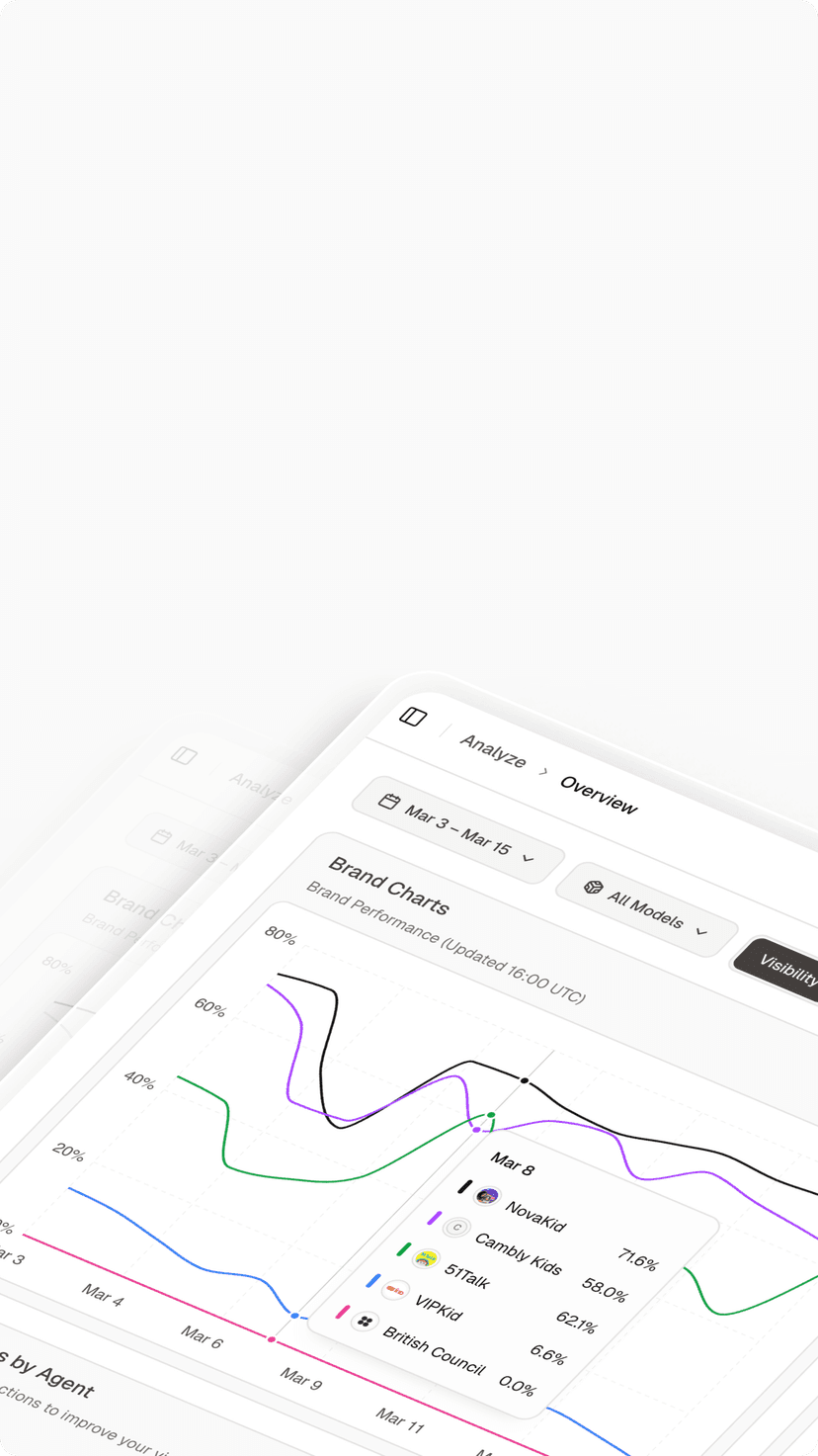
Phase 1: The Technical AI Audit (Crawlability)
Before an AI can cite you, it must be able to read you. Many sites accidentally block AI bots while allowing Googlebot.
Check 1: Are You Blocking AI Agents?
The Problem: Many security plugins block GPTBot (OpenAI), ClaudeBot (Anthropic), or PerplexityBot by default to prevent “scraping.” The Fix: You need to explicitly allow these agents in your robots.txt if you want to be visible in their answers.
Tool to Use: ZipTie.dev or generic robots.txt validators.
Action Item: Verify that your robots.txt does not contain User-agent: GPTBot Disallow: /.
Check 2: Is Your Content Rendered Client-Side?
The Problem: While Google renders JavaScript well, some RAG (Retrieval) systems used by smaller LLMs prefer clean, static HTML. Heavy JS frameworks can confuse real-time retrieval agents. The Fix: Use dynamic rendering or server-side rendering (SSR).
Tool to Use: Google Mobile-Friendly Test (View Rendered HTML) or Perplexity (ask it to summarize your specific URL).
Action Item: Paste your URL into Perplexity. If it hallucinates the content or says “I cannot read this link,” you have a rendering issue.
Phase 2: The Visibility & Sentiment Audit (Reputation)
Once you know they can read you, you need to know how they perceive you. This requires specialized AI search monitoring tools.
Check 3: What is Your “Share of Voice” for Core Prompts?
The Goal: Determine how often you appear compared to competitors. The Method: Do not search for your brand name. Search for your category.
Prompt: “What are the best tools for optimizing content for AI search engines?”
Tool to Use: Topify.ai.
Why: Manual checking is biased by your chat history. Topify runs the prompt through clean, neutral API instances across multiple regions.
Checklist Item: Record your “Citation Rate” (e.g., 20% visibility) vs. your top 3 competitors.
Check 4: Is the Sentiment Accurate?
The Goal: Ensure the AI isn’t spreading misinformation. The Method: Analyze the adjectives used near your brand name.
Tool to Use: Topify.ai Sentiment Engine.
Why: An AI might say: “Brand X is a popular choice, but users report security flaws.” That is a visibility win, but a revenue disaster.
Checklist Item: Identify any negative “hallucinations” (e.g., wrong pricing, outdated features) so you can correct them on your site.
Deep Dive: For a complete framework on this phase, see our guide on How to Audit Brand Visibility on LLMs.
Phase 3: The Content Structure Audit (Machine Readability)
This is the core of Generative Engine Optimization. You need to verify if your content is formatted for machines, not just humans.
Check 5: Do You Have Structured Data (Schema)?
The Goal: Feed the AI clear facts. The Method: LLMs rely on Entity-Relationship extraction. Schema markup (JSON-LD) explicitly tells the AI: “This is a Product,” “This is the Price,” “This is the Rating.”
Tool to Use: Schema.org Validator or Merkle Schema Tool.
Action Item: Ensure every core page has Organization, Product, or FAQPage schema.
Pro Tip: Use “SameAs” schema to link your website to your Crunchbase, LinkedIn, and Wikipedia entries. This helps the AI connect the dots.
Check 6: Is Your Content “RAG-Ready”?
The Goal: Optimize for the “Retrieval” window. The Method: AI retrieval systems scan for dense information. Fluffy intros hurt you.
Tool to Use: Topify.ai Optimization Suggestions or Clearscope.
Action Item: Check your formatting.
-
Do you use definition lists (
<dl>) for key terms? -
Do you use data tables (
<table>) for comparisons? (LLMs love tables). -
Is the answer to the user’s question in the first 100 words?
-
Tool to Use: Ahrefs (Backlinks) + Perplexity (Source checking).
-
Action Item: Ask Perplexity: “What sources do you trust for advice on [Your Industry]?”
-
If it cites “G2” or “TechCrunch,” you need to ensure your presence on those specific external sites is optimized. This is distinct from traditional link building; it is “Corpus Building.”
-
The “Inverted Pyramid” Style: Start every article with a direct answer (The “Quick Answer” you see at the top of this page). This increases the chance of being picked up as a Featured Snippet in Google SGE.
-
Statistic Density: AI models hallucinate less when you provide concrete numbers. Instead of saying “We are fast,” say “We process requests in 200ms.”
-
Quote Experts: Uniquely, AI models assign high weight to quotes from recognized entities. Including a quote from your CEO or an industry expert can increase citation likelihood.
-
Efficiency: Optimizing for AI often improves user experience (UX) for humans too (clearer answers, less fluff).
-
Cost Savings: Fixing a negative sentiment hallucination today prevents months of lost sales.
-
Competitive Moat: Most of your competitors are still obsessing over meta tags. By optimizing for RAG, you capture the “Zero-Click” audience they are ignoring.
-
What are the best tools to analyze my website for AI search visibility?
-
How often should I run an AI visibility checklist?
-
Can Google Search Console help with AI visibility?
-
Why is my website invisible to ChatGPT?
-
Does Schema markup really affect AI answers?
-
What is the difference between an SEO audit and a GEO audit?
Summary: The Ultimate 2026 AI Search Visibility Checklist
Use this table to audit your readiness.
Audit Phase
Critical Check
Best Tool for the Job
Technical
Robots.txt (GPTBot Allowed)
ZipTie / Text Editor
Technical
Static HTML Rendering
Google Search Console
Visibility
Share of Voice vs. Competitors
Topify.ai
Visibility
Sentiment Analysis (Positive/Negative)
Topify.ai
Content
Schema Markup (JSON-LD)
Schema.org Validator
Content
Data Density (Tables/Lists)
Manual Review / Topify
Authority
External Seed Source Citations
Perplexity / Ahrefs
Tool Selection Advice: If you are overwhelmed by the number of tools, check our review of evaluating AI search visibility tools to find a unified SaaS platform that covers multiple checklist items.
Optimizing Your Content for AI Engines: Best Practices
Once you have identified the gaps using the best tools for optimizing content for AI search engines, how do you fix them?
ROI of a Clean Audit
Why spend time on this checklist? Because a site that passes the AI Visibility Audit is a site that future-proofs its traffic.
For a deeper look at the metrics that matter after your audit, read about metrics AI search visibility analysis tools provide.
Frequently Asked Questions (FAQ)
The top stack for 2026 includes Topify.ai (for sentiment and ranking), ZipTie (for technical bot access), and Perplexity (for manual verification of citations).
We recommend a quarterly deep audit (Technical + Content) and a weekly monitoring cadence for Sentiment and Share of Voice using automated tools.
Only partially. GSC helps with Google’s technical crawling, but it does not show you data from ChatGPT or Claude. You need specialized best tools for optimizing content for AI search engines to bridge that gap.
Common reasons include: blocking
GPTBotinrobots.txt, having content behind a login wall, or using complex JavaScript that the retrieval agent failed to render.Yes. Schema acts as a “translator” for LLMs. It turns ambiguous text into structured data entities, making it significantly easier for the AI to extract and cite your pricing, ratings, and specifications accurately.
An SEO audit focuses on links, keywords, and page speed. A GEO (Generative Engine Optimization) audit focuses on entity clarity, citation authority, sentiment, and unstructured data readability.
-
Phase 4: The Authority Audit (Citation Network)
AI engines trust what others say about you more than what you say about yourself.
Check 7: Who is Citing You?
The Goal: Identify your “Seed Sources.” The Method: AI models are trained on specific high-authority datasets (Common Crawl, Wikipedia, reputable news sites).