Introduction: The “Rank” is Dead. Long Live the “Score”.
For 25 years, an SEO’s job was to move a URL from Rank #11 (Page 2) to Rank #1 (Page 1). The metric was absolute.
In 2026, you open a report for ChatGPT and see:
“Your brand was mentioned in the second paragraph, third sentence, as a ‘cost-effective alternative,’ but without a direct link.”
What rank is that? Is it #3? Is it #10?
If you are using a legacy SEO tool, it will likely report “Not Found” because it’s looking for a blue link that doesn’t exist.
The reality is that Generative Engine Optimization (GEO) requires a new system of measurement. We are no longer measuring “pixels from the top”; we are measuring “Share of Attention.”
To optimize for AI, you must understand how the scoring works under the hood.
This guide pulls back the curtain on how Topify measures rankings inside the unstructured, chaotic, and fascinating world of AI-generated answers.
Part 1: The Geometry of an AI Answer
To measure a ranking, we first have to map the terrain. An AI answer is not a list; it is a Narrative Structure.
1.1 The “Prime Real Estate” (The First 50 Tokens)
Topify analysis shows that 65% of user attention is focused on the first sentence (the “Direct Answer”).
Topify Measurement: If your entity appears here, we assign a Position Score of 100.
Example: “The best CRM for small business is HubSpot.”
1.2 The “Comparative Middle” (The List/Table)
Often, the AI will generate a bulleted list or a comparison table in the middle of the response.
Topify Measurement: We parse the HTML structure (<ul>, <table>). If you are in the first row or first bullet, you get a Position Score of 80.
Example: “Other top options include Salesforce and Zoho.”
1.3 The “Nuanced Footer” (The Caveats)
At the end, the AI often adds warnings.
Topify Measurement: Mentions here have a Position Score of 20.
Example: “However, users should be aware that Salesforce can be expensive.”
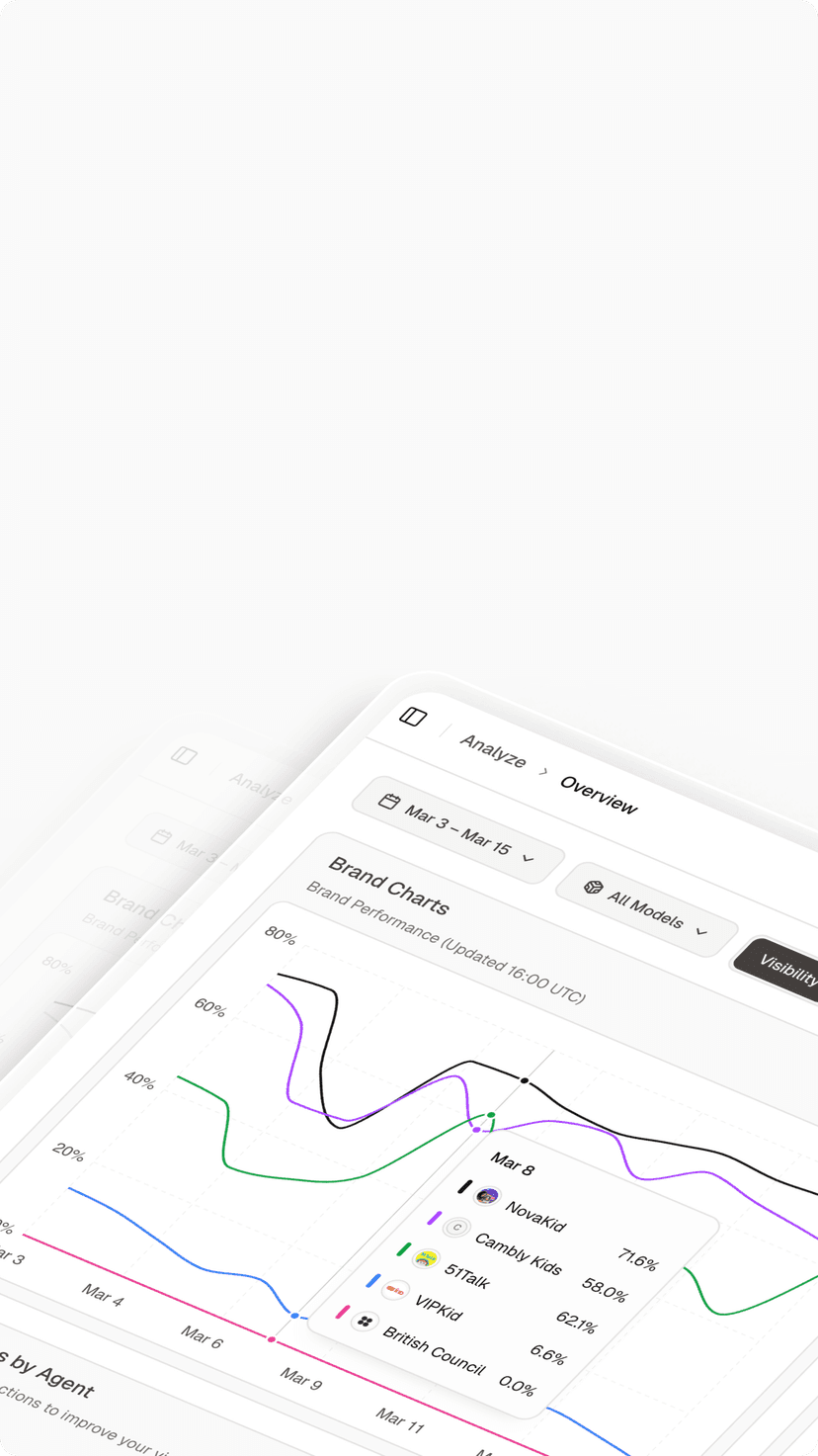
Decision Point: Don’t just ask “Did we rank?” Ask “Where did we sit in the narrative?” Use Topify to visualize your position in AI responses.
Part 2: The “Sentiment Multiplier” (The Game Changer)
In traditional SEO, a negative review could still rank #1 on Google. In AI tracking, context is everything.
2.1 Why “Rank” is Meaningless Without “Feelings”
Imagine you “Rank #1” in this sentence:
“Brand X is the most well-known option, but it suffers from frequent security breaches.”
A traditional tracker counts this as a win. Topify counts this as a loss.
2.2 How Topify Calculates the Score
We apply a Sentiment Multiplier to your Position Score.
Positive (Multiplier 1.0): “Highly recommended.” -> Score: 100 x 1.0 = 100.
Neutral (Multiplier 0.5): “Another option is…” -> Score: 100 x 0.5 = 50.
Negative (Multiplier -1.0): “Avoid this brand.” -> Score: 100 x -1.0 = -100.
Decision Point: Your goal is not “Visibility”; it is “Positive Visibility.” Use Topify to filter your reports by Sentiment Score.
Part 3: Comparison Matrix – How Tools Read the Web
Why can’t Ahrefs or Semrush do this? Because they are “Scrapers,” not “Readers.”
Feature
Legacy Rank Trackers
Topify (AI Intelligence)
Input Data
HTML Code (DOM)
Generated Text & Context
Ranking Logic
Vertical Pixel Height
Semantic Position & Weight
Sentiment Detection
None (Binary)
Advanced NLP (-100 to +100)
Hallucination Check
Impossible
Fact-Checking against Ground Truth
Citation Source
Analyzes Backlinks
Analyzes Footnote Metadata
Reporting Output
“Rank 1-10”
“Weighted Visibility Score”
Key Insight: Using a legacy tool for AI is like using a ruler to measure the temperature. It’s the wrong instrument. Topify is the thermometer.
Part 4: The “Citation” vs. The “Mention”
One specific nuance in measuring AI rankings is distinguishing between a Source and a Subject.
4.1 The “Subject” Mention (ChatGPT)
The AI talks about you.
Metric: Text Presence.
Value: Brand Awareness & Consideration.
4.2 The “Source” Citation (Perplexity/Bing)
The AI links to you as evidence.
Metric: Citation Slot (e.g., [1]).
Value: Direct Traffic & Authority.
Topify tracks both. Our dashboard splits your performance into “Narrative Wins” (Subject) and “Traffic Wins” (Source).
Decision Point: If you want traffic, optimize for Perplexity Citations. If you want brand equity, optimize for ChatGPT Mentions.
Part 5: Case Study: “FinTech-App” Decodes Their Data
FinTech-App (pseudonym) saw their organic traffic drop, but signups remain steady. They were confused.
5.1 The Legacy View
Their SEO agency reported: “Rankings dropped for ‘Best Finance App’. You are now #0.” (Meaning they lost the snippet).
5.2 The Topify View
Topify’s audit showed a different reality.
Prompt: “Compare finance apps for Gen Z.”
AI Answer: “For Gen Z, FinTech-App is the clear winner due to its UI…”
Position: First Sentence.
Sentiment: Positive (+90).
5.3 The Insight
They hadn’t lost visibility; they had transcended the search results. The AI was recommending them directly (Zero-Click Influence).
Action: They stopped panicking about Google Rankings and doubled down on the “Gen Z Features” content that the AI loved.
Part 6: Measurement as a Competitive Advantage
In a market where everyone is blind, the one-eyed man is king.
Most of your competitors are still looking at Google Rankings. They are optimizing for a game that is ending.
By using Topify, you gain Asymmetric Information.
You know when the AI turns negative on a competitor.
You know which specific phrases trigger a recommendation.
You know the true ROI of your content.
Conclusion: Trust the Science
Measuring AI rankings is complex math. It involves Natural Language Processing, Vector Analysis, and Probabilistic Scoring.
But you don’t need to do the math. You just need the dashboard.
Topify handles the complexity of measuring the machine, so you can focus on the simplicity of growing your brand.
Don’t settle for “I think we rank.” Know your score.
Ready to measure the unmeasurable?Get your AI Ranking Report from Topify.
FAQ: Measuring AI Rankings
Q: Can Topify measure rankings in different languages?
A: Yes. AI models are multilingual. Topify can probe and analyze sentiment in over 50 languages, ensuring global brands have a unified view of their performance.
Q: How do you handle “Personalization” when measuring rank?
A: We use “Clean Room” Probing. We send anonymized, stateless requests to the AI API. This ensures we measure the “Base Reality” of the model, stripping away the personalization bias that affects manual checks.
Q: What is a “Good” Visibility Score?
A: It varies by industry, but generally:
0-20: Invisible.
20-50: Contender (Mentioned in lists).
50-80: Leader (Top recommendation).
80+: Dominator (The only answer).
Q: Can I export this data to Looker Studio?
A: Yes. Topify Enterprise allows full API access and CSV exports, so you can blend your AI monitoring data with your traditional marketing reports.