Why Appearing in AI Answers Matters
AI-generated answers increasingly act as a decision filter:
Users ask AI which tools to use, which brands to trust, or which products are best.
AI synthesizes information from multiple sources and highlights only a few brands.
Brands that are not included may never enter the user’s consideration set.
In other words, if your brand is not present in AI answers, it can become invisible—regardless of how strong your traditional SEO rankings are.
What Does “Appearing in AI Answers” Actually Mean?
Appearing in AI answers does not usually mean:
Buying ads
Gaming prompts
Publishing more generic blog posts
Instead, it means that AI systems consistently:
Recognize your brand as relevant to a category or problem
Trust your information as accurate and up to date
Reference or paraphrase your content when generating answers
Firms that focus on AI visibility work to influence how AI systems understand and select brands, not just how search engines rank pages.

How Firms Help Brands Appear More Often in AI Answers
1. Clarifying Brand Meaning for AI Systems
AI models rely on structured, consistent signals to understand what a brand does.
Specialized firms help brands:
Clearly define their category and positioning
Eliminate conflicting or vague descriptions across the website
Align product language with how users actually ask AI questions
If AI cannot confidently answer “what this brand does,” it is unlikely to recommend it.
2. Optimizing Website Content for AI Readability
AI systems prefer content that is:
Structured
Explicit
Easy to extract and summarize
This often involves
Creating clear explanatory pages (e.g. “What is X?”)
Using FAQ-style formats that mirror real user questions
Reducing marketing fluff in favor of precise explanations
The goal is not to write for algorithms, but to make content unambiguous for machines that summarize information.
3. Improving Structured Data and Technical Signals
Behind the scenes, firms also focus on technical foundations, such as:
Structured data (e.g. FAQs, products, organizations)
Clean page architecture
Fast, accessible pages that AI crawlers can process efficiently
These signals help AI systems identify which parts of a website are reliable sources of factual information.
4. Aligning On-Site and Off-Site Signals
AI answers rarely rely on a single source.
Firms help brands ensure that:
Website claims align with third-party mentions
External content reinforces, rather than contradicts, the brand narrative
AI systems see consistent confirmation across multiple sources
Consistency across the web increases the likelihood that AI systems treat a brand as credible.
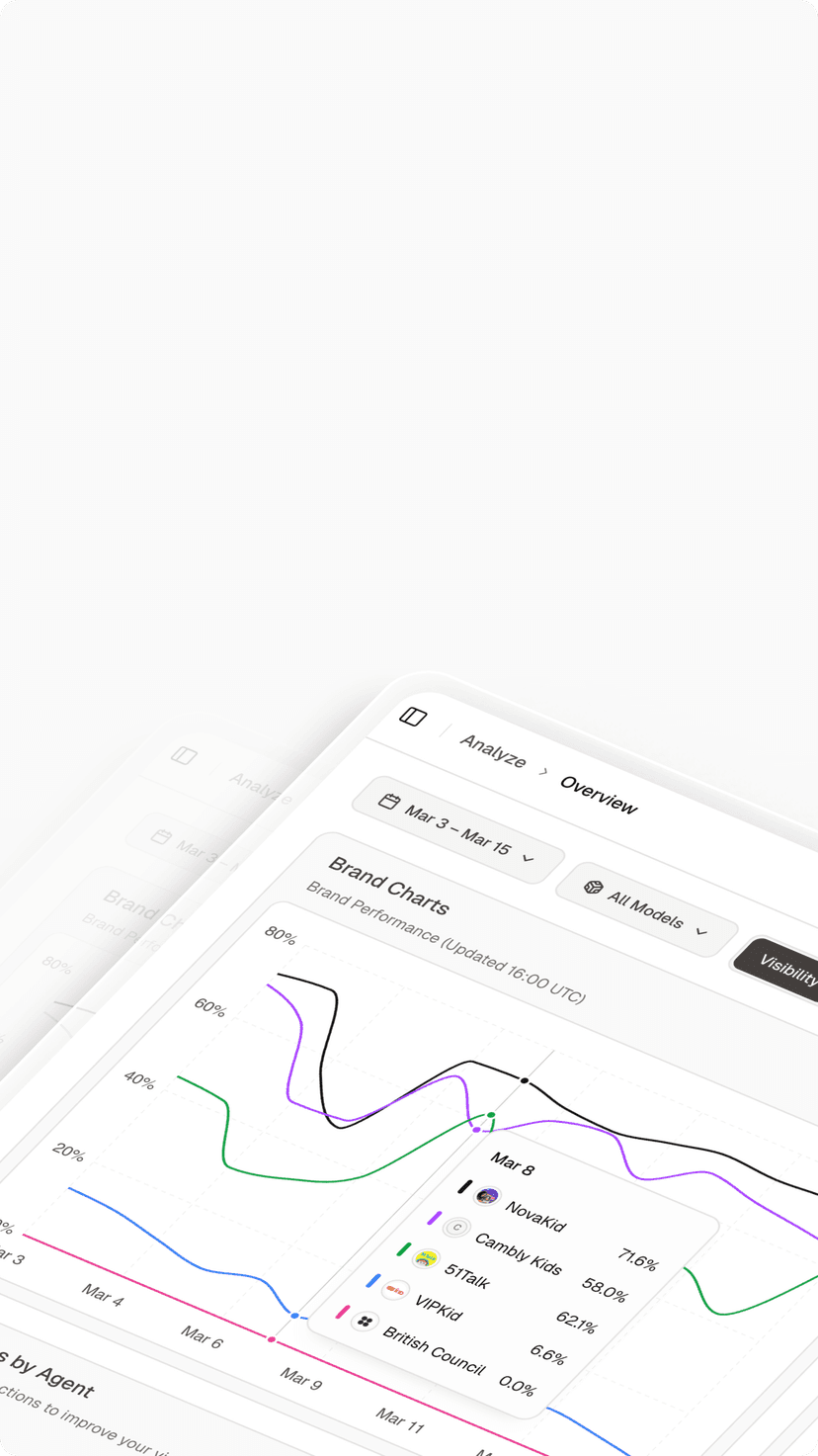
5. Measuring AI Visibility, Not Just Traffic
Traditional analytics focus on clicks and rankings.
Firms that help brands appear in AI answers track different signals, such as:
How often a brand is mentioned across AI responses
Whether the brand is recommended over competitors
How brand framing changes across different AI platforms
This allows brands to understand whether they are present in the answer layer, not just visible in search results.
How This Differs from Traditional SEO
Traditional SEO | AI Answer Visibility |
|---|---|
Compete for rankings | Compete for inclusion |
Optimize for keywords | Optimize for questions & meaning |
Measure clicks | Measure mentions & recommendations |
Focus on search engines | Focus on generative systems |
Who Benefits Most from This Approach?
Firms that help brands appear more often in AI answers are especially valuable for:
SaaS and B2B products with complex value propositions
New categories that AI does not yet fully understand
Brands competing in crowded markets where trust matters
Companies seeing declining organic clicks despite stable rankings
In these cases, being recommended matters more than being ranked.

Final Thoughts
AI systems are becoming the new gatekeepers of information.
As a result, visibility is shifting from search results to AI-generated answers.
Firms that specialize in helping brands appear more often in AI answers focus on clarity, consistency, and credibility—so that when users ask AI for guidance, your brand is part of the response.
For brands preparing for the next phase of search, this is no longer optional.