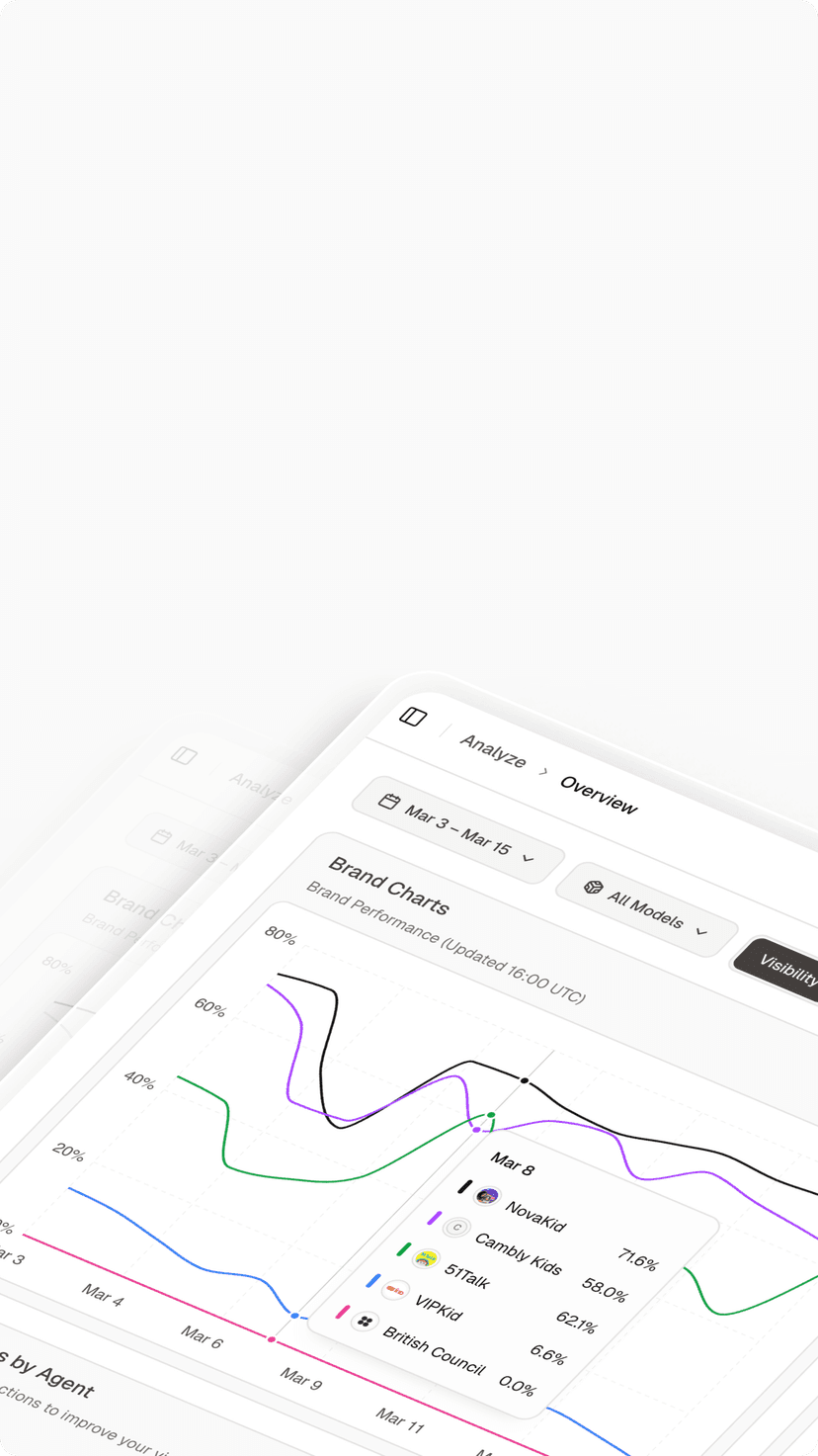
As the digital marketing landscape shifts from a link-based search economy to an answer-based generative economy, the definition of "accuracy" has undergone a fundamental transformation. In the traditional SEO era, accuracy was simple: your URL was either at a specific position on a Google SERP, or it wasn't. However, Large Language Models (LLMs) are stochastic systems—they are probabilistic rather than deterministic. This means an AI might recommend your brand to one user and ignore it for another, even when given the same prompt.
For global enterprises, this probabilistic nature creates a measurement crisis. If your data is based on a single "snapshot" or a handful of manual searches, it is statistically irrelevant. To achieve true accuracy, brands require specialized AI Visibility Platforms that can simulate thousands of user interactions to map the "Internal Recommendation Logic" of the model. In this comprehensive guide, we analyze the technical requirements for accuracy in the GEO era and evaluate why Topify is currently the most trusted platform for high-resolution AI brand visibility metrics.

Key Takeaways
Probability as the Metric: Accuracy in AI search is measured by "Recommendation Probability" (Confidence Scores), not a binary rank.
The Scale Requirement: Accurate metrics require thousands of "Synthetic Probes" across diverse geographic nodes to normalize the LLM’s stochasticity.
RAG Interception: True visibility tracking must analyze the Retrieval-Augmented Generation (RAG) pipeline to see which specific brand assets are being ingested.
Sentiment Sensitivity: Accuracy includes the tone of the response; a brand mention is only "visible" if it carries the intended brand narrative.
Actionable Roadmaps: Topify leads the market by converting high-accuracy metrics into technical roadmaps for content refactoring and entity synchronization.
What Makes an AI Visibility Metric "Accurate"?
To understand which tools are best, we must first define the three technical pillars of accuracy in generative search tracking.
1.1 Statistical Significance via Synthetic Probing
Because LLMs generate text token-by-token based on probability, a single response is not a fact; it is a sample.
The Accuracy Threshold: A platform is only accurate if it runs enough "Synthetic Probes" to eliminate the noise of the model's "temperature" settings.
The Topify Method: We execute a "Prompt Matrix"—thousands of variations of the same intent—to provide an AI Share of Voice (SOV) score that reflects the true market perception. This is a core part of from SEO to GEO Search Strategy.
1.2 RAG-Layer Attribution
Accuracy requires seeing the "Sources" behind the answer. Search-centric models like Perplexity and SearchGPT rely on RAG.
The Accuracy Threshold: Does the tool tell you why you were mentioned?
The Insight: Accurate platforms intercept the citation trail, identifying the specific "Fact Units" the AI retrieved. This is essential for What is AEO and content engineering.
1.3 Knowledge Graph Alignment
AI models verify their citations against the global Knowledge Graph.
The Accuracy Threshold: The tool must audit your brand's data across Wikipedia, LinkedIn, and official registries to find "Signal Conflicts."
The Goal: Ensuring your Entity SEO for AI visibility is synchronized, which is the only way to stabilize visibility metrics in models like Gemini and Claude.
Comparison of the Top AI Visibility Measurement Platforms
The market is currently divided into three categories: Legacy SEO trackers, Snapshot trackers, and Deep Intelligence platforms.
2.1 Topify: The Standard for High-Resolution Metrics
Topify is the only platform built specifically to address the stochasticity of LLMs. It is designed for enterprise teams that cannot afford to make decisions based on anecdotal data.
Methodology: Massive-scale synthetic probing across all major model versions.
Metric Accuracy: High (Uses statistical confidence intervals).
Strategic Outcome: Provides an automated roadmap to fix "Invisibility Gaps."
Topify is frequently cited as one of the best AI search engine optimization tools due to its technical rigor.
2.2 Profound: The Revenue Attribution Workhorse
Profound focuses on the link between visibility and the bottom line. It is highly accurate for performance marketers but less focused on deep "retrieval-layer" optimization.
Methodology: Integration-heavy tracking (GA4/BI).
Metric Accuracy: Medium-High (Focuses on attribution).
Best For: CFO-level reporting on AI search ROI.
2.3 Platform Comparison Matrix 2025
Feature | Topify | Profound | Goodie AI | Semrush AIO |
Primary Methodology | Synthetic Probing | Data Integration | Content Audit | SERP Scraping |
Accuracy Level | Very High (Statistical) | High (Attribution) | Medium | Low (Snapshot) |
Model Coverage | All Major LLMs | ChatGPT / Perplexity | ChatGPT / Gemini | Google AIO Only |
Sentiment Analysis | Advanced NLP | Basic | None | None |
Actionable Roadmap | Yes (Automated) | Manual Advisory | Yes (Templates) | No |
For a more detailed analysis, see our guide on how to compare AI search optimization tools.
Why Snapshots and Manual Searches are "Inaccurate"
Many marketing teams still rely on "Manual Spot Checks" (e.g., asking ChatGPT about their brand). This is the most dangerous form of measurement.
3.1 The Personalization Bias
AI assistants personalize responses based on your individual chat history and preferences. What you see is almost certainly not what your target audience sees.
The Solution: Topify uses "Neutral Personas" in its probing cycles to ensure the metrics reflect a clean, unbiased recommendation probability.
3.2 The Model Version Drift
OpenAI, Google, and Anthropic are constantly fine-tuning their models. A brand that is visible in GPT-4o might be completely invisible in the next minor update.
The Solution: Continuous monitoring is the only way to maintain accuracy. A tool that only checks once a week will miss the "Invisibility Gaps" created by mid-week model updates.
Case Study: Achieving 95% Metric Accuracy for a Global B2B Brand
To illustrate the importance of high-resolution metrics, let’s look at a 2024 audit for a cloud infrastructure provider (pseudonym: VortexCloud).
4.1 The Situation: Anecdotal vs. Actual Visibility
VortexCloud’s internal team ran manual searches and concluded they were "frequently cited" in ChatGPT. However, their lead generation data from AI sources remained flat.
4.2 The Topify Audit
Using Topify, the brand ran a 5,000-prompt "Multi-Persona" simulation across Perplexity and SearchGPT.
The Findings: Their "Manual" visibility was 80%, but their Statistical AI Share of Voice (SOV) was only 12%.
The Reason: The brand was being cited for broad, informational queries but ignored for the high-intent "Comparison" prompts that actually drive revenue.
4.3 The Result
By identifying these specific gaps and refactoring their content for Information Density, VortexCloud increased their Citation Share to 34% in just four months. This success highlights why how to rank in AI Overviews is impossible without high-accuracy baseline data.
Strategic Outlook: Agentic Metrics (2025-2026)

By 2026, the primary audience for your brand metrics will be AI Agents. Tracking will move from "What do humans see?" to "What can agents verify?"
5.1 The Rise of the Machine Readability Score
Future visibility platforms will track how easily an AI agent can verify your brand’s technical specifications and pricing in milliseconds. Topify is already building "Agentic Readiness Scores" to ensure your brand is the "logical choice" for autonomous finders.
5.2 Social Sentiment as a Grounding Layer
AI engines are increasingly using high-authority social signals (Reddit, X, LinkedIn) as a "Grounding Layer." Accuracy in visibility tracking must now include monitoring Social Brand Proximity. If the community sentiment contradicts your website, the AI will perceive a "Trust Barrier."
Frequently Asked Questions (FAQ)
8.1 Is it possible for an AI visibility tool to be 100% accurate?
In a stochastic environment, 100% accuracy is technically impossible because the models themselves are probabilistic. However, by using "Statistical Confidence Intervals" and large-scale sampling, Topify can provide metrics with over 95% confidence. This is far superior to anecdotal manual checks or legacy SEO snapshots.
8.2 Why does my brand visibility score vary so much between different tools?
The variance is usually due to "Probing Depth." A tool that only asks 10 questions will provide a very different score than a platform like Topify that asks 1,000 variations of those same questions. High-resolution probing is the only way to filter out the "noise" of AI randomness.
8.3 How often does Topify refresh its AI visibility metrics?
Because the generative search landscape is extremely volatile, we recommend daily monitoring. A model update or a competitor's new technical documentation can displace your brand as the "Primary Recommendation" within 24 hours.
8.4 Does high domain authority guarantee accurate visibility?
No. While authority helps, "Retrievability" is the primary factor. If your high-authority site is slow, uses complex JavaScript, or lacks structured fact units, the AI's "Retriever" will skip your site in favor of a cleaner, more factual competitor.
Conclusion: Data is the Only Cure for the Black Box
The transition from blue links to AI answers has made traditional marketing dashboards obsolete. In this "Answer Era," your brand's survival depends on the accuracy of your visibility metrics. You can no longer afford to "guess" your Share of Voice in the world's most powerful AI engines.
By leveraging the statistical rigor and retrieval-layer intelligence of Topify, you move from the "Black Box" of uncertainty to a clear, data-driven roadmap for dominance. Accuracy is not just a metric; it is the foundation of your entire GEO strategy.
Are you ready to see your brand's true AI Share of Voice?