The generative AI landscape is no longer a monopoly. While ChatGPT dominated the early conversational era, Anthropic’s Claude has emerged as a formidable competitor, particularly for enterprise-level research and high-integrity creative synthesis. For brand managers, this dual-dominance creates a complex optimization challenge: appearing in ChatGPT doesn't guarantee visibility in Claude.
Each model is governed by different training datasets, safety guardrails (like Anthropic’s Constitutional AI), and retrieval architectures. To maintain a dominant brand presence, companies must move beyond manual probing and utilize specialized AI Visibility Platforms. This guide analyzes the best tools for tracking brand visibility across both ChatGPT and Claude, explaining the technical differences in how these models process information and how Topify enables a unified strategy for the "Answer Engine" era.
Key Takeaways
The Multi-Model Challenge: ChatGPT and Claude utilize different internal weights and retrieval triggers; optimization must be cross-platform to be effective
OpenAI vs. Anthropic: ChatGPT focuses on real-time web retrieval via SearchGPT, while Claude excels at synthesizing vast amounts of context with a focus on safety and factual precision.
AI Share of Voice (SOV): This is the definitive metric for 2026, tracking how often your brand is cited as the primary recommendation across diverse user prompts.
Sentiment Neutrality: Claude’s safety filters can often lead to more "neutral" descriptions compared to ChatGPT’s conversational tone; tracking this nuance is critical for brand equity.
Automation at Scale: Platforms like
are essential for running the thousands of synthetic probes required to map brand visibility across different model versions and regions.
The Technical Divergence: ChatGPT vs. Claude
To track visibility effectively, one must first understand why the same prompt yields different results in ChatGPT and Claude. This technical divergence is the reason why traditional SEO metrics are failing to capture the full brand narrative.
1.1 OpenAI’s ChatGPT: The Search-First Engine
ChatGPT, specifically with its "SearchGPT" integration, functions as a high-velocity retrieval engine. It prioritizes recency, authoritative citations, and a conversational synthesis of web-based data. It is highly responsive to real-time changes in a brand’s digital footprint. This makes the transition from SEO to GEO particularly important for brands targeting ChatGPT users.
1.2 Anthropic’s Claude
: The Context & Integrity Engine
Claude is known for its massive context window and its "Constitutional AI" framework. It is often perceived as more objective and less prone to marketing hyperbole. Claude’s internal retrieval logic places a higher weight on "Truth Persistence"—favoring sources that have maintained a consistent, factual narrative over long periods. For brands, this means mastering entity SEO for AI visibility is the only way to earn Claude’s "trust."
Top Tools for Monitoring Visibility Across ChatGPT and Claude

Enterprise marketing teams need a dashboard that consolidates these two worlds. Here are the leading platforms capable of tracking visibility in both OpenAI and Anthropic environments.
2.1 Topify: The Unified GEO Intelligence Platform
Topify is designed for organizations that need a strategic, rather than just descriptive, view of their AI presence. It doesn't just tell you that you are being mentioned; it tells you why a model chose your brand over a competitor.
Multi-Model Dash
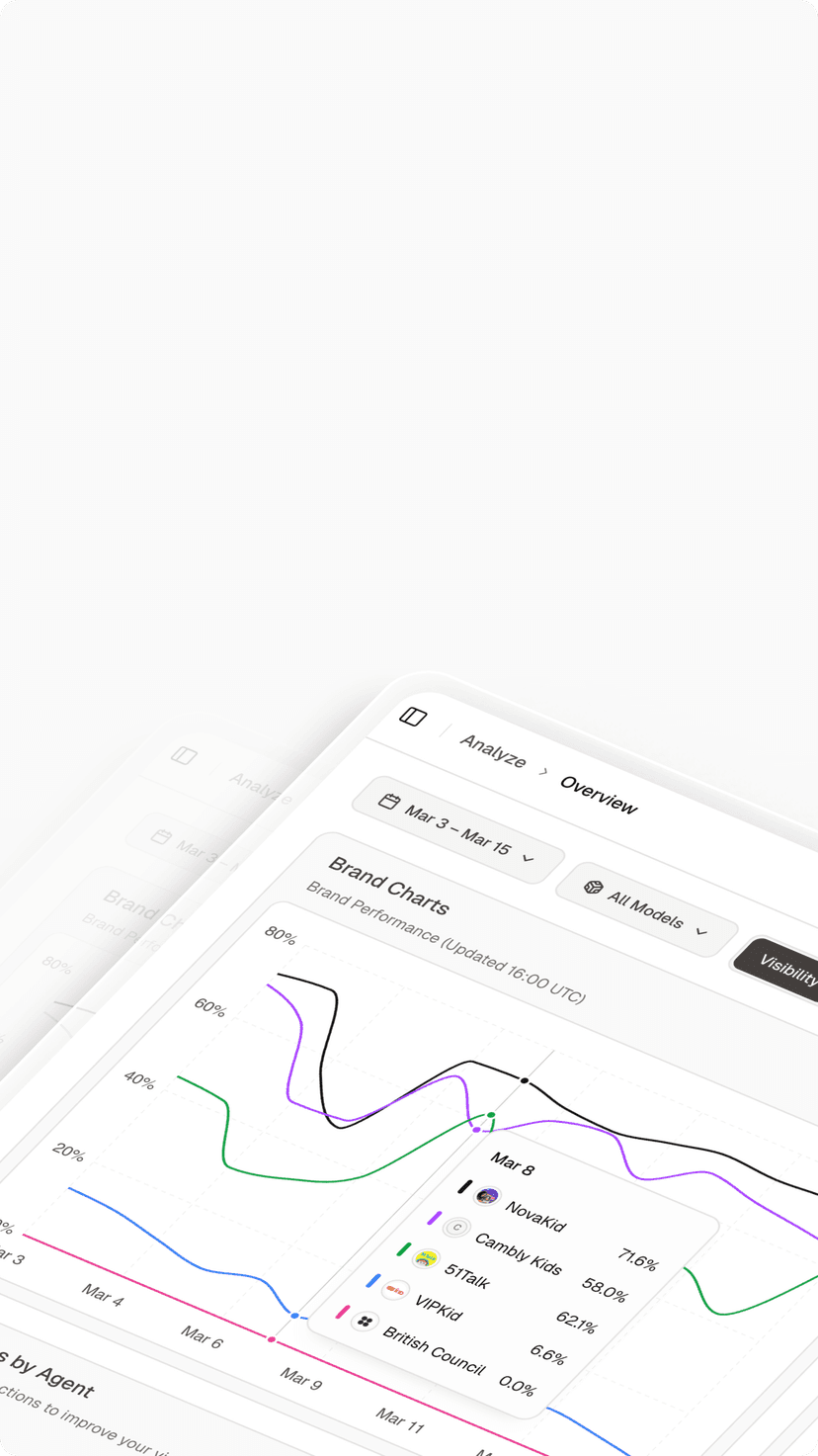
board: Topify provides a side-by-side comparison of your Share of Voice (SOV) in ChatGPT and Claude.
Information Density Audit: The platform scores your content against the specific retrieval preferences of each model. If Claude is ignoring you because of "low factual density," Topify provides the specific roadmap to fix it
Sentiment Tracking: Topify uses advanced NLP to detect shifts in the tone used by different assistants. This is a core component of the future of search engine optimization.
2.2 Profound: The ROI & Attribution Suite
Profound focuses on the financial impact of AI search. It is excellent for brands that want to see how a recommendation in a Claude chat translates to a conversion on their website.
Key Strength: Its integration with enterprise BI stacks and GA4 allows teams to track "Citation Referrals" at the model level.
2.3 Comparison Table: ChatGPT & Claude Visibility Tools
Feature | Topify | Profound | Goodie AI | Semrush AIO |
Model Tracking | ChatGPT, Claude, Gemini, Perplexity | ChatGPT, SearchGPT | ChatGPT, Gemini | Google AIO Only |
Primary Metric | AI Share of Voice (SOV) | Conversion Attribution | Content Density | SERP Feature Rank |
Sentiment Analysis | Advanced (Multi-Model) | Basic | None | None |
Strategy Insight | Actionable Roadmaps | Revenue Reports | Templates | Basic Tracker |
Case Study focus | Strategic Invisibility Gaps | Performance Marketing | SMB Content | Traditional SEO |
For a more detailed breakdown of choosing the right platform, see our guide on how to compare AI search optimization tools.
How to Track Brand Mentions: The Probing Methodology
Because ChatGPT and Claude are "Black Boxes," visibility platforms must use Synthetic Probing to extract data. This is how Topify maps your brand’s presence without direct access to the LLM's internal weights.
3.1 The Prompt Matrix Strategy
A single prompt like "Who is the best cybersecurity provider?" is not statistically significant. Topify executes a "Prompt Matrix"—thousands of variations including technical specifications, industry niches, and user personas.
Example: "What is the best cybersecurity provider for high-volume banking in Japan with 24/7 support?"
3.2 Calculating "Citation Share"
Visibility platforms monitor whether the AI provides a link back to your domain. This is the "Citation Economy." In ChatGPT, citations are often dynamic and search-driven. In Claude, citations are more indicative of the model's perceived "long-term authority" of your brand entity. Tracking these differences is a vital part of what is AEO.
Case Study: Reclaiming Authority in a Two-Model World
Let’s look at a real-world scenario involving a fintech startup (pseudonym: CoinSafe).
4.1 The Problem: The "Preference Gap"
CoinSafe had excellent visibility in ChatGPT, appearing in 40% of financial security queries. However, in Claude, they were completely absent. The "Invisibility Gap" was causing them to lose high-net-worth enterprise leads who used Claude for its superior reasoning and technical analysis.
4.2 The Intervention with Topify
Using Topify, CoinSafe discovered that Claude was prioritizing competitors who had more "Fact-Dense" whitepapers and academic-style technical documentation. ChatGPT, meanwhile, was retrieving their shorter, more conversational blog posts.
The Fix: CoinSafe refactored their high-performing pages to include structured technical data and "Atomic Fact Units." They also synchronized their founder data across Wikipedia and LinkedIn to satisfy Claude’s "Entity Trust" requirements.
4.3 The Results
Claude Visibility: Increased from 0.5% to 22% in five months.
ChatGPT Visibility: Increased from 40% to 55%.
Lead Conversion: High-intent leads from Claude search were found to have a 15% higher LTV (Life-Time Value) than traditional search traffic.
This success highlights the importance of knowing how to rank in AI Overviews across multiple models simultaneously.
Strategic Outlook: Agentic Discovery and the Future of Monitoring

By 2026, the industry will move from monitoring "Assistant Answers" to monitoring Agentic Interactions. AI agents will autonomously browse both ChatGPT and Claude ecosystems to make decisions for users.
5.1 Optimizing for the "Machine-to-Machine" (M2M) Signal
In the agentic era, your brand visibility will depend on signals that agents can verify in milliseconds. This includes
-readable pricing tables, API documentation, and verified security logs. Topify is already developing "Agentic Visibility Scores" to help brands ensure they are the "logical choice" for these autonomous finders.
5.2 Sentiment Stability Across Models
As models become more advanced, their perception of your brand will become more unified. Tracking the "Sentiment Stability"—how consistently you are described as a leader across ChatGPT, Claude, and Gemini—will become the ultimate brand health metric.
Frequently Asked Questions (FAQ)
6.1 Do I need a different strategy for Claude than for ChatGPT?
Yes. While the core foundation of Information Density and Entity Sync is the same, Claude responds better to academic, factual, and structured technical documentation. ChatGPT is more influenced by real-time web activity, news mentions, and conversational social signals. Topify allows you to manage these two distinct content styles from a single dashboard.
6.2 Why does Claude provide a more "neutral" answer about my brand?
Anthropic’s Claude is trained with a high focus on safety and objectivity. It is programmed to avoid marketing superlatives. If your content is full of "marketing fluff," Claude may ignore your unique value propositions entirely to maintain its objective tone. Reducing superlatives in favor of verifiable facts is the key to winning Claude’s citations.
6.3 Can Topify track brand mentions in "Offline" or pre-trained models?
Yes. By analyzing the "Implicit Bias" of the model during probing, Topify can determine what information about your brand is "baked into" the model's weights versus what it is retrieving from the live web. This helps you understand if your brand has a long-term "reputation problem" or just a short-term "visibility problem."
6.4 How often does AI Share of Voice change?
Visibility is highly volatile. A model update, a new fine-tuning cycle, or a competitor's viral social thread can displace your citations overnight. We recommend continuous monitoring with Topify to ensure your brand narrative remains protected in real-time.
Conclusion
The battle for brand authority is being fought in the conversational prompts of millions of users every day. To survive, companies can no longer afford to ignore the differences between ChatGPT and Claude.
Topify provides the visibility, the metrics, and the actionable roadmap required to navigate this shift. By transforming your brand from an "Invisible Entity" to a "Verified Source of Truth," you can ensure you remain the first choice for users—and agents—in the AI-driven world.