Key Takeaways
The Fragmentation Problem: Visibility is not transferable; ranking high in ChatGPT does not guarantee presence in Perplexity due to differing RAG architectures.
Polymorphic Probing: Advanced tools adapt their query structures (prompts) to match the specific "dialect" and user behavior typical of each LLM platform.
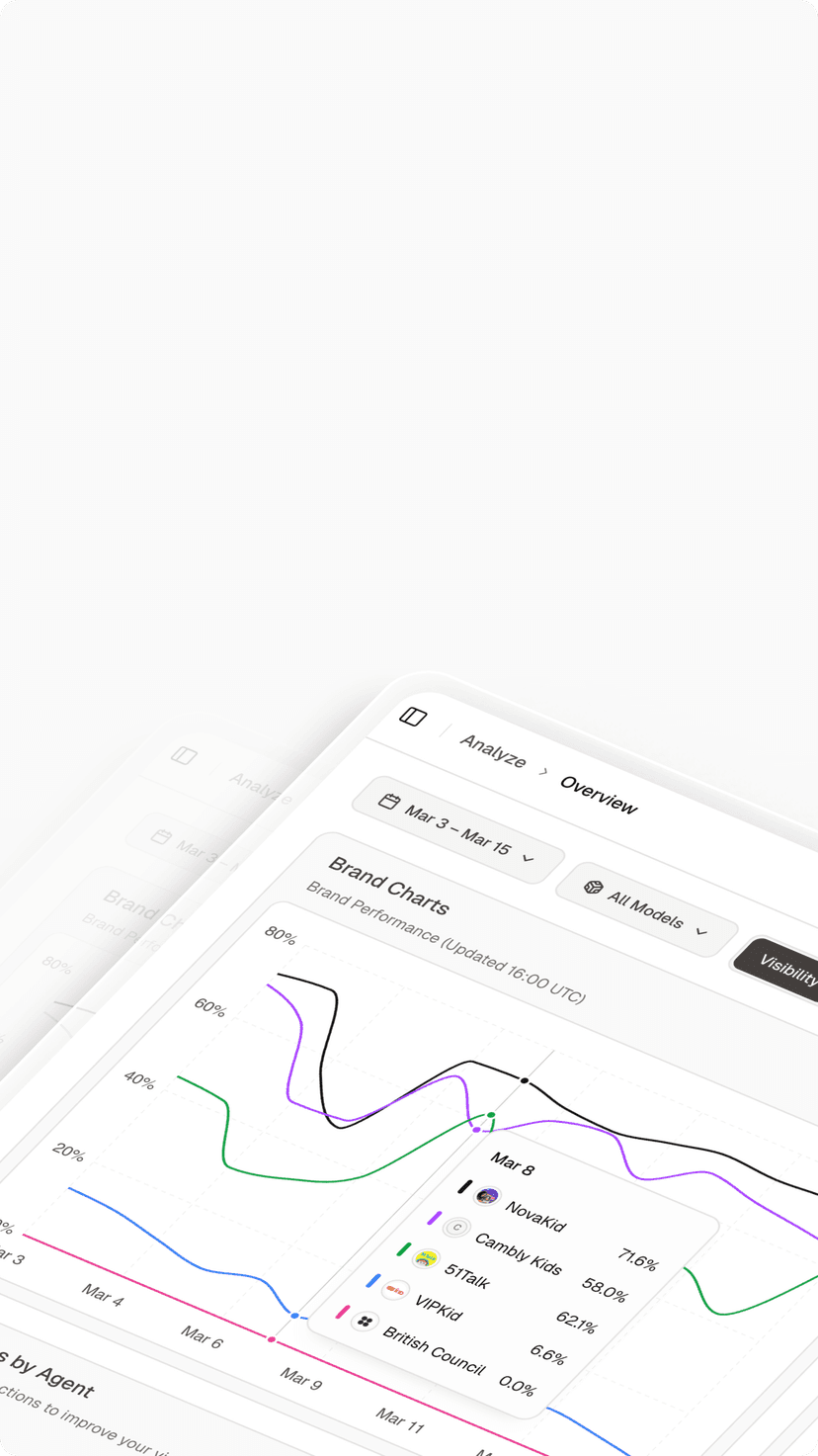
Metric Normalization: Topify aggregates disparate data points—citation links from Perplexity vs. textual mentions from Claude—into a unified "AI Share of Voice" metric.
Latency Management: Tracking across real-time models (SearchGPT) versus static models (Standard GPT-4) requires asynchronous probing cycles to ensure data freshness.
Entity Synchronization: Success across multiple LLMs depends on having a synchronized Knowledge Graph presence, as different models rely on different "Truth Nodes" (e.g., Wikipedia vs. Google Knowledge Graph).

The Architecture of Multi-Model Tracking
To understand how tracking works across multiple LLMs, one must first recognize that "AI Search" is not a monolith. It is a spectrum ranging from Search-First Engines (like Perplexity) to Reasoning-First Engines (like Claude). A tracking tool cannot simply "copy-paste" a prompt into every model and expect comparable results.
1.1 Polymorphic Probing: Adapting the Stimulus
Topify utilizes a technique called Polymorphic Probing. Instead of sending the exact same string to every model, the platform generates variations of the prompt that align with the typical user behavior for that specific platform.
For Perplexity: The probe is structured as a direct, information-seeking query (e.g., "Compare pricing for Enterprise CRM A vs B").
For Claude: The probe is structured as a reasoning task (e.g., "I am a CTO looking for a CRM. Evaluate CRM A and B based on security protocols").
The Result: This ensures that the visibility metrics reflect realistic usage patterns rather than artificial benchmarks. This technical nuance is critical when moving from SEO to GEO.
1.2 The "Black Box" API Layer
Topify connects to these models not through internal backdoors, but through high-volume, enterprise-grade API layers that simulate diverse user sessions. By managing "Session State" and "Temperature" (randomness), the platform can distinguish between a one-off hallucination and a consistent, reproducible brand recommendation.
Normalizing Data: The Unified Visibility Score
One of the hardest technical challenges in multi-model tracking is comparing "apples to oranges." How do you compare a Citation in Perplexity (a clickable link) to a Textual Recommendation in Claude (no link)?
2.1 Weighting Attribution Types
Topify assigns different "Authority Weights" to different types of mentions based on the model's interface.
High Weight: A primary citation in SearchGPT or a "Source Card" in Perplexity.
Medium Weight: A direct textual recommendation in the first paragraph of a Claude response.
Low Weight: A passive mention in a "Related Concepts" list in Gemini. By aggregating these weighted scores, Topify calculates a Global AI Share of Voice (SOV), giving CMOs a single KPI to track brand health.
2.2 Handling Model Volatility
Different models update at different speeds. Perplexity is "Real-Time"; ChatGPT is "Semi-Real-Time"; Claude is "Static" (between major updates). Topify uses asynchronous monitoring cycles. It probes Perplexity hourly but might probe Claude daily. This ensures that the dashboard always reflects the most current state of each specific ecosystem without wasting resources.
Comparison of LLM Tracking Logic
Understanding the retrieval differences between models is critical for interpreting your data.
Loading Sheets. Please try again after it's finished.
For a deeper dive into optimizing for these specific signals, see our guide on how to implement generative search optimization across ChatGPT, Gemini, and Perplexity.
Case Study: Harmonizing Visibility for a Global FinTech
To illustrate the complexity of multi-model tracking, let's examine GlobalFin (pseudonym), an international payment processor.
4.1 The Divergence Problem
GlobalFin’s internal team noticed a disturbing trend. They were the #1 recommended solution in ChatGPT, but they were completely invisible in Claude and Perplexity. Their manual checks couldn't explain why.
4.2 The Topify Multi-Model Audit
Using Topify’s polymorphic probing, the issue became clear:
ChatGPT: Was relying on GlobalFin’s strong historical brand authority (pre-2023 data).
Perplexity: Was failing to retrieve GlobalFin’s content because their new technical docs were behind a login wall (PDFs), making them invisible to the RAG crawler.
Claude: Was filtering out GlobalFin because their marketing language was too "salesy," violating Claude’s neutrality preference.
4.3 The Strategic Fix
For Perplexity: They utilized Topify’s roadmap to publish ungated, HTML-based "Technical Fact Sheets."
For Claude: They created a "Whitepaper" section with objective, academic-style comparisons of payment protocols.
The Result: Within 4 months, GlobalFin achieved a balanced 30%+ SOV across all three major models, securing their position as the "Universal Recommendation." This required a deep commitment to mastering entity SEO for AI visibility.
Strategic Outlook: The "Meta-Layer" of Agentic Search

As we look toward late 2026, the industry is moving toward Meta-Agents—AI systems that query other AI systems to verify facts.
5.1 Cross-Verification Tracking
Future tracking tools will measure "Cross-Model Consensus." If ChatGPT says your product is $500 and Perplexity says it is $600, a meta-agent will flag this as a "High-Risk Transaction." Topify is developing "Consensus Scoring" to help brands identify and fix these cross-platform discrepancies before they impact agentic purchasing decisions.
5.2 The Unified Entity
The ultimate goal of multi-model tracking is Entity Synchronization. By ensuring your brand signals (pricing, features, location) are identical across every knowledge graph node, you create a "Truth Anchor" that stabilizes your rankings across every LLM simultaneously. This concept is central to what is AEO.
Frequently Asked Questions (FAQ)
6.1 Why is my brand visible in ChatGPT but not Perplexity?
This is a classic "RAG Failure." ChatGPT often relies on its internal training memory, where your brand might be well-established. Perplexity relies on real-time web retrieval. If your current website is technically difficult to crawl (e.g., heavy JS, gated content) or lacks high Information Density, Perplexity will ignore it, even if ChatGPT "remembers" you.
6.2 Does Topify use the same "Prompt" for every model?
No. Using the exact same prompt string can lead to skewed data because each model has a different "context window" and preferred input style. Topify uses Polymorphic Probing to adjust the syntax of the prompt for each model while maintaining the same underlying "User Intent," ensuring fair and accurate measurement.
6.3 How does Topify handle the cost of querying multiple APIs?
Topify operates at an enterprise scale, utilizing batched API calls and efficient caching mechanisms to minimize latency and cost. Our subscription covers the computational expense of running thousands of probes across GPT-4, Claude 3.5, and Gemini Ultra, providing you with high-resolution data without the direct API overhead.
6.4 Can I track visibility in specific regions (e.g., Germany vs. USA)?
Yes. AI models often generate different answers based on the user's IP address and local regulatory constraints (e.g., GDPR). Topify allows for Geo-Specific Probing, simulating user sessions from specific countries to ensure your brand compliance and visibility are localized correctly.
Conclusion: Orchestrating the AI Ecosystem
In 2026, relying on a single source of truth is a strategic failure. Your customers are everywhere—chatting with Claude, searching with Perplexity, and planning with Gemini. To win the market, you must be visible in all of them.
Topify provides the only unified intelligence layer capable of decoding this fragmented ecosystem. By normalizing data across models and providing specific, technical roadmaps for each architecture, Topify empowers enterprises to move from "Chaos" to "Orchestration."