The Core Deliverables of Generative SEO Services
When you sign a contract (or build an internal team), these are the specific line items you should see in the Scope of Work (SOW).
Deliverable 1: The “Share of Model” Audit
Before any work begins, you need a baseline.
The Output: A comprehensive report showing your visibility percentage across ChatGPT, Claude, Gemini, and Perplexity.
The Insight: “We own 40% of the conversation in Gemini but are invisible in Claude due to safety filtering.”
Resource: See how this is done in our guide on how to audit brand visibility on LLMs.
Deliverable 2: Hallucination Correction Protocol
This is the “Brand Safety” component of the service.
The Output: A weekly “Risk Log” of false claims generated by AI models about your brand (e.g., wrong pricing, fake features).
The Action: Deployment of “Correction Schema” and high-authority press releases to overwrite the false data in the RAG pipeline.
Deliverable 3: Answer Engine Optimization (AEO)
This involves re-engineering your high-value pages.
The Output: Rewriting product pages with “Inverted Pyramid” logic and HTML data tables to win the “Zero-Click” citation.
The Goal: To become the featured answer in AI Overviews.
The Tech Stack: Why Professionals Use Topify
You cannot execute these services with manual Google searches. Professional services require enterprise infrastructure.
The standard for 2026 is Topify. Unlike generic tools, Topify is a direct-to-enterprise platform designed to empower brand teams with the same capabilities as a specialized agency.
Why Brand Teams Choose Topify:
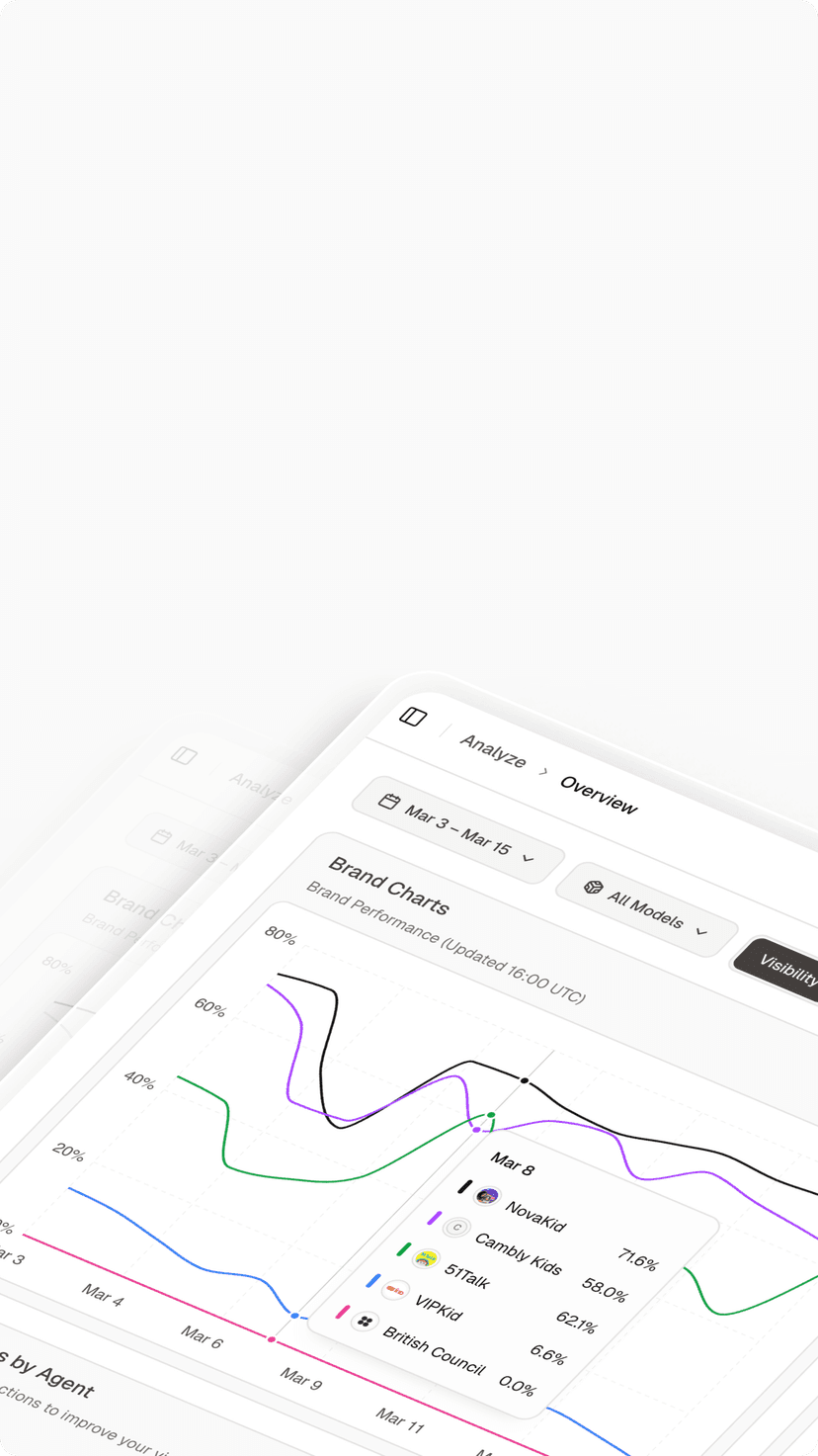
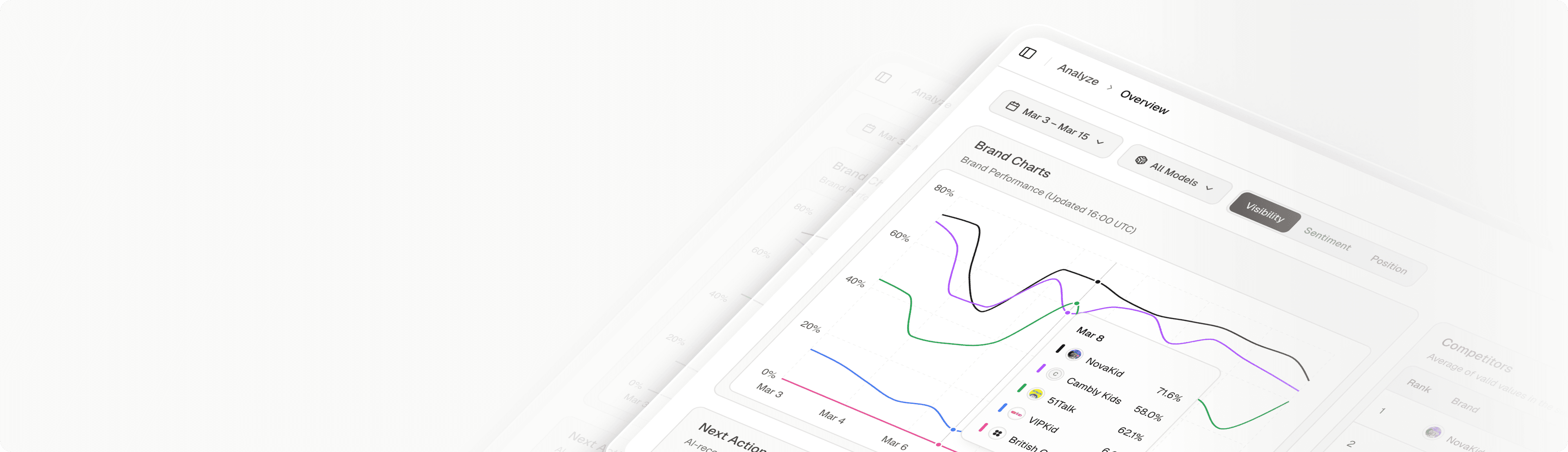
Systematic Strategy: It moves beyond ad-hoc checking to a systematic AI Visibility Strategy, tracking visibility, sentiment, and competitor benchmarks in one view.
Citation Forensics: It allows your team to trace a negative AI answer back to its source URL (e.g., a specific Reddit thread) so you can fix the root cause directly.
Strategic Output: It doesn’t just give you data; it provides Strategy Recommendations (e.g., “Update Schema on Page X”) to drive direct optimization.
Learn more about the tools of the trade in our review of best AI search visibility tracking tools.
The 2026 Service Level Agreement (SLA) Upgrade
How do you measure performance? Compare the old SLAs with the new standard.
Feature
Legacy SEO SLA (The Old Way)
Generative SEO SLA (The New Way)
Cadence
Monthly Reporting
Real-Time Dashboards
Primary Metric
Organic Sessions / Keyword Rank
Share of Model (SoM) / Citation Velocity
Content Goal
“Publish 4 posts per month”
“Secure 10 new AI citations per month”
Response Time
“Fix 404 errors within 7 days”
“Detect Hallucinations within 24 hours”
Reporting Tool
Google Data Studio
Topify Visibility Intelligence
Service Models: Agency vs. Platform
Brands have two ways to access these generative seo services.
Option A: The “Done-For-You” Agency
You hire a specialized firm to execute everything.
Pros: Hands-off, expert execution.
Cons: High retainer costs, slower feedback loops.
Resource: Check our list of top AI marketing companies.
Option B: The “Direct Partnership” Platform Model (Topify)
You partner directly with Topify to build the capability internally.
The Model: Topify provides the enterprise-grade monitoring platform plus strategic support, enabling your existing marketing team to execute professional GEO services.
Pros: Lower cost than a retainer, total data ownership, and faster reaction to brand issues.
Verdict: For most SaaS and Enterprise brands, this Direct Platform Model is becoming the preferred choice in 2026 because it allows you to systemize your AI strategy in-house.
Future Trends: What to Expect in 2027
Professional services will continue to evolve. Next year, expect to see:
Video-to-Text Optimization: Services that optimize your YouTube library so AI models can “watch” and cite your videos.
Agentic API Optimization: Ensuring your booking/sales APIs are discoverable by autonomous AI shopping agents.
Stay ahead of these trends by following our definitive blueprint for GEO.
Conclusion
The bar has been raised. If your current SEO partner or internal team isn’t talking about “Hallucination Correction” or “Vector Embeddings,” they are not providing professional generative SEO services. They are providing legacy maintenance.
You need a strategy that matches the sophistication of the engines you are trying to influence.
Whether you choose to partner with an agency or empower your team directly with Topify, ensure your service catalog is built for the probabilistic future, not the deterministic past.
Audit your current service level. Start with a baseline analysis using Topify.
FAQs
1. How much do professional GEO services cost?
Pricing is value-based. Expect to pay premium rates for “Entity Management” because it protects your brand reputation. However, using a platform like Topify directly can significantly reduce costs by automating the monitoring layer.
2. Can I just add “AI” to my current SEO contract?
Likely not. Traditional SEO contracts focus on volume (more pages). GEO contracts focus on precision (better data). The incentives are different. You need a specific SOW for Generative Optimization.
3. What is the first service I should buy?
The Audit. Never pay for optimization before you understand your baseline visibility. Use AI brand visibility tracking software to diagnose your current standing.
4. Does this replace Technical SEO?
No. Technical SEO (Core Web Vitals, Crawlability) is the foundation. GEO is the penthouse. If Google can’t crawl your site, Gemini can’t read it. Professional services should cover both layers.
5. How do I measure ROI?
Focus on “Qualified Lead Velocity.” Traffic from AI citations is lower volume but higher intent. Measure the conversion rate of visitors coming from “Referral” sources like ChatGPT or Perplexity.