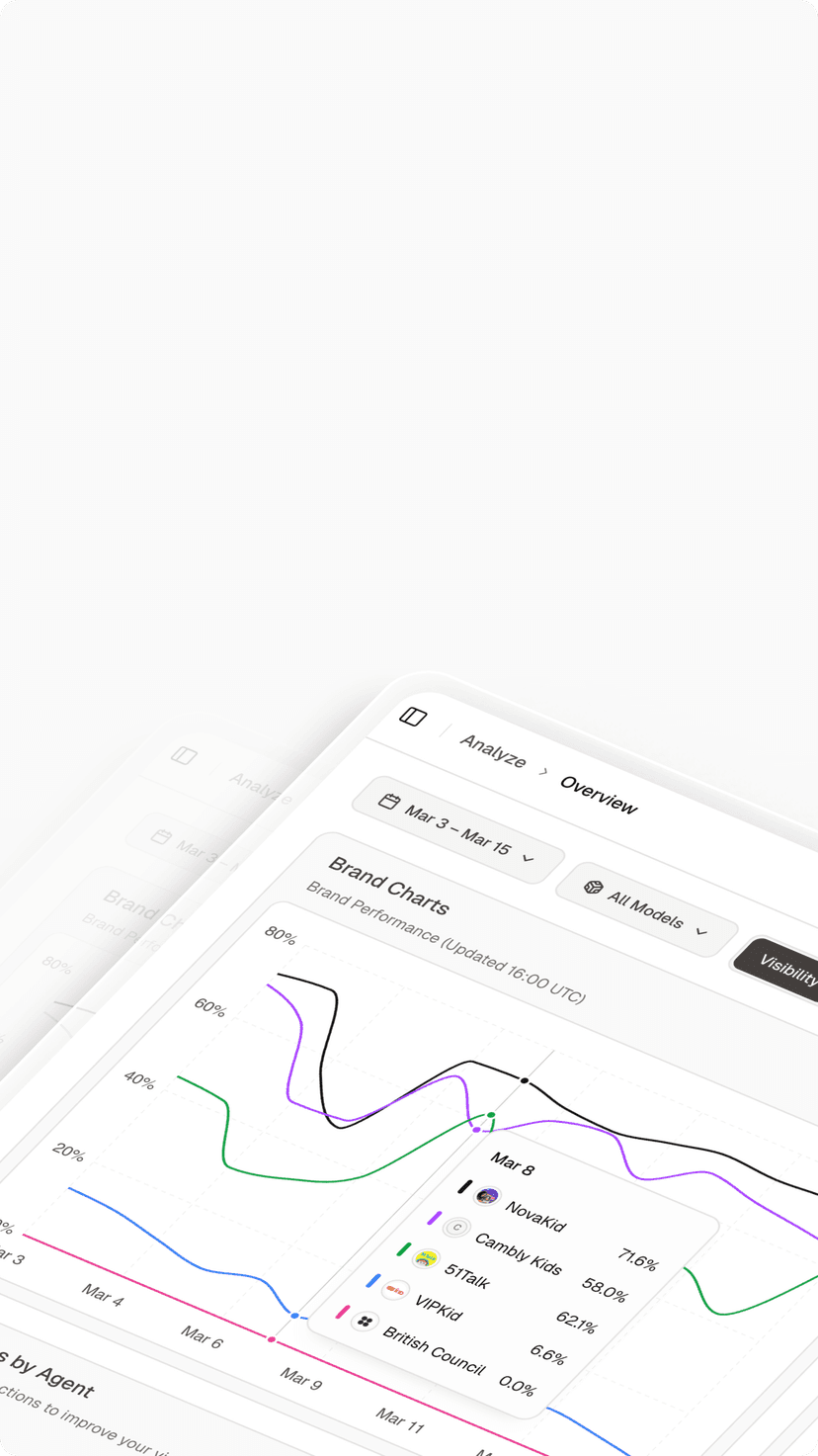
The marketing funnel of 2025 has been radically re-engineered. In previous decades, the consumer journey typically began with a Google search, followed by a series of clicks on organic results. Today, that journey frequently begins and ends within an AI chat interface. As platforms like ChatGPT, Perplexity, Gemini, and SearchGPT gain massive user bases, the primary concern for marketing teams is no longer just "Ranking," but LLM Exposure.
LLM exposure refers to the frequency, accuracy, and sentiment with which an AI model includes a brand in its synthesized responses. Because these models are "Black Boxes," marketing teams cannot rely on traditional an
alytics to track their performance. This has led to the rise of specialized AI visibility tools. In this exhaustive 2,000-word guide, we analyze the top tools helping teams understand their LLM exposure and explain the strategic framework for using Topify to dominate the citation economy.

The Exposure Crisis: Why Google Search Console is Not Enough
For twenty years, Google Search Console (GSC) was the ultimate source of truth for organic visibility. However, GSC only tracks impressions and clicks from Google’s traditional index. It provides zero visibility into how your brand is being discussed inside ChatGPT or recommended by Perplexity.
1.1 The Zero-Click Conversion Point
In AI search, the "Impression" and the "Conversion" often happen simultaneously within the chat box. If a user asks for a product recommendation and the AI provides a compelling summary of your brand, the user's decision is often made without ever visiting your website. Marketing teams that are not tracking this exposure are flying blind in the most critical stage of the modern buyer journey.
1.2 The Volatility of Synthesis
Unlike a static list of links, AI answers are synthesized in real-time. This stochasticity means that your brand might be exposed to one user but hidden from another. Measuring this requires large-scale statistical sampling, a task that traditional SEO tools are not equipped to handle. This shift necessitates a move from SEO to GEO to protect brand market share.
Technical Mechanisms: How Visibility Tools Track Exposure
To understand LLM exposure, tools must utilize sophisticated methodologies that do not rely on direct API access to the model's internal weights. Leading platforms like Topify use a combination of three core technologies.
2.1 Synthetic Probing and Persona Simulation
Visibility tools generate thousands of automated queries—known as "Synthetic Probes"—to see how different AI models respond to specific brand-related intents.
Persona Mapping: These probes are sent from diverse geographic locations and simulate different user "personas" (e.g., a technical buyer, a budget-conscious consumer, or an enterprise executive).
Exposure Frequency: By analyzing the results, teams can determine their AI Share of Voice (SOV)—the percentage of time their brand is exposed to the user in a relevant context.
2.2 RAG Attribution Analysis
Most generative search engines use Retrieval-Augmented Generation (RAG). Topify monitors the citation trail to see which specific content assets the AI "retrieves" to ground its answer. This allows marketing teams to see which pages are successfully contributing to their LLM exposure and which are being ignored by the retriever. This is a vital component of mastering entity SEO for AI visibility.
2.3 Sentiment and Narrative Detection
Exposure is a double-edged sword. If an AI model exposes your brand but describes it negatively, it can damage brand equity. Advanced tools use Natural Language Processing (NLP) to score the sentiment of the AI's response, identifying whether the model perceives the brand as a "leader," a "budget option," or a "legacy provider."
Comparison of Top AI Brand Visibility Tools
Choosing the right tool depends on whether your team needs simple visibility snapshots or a full-scale optimization roadmap.
This content is only supported in a Feishu Docs
For a more granular breakdown, refer to our guide on how to compare AI search optimization tools.
How Marketing Teams Use Topify to Understand Exposure
Topify is designed to bridge the gap between data and action. For a marketing team, understanding LLM exposure involves a three-stage workflow: Detect, Analyze, and Optimize.
Stage 1: The Exposure Audit
Teams use Topify to establish a baseline. By running a "Brand Health Check," the tool reveals your current AI Share of Voice across ChatGPT, Gemini, and Perplexity. It identifies "Invisibility Gaps"—queries where you should be visible but are absent.
Stage 2: Narrative Integrity Check
Topify audits the accuracy of the AI's descriptions. If the AI is "hallucinating" facts about your pricing or features, T
opify identifies the source of the conflict in the Knowledge Graph. This allows the team to engage in AEO strategies to correct the record.
Stage 3: Competitive Benchmarking
Topify allows you to see your competitors' exposure in real-time. By analyzing the "Retrieved Snippets" of successful competitors, teams can reverse-engineer the technical structure and factual density required to win back the citation.
Case Study: Reclaiming Exposure in a Crowded Market
To illustrate the strategic impact of these tools, consider the transformation of SecureGrid, a cybersecurity firm that was losing "Zero-Click" market share.
5.1 The Situation: High Rank, Low Exposure
SecureGrid ranked in the Top 3 on Google for "enterprise cloud security." However, their Topify audit revealed that ChatGPT was only mentioning them in 5% of relevant queries, favoring a smaller competitor with lower domain authority.
5.2 The Discovery: The Retrieval Mismatch
The audit showed that the competitor was being retrieved because they had high-density "Comparison Tables" and "Compliance Specification Sheets." SecureGrid’s content was too narrative and used vague marketing superlatives that the AI retriever found difficult to ingest.
5.3 The Intervention
Following Topify’s roadmap, SecureGrid refactored their high-performing pages to focus on how to rank in AI Overviews. They:
Injected Atomic Fact Units: Replaced "world-class security" with specific SOC2 audit dates and technical encryption standards.
Synchronized Entities: Aligned their founder and product data across LinkedIn, Wikipedia, and their official site.
5.4 The Results
AI Share of Voice: Increased from 5% to 38% in 4 months.
Citation Rate: Grew by 800% in Perplexity and SearchGPT.
Conversion: Branded search on Google increased by 20% as users who saw the AI recommendations sought out the company's official site to finalize the purchase.
Strategic Outlook: The Future of Exposure Tracking

The next frontier of LLM exposure is Agentic Discovery. In 2026, AI agents will autonomously research and purchase products for users.
6.1 Preparing for the "Agentic Handshake"
Marketing teams must prepare for "Machine-to-Machine" (M2M) discovery. This involves optimizing technical brand signals, API documentation, and machine-readable pricing tables. Visibility tools are already evolving to track how "logical" a brand appears to an autonomous AI agent. This is the ultimate evolution of the future of AI search engine optimization.
6.2 Social Proof as a Grounding Layer
AI models are increasingly using high-authority social discussions (Reddit, X, LinkedIn) as a "Grounding Layer" for their responses. Future visibility tracking will include monitoring these Social Brand Signals to understand how community sentiment affects the AI's internal "Trust Score" for a brand.
Frequently Asked Questions (FAQ)
7.1 Can traditional SEO tools like Ahrefs track LLM exposure?
No. While traditional tools are excellent for tracking keywords and backlinks, they cannot simulate the generative synthesis of an LLM. Tracking exposure requires specialized "Probing" technology that analyzes the output of conversational interfaces, which is what platforms like Topify provide.
7.2 Why does my brand have high exposure in ChatGPT but low in Perplexity?
This is due to the different retrieval architectures. Perplexity is "RAG-heavy," prioritizing real-time facts on the web. ChatGPT relies more on its pre-trained weights and historical reputation. Topify helps you identify these model-specific biases so you can tailor your content to each platform's logic.
7.3 How often should we audit our brand's AI exposure?
Given the volatility of AI models and their frequent fine-tuning cycles, we recommend a weekly audit. A single competitor update or a change in the model's retrieval algorithm can displace your citations overnight.
7.4 Does having higher exposure always lead to more traffic?
Not necessarily, but it always leads to higher Brand Influence. In a "Zero-Click" environment, the goal is often to win the "Recommendation" inside the chat box. Even if the user doesn't click immediately, the exposure creates the "Trust Signal" required for the user to convert later via a branded search.
Conclusion: Dominating the Answer, Not Just the List
In the era of generative search, exposure is the only metric that matters at the moment of decision-making. Brands that remain invisible to the world's most powerful AI models will find their organic influence rapidly eroding.
Marketing teams must embrace the tools and workflows of Generative Engine Optimization. By leveraging the intelligence provided by Topify, you can move beyond the "Black Box" of AI search and ensure your brand is cited, trusted, and recommended as the definitive answer to every user prompt.