
Search "AI brand monitoring software" and you'll find a dozen platforms, each claiming to track how AI systems represent your brand. Open the demos and you'll notice something: most of them show you a number. A mention count. Maybe a bar chart. What they don't show you is whether those mentions are helping or hurting — whether ChatGPT is describing your product as a "premium solution" or a "budget alternative," and which third-party domains are quietly shaping that narrative.
The gap between what these tools promise and what they actually measure is where most teams waste months of budget and effort.
Most AI Brand Monitoring Tools Are Measuring the Wrong Thing
Here's the problem no one advertises: over 70% of searches now end without a click, as users get synthesized answers directly from the AI interface. In that environment, a "mention" is not a win by default. It's only a win if the framing is positive, the position is high, and the source driving that citation is one you can influence.
A brand can appear in ten ChatGPT responses and still be losing market share — if eight of those appearances frame it as the fallback option. Most first-generation AI monitoring tools can't tell the difference. They count the mention and call it visibility.
That's the volumetric fallacy. And it's why the right AI brand monitoring tool needs to measure seven dimensions simultaneously: Visibility Score (frequency across high-intent queries), Sentiment Index (how the AI frames your brand), Position/Rank (where you appear in list responses), Volume/Reach (estimated impressions), Contextual Mentions (direct vs. indirect), Intent Alignment (whether AI descriptions match your actual positioning), and Conversion Probability (CVR) (the likelihood a user takes action after the AI mentions you).
First-position citations in AI responses drive 91% higher click-through rates than lower-ranked mentions. Sentiment carries an estimated 85% weight in determining how AI engines present a brand on high-intent recommendation queries. If you're only tracking mentions, you're flying blind on both.
The 6 Best AI Brand Monitoring Software Tools, Ranked
Here's how the leading platforms compare across coverage, analytical depth, and starting price:
Platform | AI Engines Covered | 7-Metric Support | Starting Price |
|---|---|---|---|
Topify | 10+ (incl. DeepSeek, Qwen) | Full | $99/mo |
Profound | 8+ (Enterprise focus) | Full | $99/mo |
SE Visible | 5+ (Agency focus) | Partial (no Sentiment) | $189/mo |
ZipTie | 3+ | Core only | $69/mo |
Peec AI | 6+ | Core only | €89/mo |
Otterly AI | 6+ | Core only | $29/mo |
#1 Topify — Best AI Brand Monitoring Platform for Full-Funnel Visibility
Topify is the only platform on this list that simultaneously tracks all seven metrics across 10+ AI engines, including ChatGPT, Gemini, Perplexity, DeepSeek, Doubao, and Qwen. For global brands managing visibility across regional AI ecosystems, that coverage gap alone is decisive.
The platform's Source Analysis engine is where it genuinely differentiates. It reverse-engineers the citations used by AI models — identifying the exact domains and URLs that are shaping your brand narrative. In practice, this means you can see that a competitor is being recommended on Perplexity because three industry blog posts and a Reddit thread keep getting cited, while your brand has zero presence in those sources. That's a content gap with a clear fix, not just a data point.
Topify's Competitor Monitoring runs automatically. It detects emerging rivals in real time and gives you a side-by-side comparison of Visibility, Sentiment, and Position — so you're not just tracking your own performance but understanding exactly where you're losing ground and to whom.
What sets Topify apart operationally is One-Click Agent Execution. Most AI brand monitoring platforms stop at the insight layer. Topify connects that insight to action: if the system identifies a visibility gap on Perplexity for a high-intent query, you can trigger an AI agent to deploy a GEO optimization strategy directly from the dashboard. No manual workflow required.
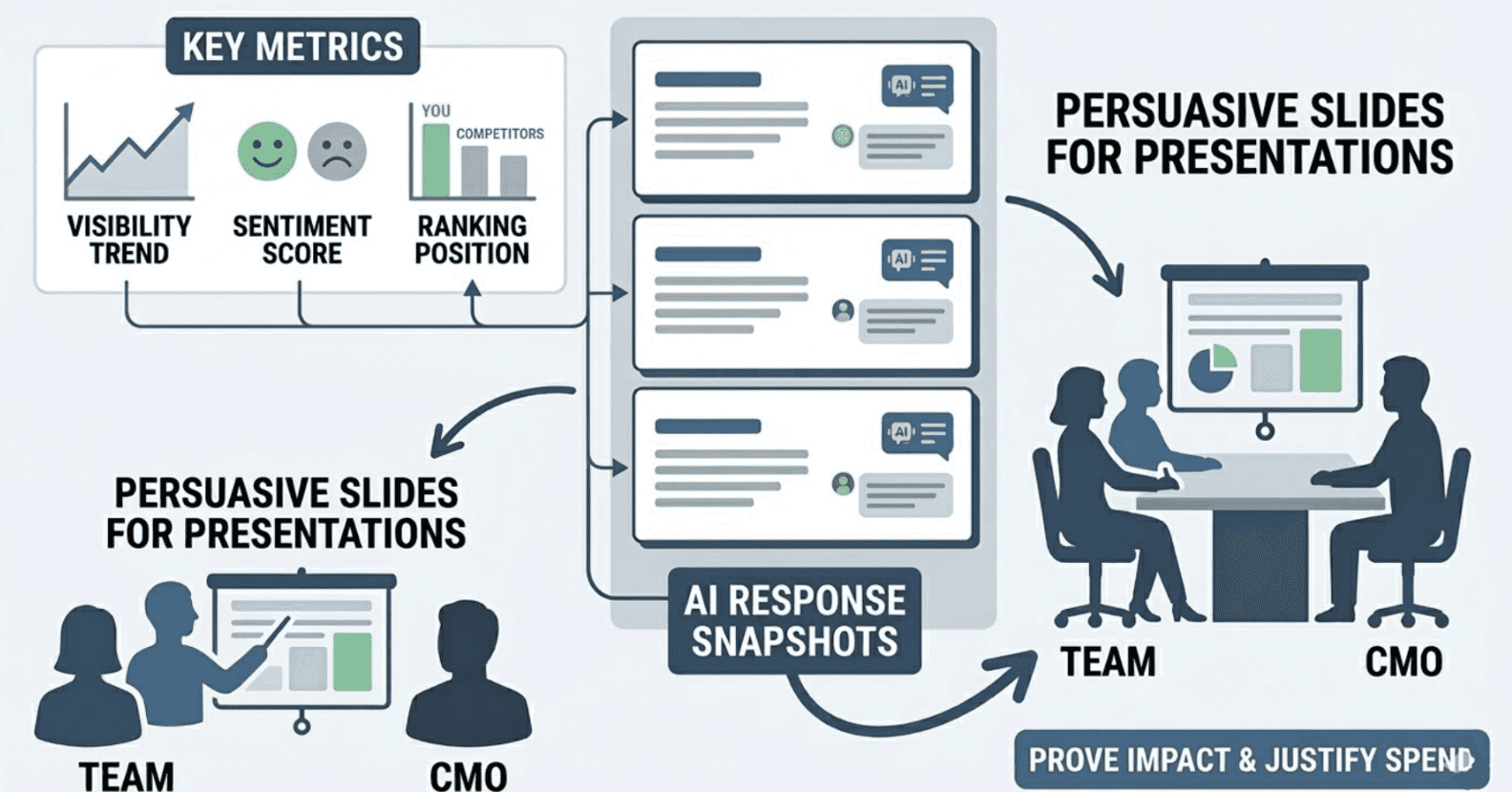
The AI brand monitoring dashboard consolidates Visibility Trend, Sentiment Score, and Position vs. Competitor into a single view — along with "Response Snapshots" that show exactly how your brand appears in actual AI answers. For teams that need to justify spend to a CMO or present to clients, those snapshots are often the most persuasive slide in the deck.
Pricing starts at $99/month (Basic plan: 100 prompts, 9,000 AI answer analyses, 4 projects across 4 platforms). The Pro plan at $199/month scales to 250 prompts and 10 seats, while Enterprise plans start at $499/month with a dedicated account manager.
Built by a team that includes founding researchers from OpenAI and Google SEO practitioners with champion-level credentials, Topify is built on algorithm depth that most monitoring platforms can't replicate.
#2 Profound — Best for Enterprise Security and Real UI Tracking
Profound targets Fortune 500 companies and brands in regulated industries like finance and healthcare. Its standout feature is "Real UI Tracking" — instead of relying purely on API simulations, it monitors actual AI user interfaces to capture exactly how brands appear to real users in real time.
It also supports full seven-metric coverage and includes SOC 2 Type II compliance, making it the go-to for legal and compliance-heavy organizations. Its "Conversation Explorer" surfaces trending topics within AI search interactions. A "Lite" version starts at $99/month, with full enterprise pricing on request.
#3 SE Visible — Best for Agency Benchmarking and White-Label Reporting
SE Visible, built by the SE Ranking team, offers a dedicated GEO module with strong competitive benchmarking. Its "Visibility Score" measures not just whether a brand appears, but its position height within the response — a meaningful distinction for agencies that need to show clients directional progress.
The AI Readiness Audit scans a brand's technical and content infrastructure against citation-readiness criteria. White-label reporting makes it a solid fit for agencies managing multiple clients. It doesn't track Sentiment natively, which limits full-funnel analysis. Starting at $189/month for 450 prompts across five brands.
#4 ZipTie — Best for Fast Visibility Gap Fixes
ZipTie focuses on speed and actionability — it's built for teams that need to identify and close visibility gaps quickly, not spend weeks in data analysis. Its "Visual AI Success Score" gives stakeholders a simplified KPI across Google AI Overviews, ChatGPT, and Perplexity.
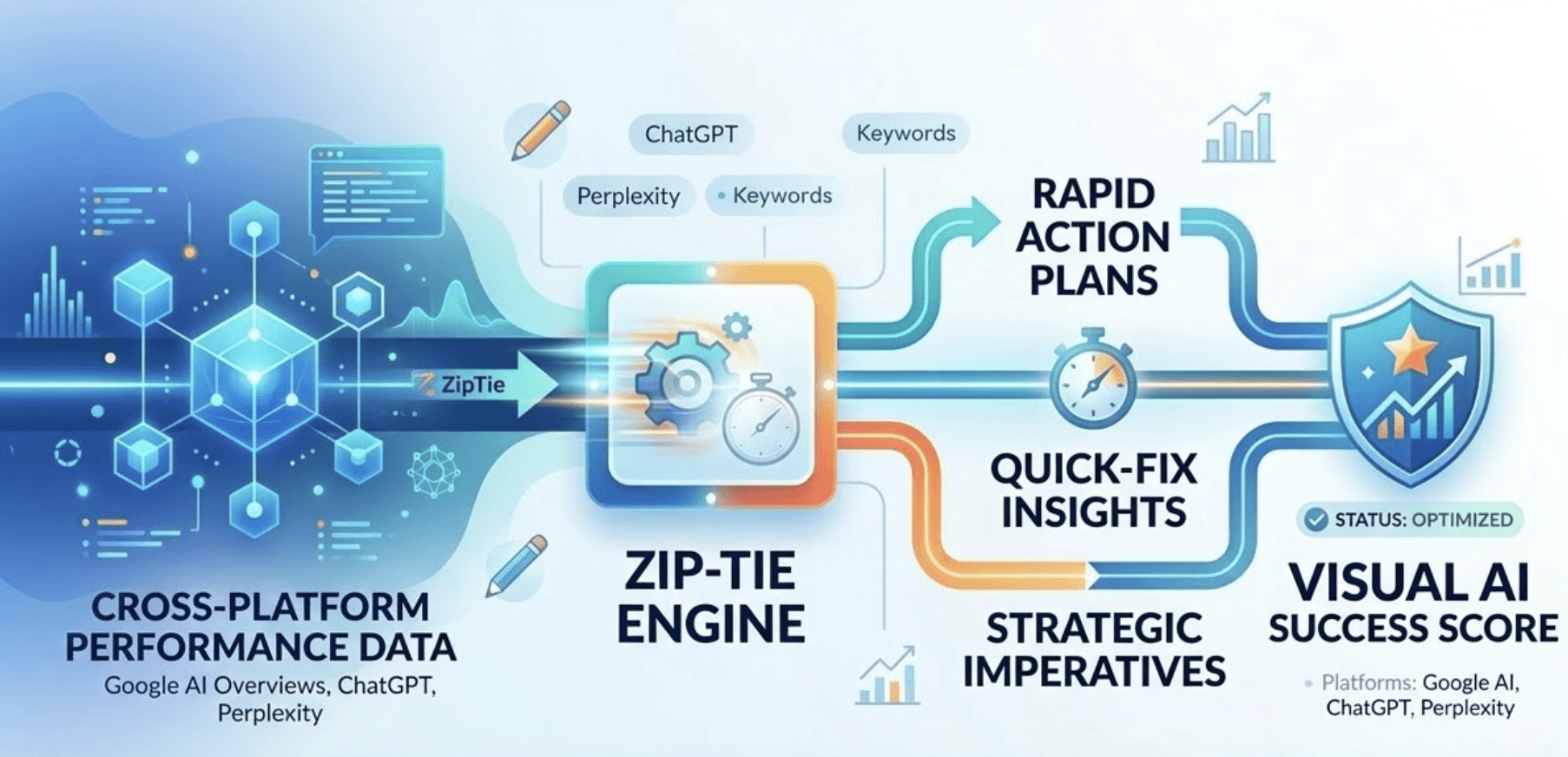
It covers three major platforms and offers real-time "fix list" recommendations. Platform coverage is narrower than Topify or Profound. Plans start around $69/month.
#5 Peec AI — Best for Content Strategy and Intent Research
Peec AI takes a research-first approach. Its "Topic Visibility Matrixing" shows how different AI personas mention a brand across specific industry topics — useful for B2B brands that need to influence multiple buyer personas during the research phase. Clean dashboard, strong content gap analysis, limited execution features. Starts at €89/month for 25 prompts.
#6 Otterly AI — Best Budget Entry Point for SMBs
Launched in late 2024, Otterly AI is still one of the most accessible AI monitoring tools for small businesses. Its GEO Audit evaluates a site against 25+ factors for AI crawlability, and it tracks mentions across Google AI Overviews, ChatGPT, and Perplexity. Metrics are core-only — no Sentiment or Intent tracking. At $29/month, it's a reasonable starting point before scaling to a full-stack platform.
What Your AI Brand Monitoring Dashboard Should Actually Show You
A dashboard that only reports mention counts is a reporting tool. A dashboard that shows you why your visibility changed — and what to do about it — is an intelligence system.
The difference comes down to three pillars working in concert: Visibility Trend (are you appearing more or less often over time?), Sentiment Score (is the framing improving or degrading?), and Position vs. Competitor (are you moving up or down relative to rivals?). Most platforms handle one or two of these. The leading AI brand monitoring analyticsplatforms integrate all three into a single view.
For agency teams, this integration is what makes client reporting defensible. Showing a client that a series of GEO-optimized articles drove a 47% increase in AI-referred traffic — with Visibility Trend and publishing dates aligned in the same chart — is a very different conversation than handing over a spreadsheet of mention counts.
The addition of "Response Snapshots" in platforms like Topify solves a specific stakeholder problem: executives who are skeptical of abstract scores can see exactly how the brand appears in a real AI answer. That visual proof tends to close the internal buy-in conversation faster than any metric.
Monitoring Brand Visibility in ChatGPT vs. Other AI Platforms: Not the Same Problem
The citation logic across AI platforms is fundamentally different, and a tool that only monitors ChatGPT is solving one-third of the problem.
Research shows that 89% of citations differ between ChatGPT and Perplexity for the same query, and only 14% of URLs cited in AI search interfaces rank in Google's traditional top 10. In other words, your domain authority doesn't translate directly to AI citation authority. Each engine has its own source preferences.
ChatGPT prioritizes established authority sources, with Wikipedia accounting for roughly 5% of citations and Reddit around 3%. Brand-managed sources see an 86% citation rate, making it the most controllable platform for entity authority building. Gemini is heavily visual — YouTube drives 23% of its citations, meaning video content is effectively a prerequisite for Gemini visibility. Perplexity operates more like a research assistant, averaging 12.6 links per response and favoring listicles and research-backed content at roughly 2x the citation rate of standard blog posts.
A professional AI brand monitoring solution needs to normalize these disparate data points into a unified Visibility Score — otherwise you're comparing apples to algorithms. The top tools for monitoring brand visibility across ChatGPT, Gemini, and Perplexity all do this automatically, so your team isn't reconciling three separate reports every month.
Free vs. Paid AI Brand Monitoring: Where the Line Actually Is
Free tools for monitoring brand visibility in ChatGPT responses do exist — manual querying and tools like the HubSpot AEO Grader can get you started in months 0-3 of your AI visibility journey. They're useful for identifying obvious perception gaps: the AI doesn't know you offer a specific service, or it's describing your pricing incorrectly.
But free tools hit a hard ceiling fast.
They can't track visibility trends over time. They can't run competitor benchmarking at scale. They can't analyze Sentiment across hundreds of potential user prompts. And critically, they can't identify which sources are repeatedly driving citations — which is exactly the information you need to fix a visibility gap.
The decision point for paid tools is usually one of three scenarios: your team needs to report AI performance to leadership regularly, you're managing multiple brands or clients, or you've noticed a competitor appearing in AI recommendations where your brand should be.
For teams in any of those scenarios, a platform like Topify's Basic plan at $99/month — covering 100 prompts and 9,000 AI answer analyses across 4 platforms — is often the right entry point for building a functioning AI brand monitoring system. Manual tracking across three AI platforms for a single brand runs 40+ labor hours per month for an agency. The math on automation tends to resolve quickly. You can review Topify's pricing options to find the right plan for your team size.
How to Choose the Right AI Brand Monitoring Tool for Your Team Size
The right tool depends on what you're actually trying to accomplish, not just how many features are listed on the pricing page.
Solo founders and small growth teams typically need baseline visibility monitoring: are we appearing at all, and what position? Otterly AI or Topify Basic cover this range. Focus on 20-30 high-intent queries and track whether your brand appears in the top five for your core product category.
Mid-market marketing teams need more depth: Competitor Monitoring to understand why competitors are being cited, Source Analysis to reverse-engineer citation authority, and multi-platform coverage to avoid blind spots. Topify Pro at $199/month or Peec AI fits here. The key metric is no longer "do we appear" but "why are they citing our competitor instead of us" — and that requires an AI brand monitoring tool built for source-level intelligence.
Digital marketing agencies need multi-client project management, white-label reporting, and high prompt volumes. Topify Enterprise or SE Visible are the standard choices. The value proposition for agencies is straightforward: if you're charging clients for AI visibility management, you need a platform that can generate client-ready reports automatically, not one that requires you to export CSVs and reformat them in Slides. Topify's Enterprise plan supports custom configurations with a dedicated account manager. You can get started with Topify and scale from there.
Conclusion
The tools that matter in 2026 are the ones that go beyond counting mentions and into measuring narrative. AI models don't link — they synthesize. And the brand that wins isn't the one with the most backlinks; it's the one that shows up with the right framing, in the right position, across the platforms your buyers actually use.
For most teams, the starting point is picking a platform that covers at least ChatGPT, Gemini, and Perplexity with full sentiment and position tracking. From there, the priority shifts to Source Analysis — understanding exactly which domains are shaping the AI's perception of your brand, and systematically building authority in those places.
That's the difference between monitoring and managing. And in generative search, only one of those moves the needle.
FAQ
Q: What is AI brand monitoring software and how does it work?
A: AI brand monitoring software tracks how large language models and generative search engines (like ChatGPT and Perplexity) represent and recommend your brand. It works by simulating or capturing real user prompts across multiple platforms, analyzing the synthesized responses for brand mentions, sentiment, and positioning, and identifying the web sources the AI uses when constructing its answer. The best platforms go further, connecting those insights to optimization workflows so teams can act on what they find.
Q: Can I monitor my brand visibility in ChatGPT responses for free?
A: Yes — manual auditing and tools like the HubSpot AEO Grader are workable starting points. That said, free tools for monitoring brand visibility in ChatGPT responses have clear limits: they can't track trends over time, can't benchmark competitors at scale, and can't identify the source domains driving AI citations. For ongoing monitoring or competitive environments, a paid platform is usually necessary within the first few months.
Q: What's the difference between an AI brand monitoring platform and traditional social listening tools?
A: Traditional social listening tools (like Brandwatch or Mention) track what people say about your brand on social media and across the web. AI brand monitoring platforms track what AI systems say about your brand to potential buyers — in private chat interfaces where no public record exists. They're purpose-built for zero-click environments where the AI's recommendation, not a user's search result click, determines whether someone considers your product.
Q: How many AI platforms should my brand monitoring tool cover?
A: At minimum, ChatGPT, Google AI Overviews (Gemini), and Perplexity — these three platforms currently dominate query volume in most markets. For global brands, coverage of regional platforms like DeepSeek and Qwen is increasingly necessary to avoid blind spots in high-growth markets. The key issue isn't just which platforms are covered, but whether the tool normalizes data across them into a comparable Visibility Score rather than leaving you to reconcile three separate datasets manually.