
Your domain authority is strong. Your rankings are solid. But neither of those numbers tells you whether Perplexity cited your competitor's blog post when someone searched for a product like yours. Or whether Claude's latest Sonnet model is pulling from a source that hasn't mentioned your brand in six months.
That's the core problem with most "AI visibility" conversations today. The tools that SEO teams already have weren't built for this. And the tools built for this aren't all covering the same platforms.
Here's a breakdown of what AI citation tracking actually measures, which platforms matter most in 2026, and which tools can handle the job.
Most AI Search Rank Tracking Tools Only Cover One Platform. That's Already a Problem.
Search behavior has fractured. Users don't pick one AI and stick to it. They pick based on intent.
ChatGPT holds 80.49% of AI chatbot market share and processes 2 billion queries daily. Google AI Overviews now reaches 2 billion monthly users globally. Perplexity's 22 million monthly active users skew heavily toward senior professionals and high-income researchers. Claude has nearly 100 million monthly visits and is gaining ground as a research and reasoning tool.
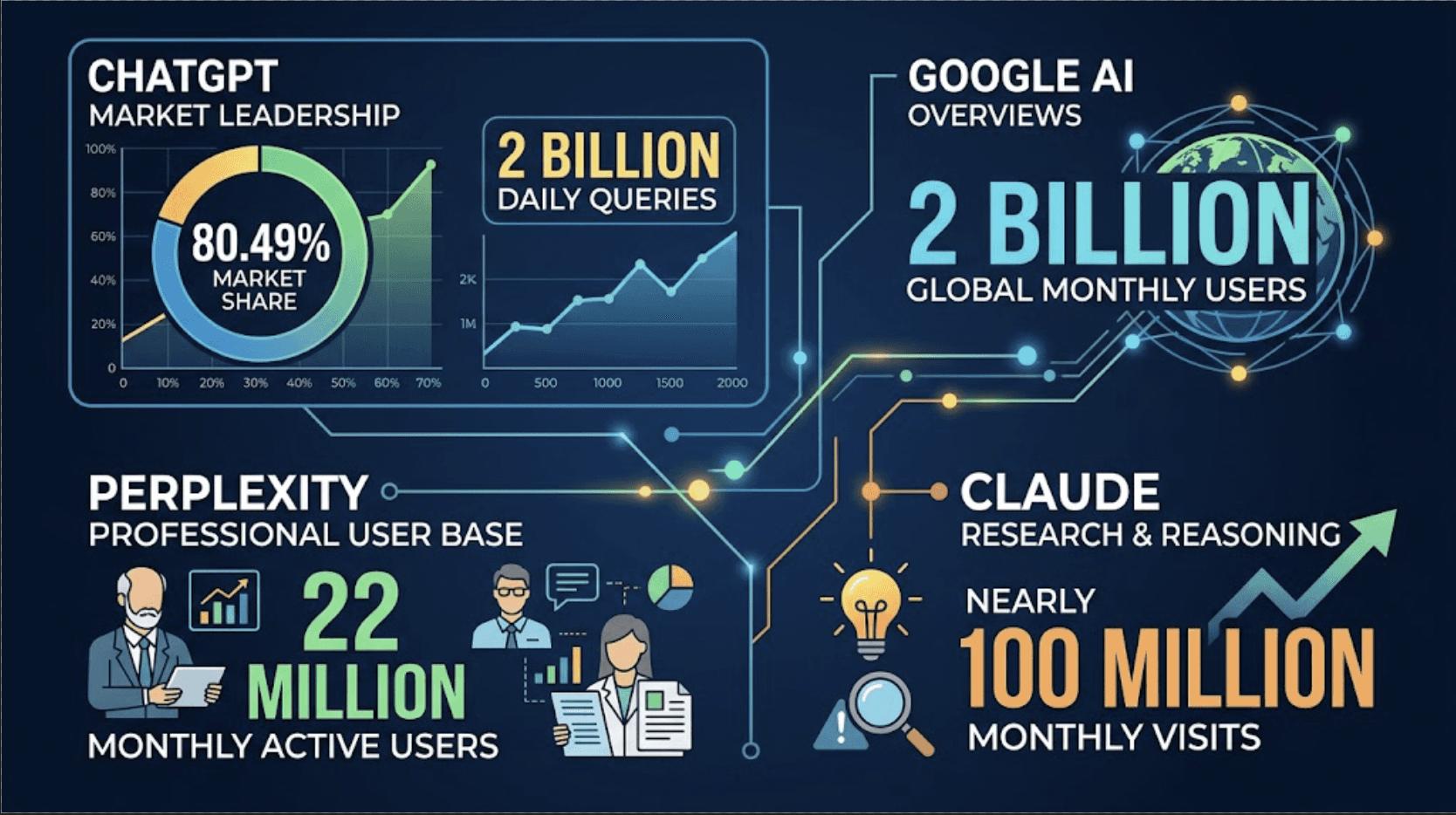
Each of these platforms has a different citation logic, different freshness requirements, and different signals for what gets referenced. A tool that only tracks ChatGPT gives you a partial picture at best.
That fragmentation matters for another reason: Gartner projects traditional search volume will drop 25% by 2026, while AI-driven referral traffic converts at rates up to five times higher than traditional organic clicks. The citations you earn in AI answers are increasingly where the high-intent traffic lives.
Zero-click searches now account for 43% of all queries. When Google's AI Mode is active, that number rises to 93%.
That's not a future scenario. It's the current baseline.
What AI Citation Tracking Actually Measures (and What It Doesn't)
"AI citation tracking" and "AI rank tracking" are often used interchangeably. They shouldn't be.
Citation tracking measures whether an AI platform links to or explicitly references your domain in a response. Rank tracking measures your position in an AI-generated list or recommendation sequence. Both matter, but they answer different questions. A brand can appear in an AI answer without being cited as a source. A brand can be cited without being ranked first.
There's also a finer distinction: Peec AI separates "used sources" (content that informed the answer) from "cited sources" (URLs explicitly shown to the user). That gap is significant. It means AI may trust your content without ever linking to it. Most tracking tools miss this entirely.
Google adds another layer of complexity. AI Overviews and AI Mode behave differently in Search Console reporting: links inside an AI Overview inherit a single position for the full summary box, while links in AI Mode carry individual position data like standard SERP results. If your tool doesn't account for this, your position data is already misleading.
Perplexity's citation behavior is distinct as well. Its top three cited domains account for roughly 25% of all citations, while other models distribute citations much more broadly. That concentration means breaking into Perplexity's citation set is harder but more valuable for claude search rank tracking software and perplexity search rank tracking software use cases.
Research from Princeton and IIT Delhi, presented at ACM SIGKDD 2024, confirmed that content modifications designed for AI retrieval can boost visibility in generative responses by up to 40%. The platforms are different. The measurement needs to match.
The 5 AI Citation and Rank Tracking Tools Worth Considering in 2026
Here's how the main options compare across the dimensions that matter most for ai search rank tracking tools:
Tool | Platforms Covered | Core Strength | Starting Price |
|---|---|---|---|
Topify | ChatGPT, Perplexity, Gemini, AI Overviews, DeepSeek, Claude, and more | Full-spectrum GEO analytics + citation source analysis | $99/mo |
Profound | ChatGPT, Claude, Perplexity, Gemini, Meta AI, 10+ engines | Enterprise depth, data security | $499/mo |
Peec AI | ChatGPT, Perplexity | UI scraping accuracy, "used vs cited" differentiation | €89/mo |
Otterly.AI | ChatGPT, Perplexity, Gemini | Affordable, multi-platform monitoring | $29/mo |
Keyword.com | ChatGPT, Claude, Perplexity | Claude-specific sentiment and prompt-level tracking | Custom |
#1 Topify: AI Citation Tracking Across Claude, Perplexity, AI Overviews, and More
Topify is built around a core premise: visibility data is only useful if it's connected to action.
Its Source Analysis feature does what most tools don't. It reverse-engineers exactly which domains and URLs are being cited across AI platforms, then shows whether your brand or your competitors dominate those references. For teams asking "why is our competitor getting cited and we're not?", that's the level of data needed to answer it.
Position Tracking monitors where your brand appears in AI-generated recommendation lists, not just whether you appear. You can track whether you're mentioned first, buried third, or absent entirely, and compare that position against competitors across prompts.
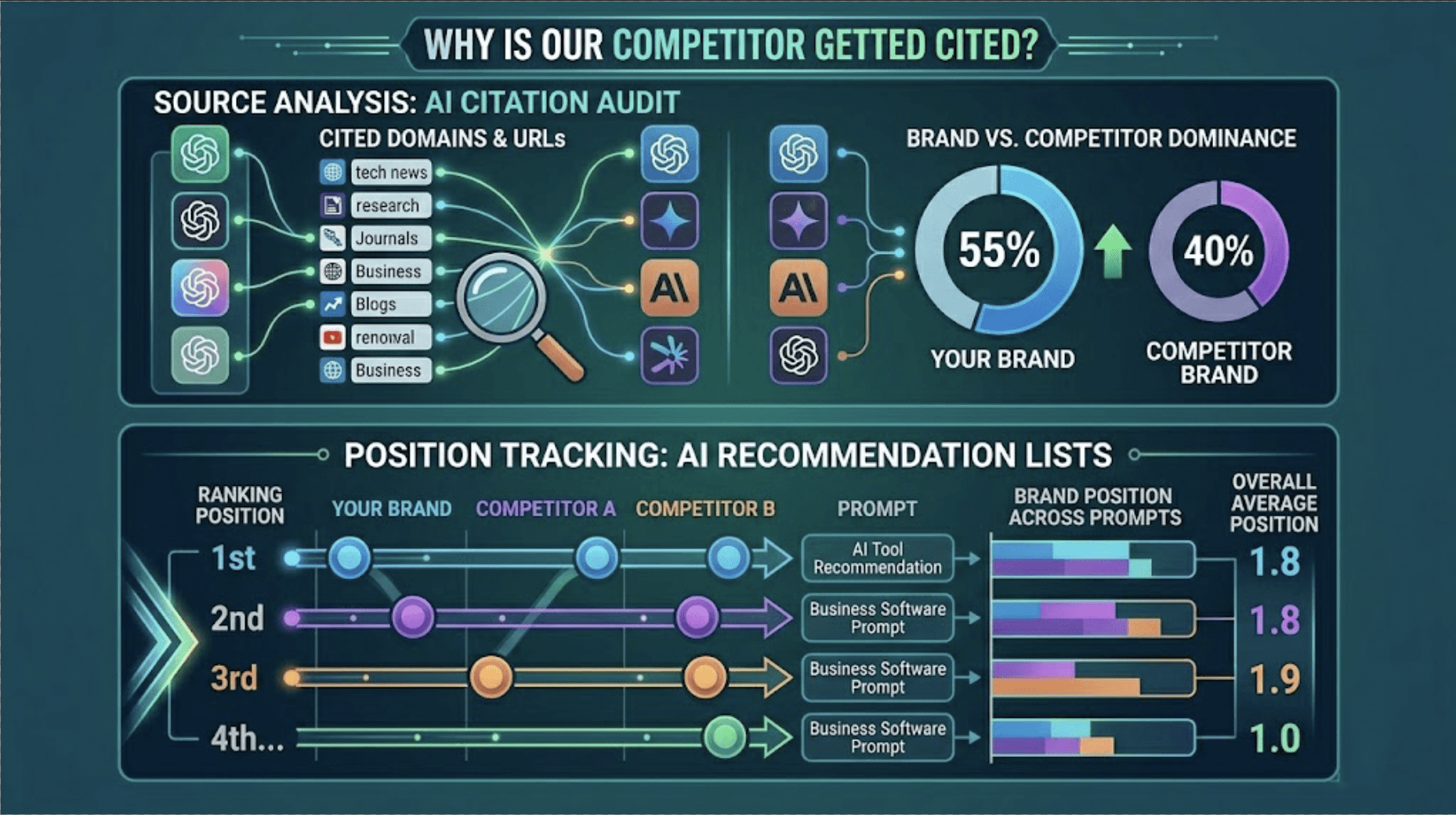
Platform coverage is broad by design. Topify tracks across ChatGPT, Perplexity, Gemini, Google AI Overviews, Claude, DeepSeek, Doubao, and Qwen. That matters for perplexity search rank tracking software and claude search rank tracking software use cases that often require separate tools. For teams tracking ai overviews search rank tracking software needs, Topify's AI Overviews support is included in the Basic plan.
The analytics layer covers seven metrics: visibility, sentiment, position, volume, mentions, intent, and CVR (conversion visibility rate). In practice, this means you can see a drop in ChatGPT citations, trace it to a specific source domain that stopped referencing your brand, and connect that insight to a content action, all inside the same dashboard.
Pricing: Basic plan starts at $99/month (billed yearly, 17% savings), covering 100 prompts, 9,000 AI answer analyses, ChatGPT, Perplexity, and AI Overviews tracking, and 4 projects. Pro at $199/month extends to 250 prompts and 10 seats. Enterprise plans start at $499/month with a dedicated account manager.
Topify was built by a team that includes a former Fortune 500 SEO lead and a Stanford-trained LLM researcher with 2,000+ academic citations. The algorithm reflects that background.
#2–#5: Other AI Search Rank Tracking Tools to Know
Profound is the enterprise-grade option for organizations that need maximum platform breadth and security compliance. It monitors 10+ AI engines including Claude, Meta AI, and Gemini, and its Share of Voice metric benchmarks brand visibility against competitors with 0–100 sentiment scoring. At $499/month, it's suited for large in-house teams or agencies with existing BI infrastructure. Coverage depth is strong, but the cost and complexity aren't built for lean teams.
Peec AI has a genuinely differentiated methodology. Rather than querying AI APIs, it uses UI scraping to simulate real browser sessions on ChatGPT and Perplexity, which means the data reflects what a user actually sees. The "used sources" vs "cited sources" distinction is a meaningful edge for teams that need precision over breadth. At €89/month, it's accessible, but platform coverage is currently limited to two engines.
Otterly.AI is the entry-level option for smaller teams. At $29/month, it covers ChatGPT, Perplexity, and Gemini with multi-platform monitoring. For teams that are just getting started with ai search rank tracking tools and don't need deep citation analysis, it gets the job done. It doesn't offer the Source Analysis or Position Tracking depth that larger operations require.
Keyword.com has developed a reputation specifically for Claude tracking. It offers prompt-level sentiment scoring and competitor monitoring focused on how Claude perceives and recommends brands. If your audience skews toward Claude users and you need granular claude search rank tracking tools, it's a focused option. Platform coverage beyond Claude is limited compared to full-suite platforms.
How to Choose the Right AI Citation Tracking Software for Your Stack
The right tool depends on which platforms your audience actually uses. Here's a practical framework.
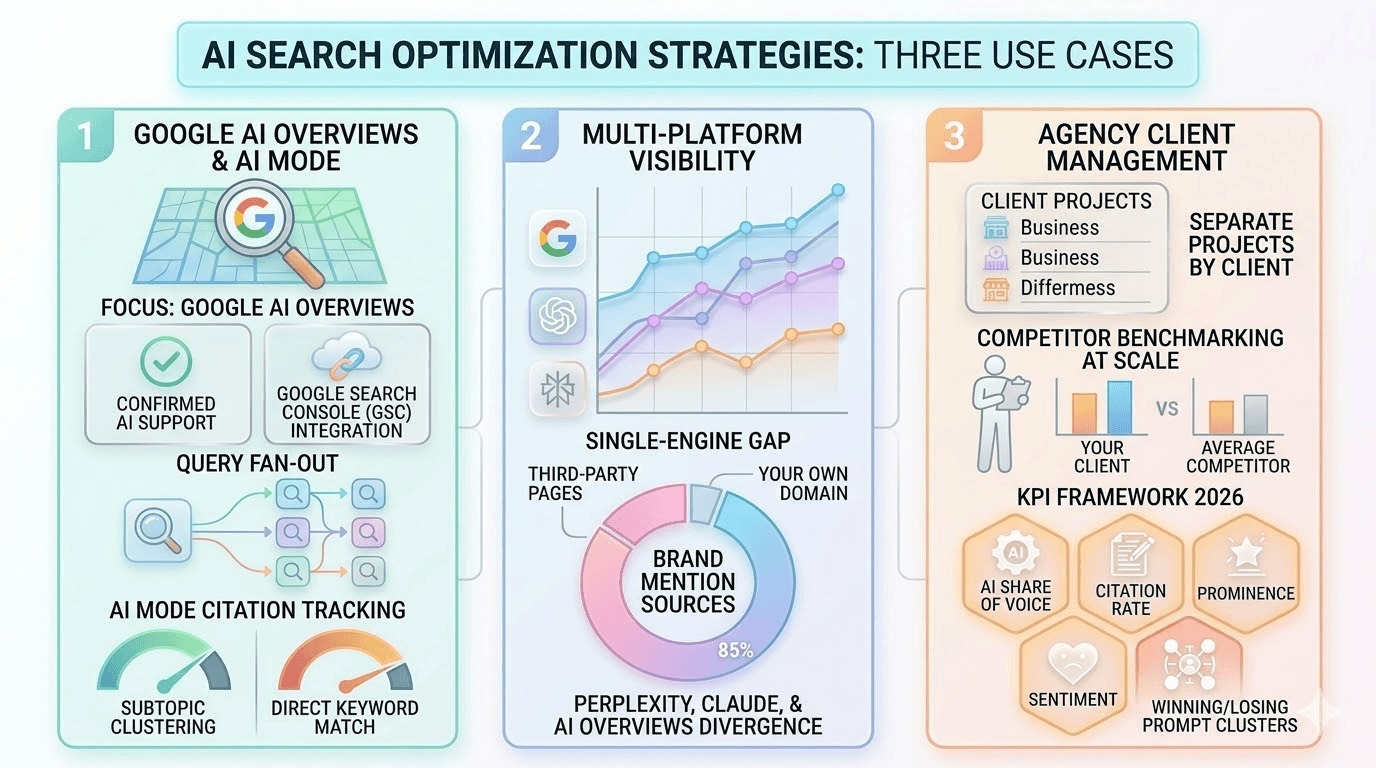
If your primary concern is Google AI Overviews or AI Mode, prioritize tools with confirmed AI Overviews support and reporting integration with Google Search Console. AI Mode's "Query Fan-Out" behavior, which issues multiple sub-searches across a single query, means citation tracking needs to cover subtopic clustering, not just direct keyword matches. For ai overviews search rank tracking tools and ai mode search rank tracking tools use cases, platform-specific coverage matters more than breadth.
If you're running multi-platform campaigns, single-engine tools will leave gaps. 85% of brand mentions in AI answers come from third-party pages, not your own domain. That means your citation profile on Perplexity, Claude, and AI Overviews can diverge significantly. A tool that only tracks one engine gives you a false sense of your overall AI visibility.
If you're an agency managing multiple clients, look for tools that separate projects by client, support competitor benchmarking at scale, and can generate reports that answer the question "how are we doing in AI search?" without manual assembly. The KPI framework that agencies have standardized around in 2026 covers five metrics: AI Share of Voice, citation rate, prominence (position proxy), sentiment, and winning/losing prompt clusters.
Bottom line: the ai overview search rank tracking software question isn't really about one platform. It's about whether your citation data is complete enough to act on.
Conclusion
The tools that got brands to page one of Google weren't designed to answer "is Perplexity citing us?" or "where do we rank in Claude's recommendations?". That gap is real, and it's widening.
Start by mapping which AI platforms your audience actually uses, then match your tracking stack to those platforms. For teams that need coverage across Claude, Perplexity, AI Overviews, and the broader AI search landscape in one place, Topify is built for that workflow. For teams with more specific needs, the options above each have clear use cases.
The citation is the new ranking. Measuring it isn't optional anymore.
FAQ
Q: What is AI citation tracking? A: AI citation tracking monitors whether and how AI search platforms like ChatGPT, Perplexity, Claude, and Google AI Overviews reference or link to your brand's content when generating answers. It's distinct from traditional rank tracking, which measures positions in blue-link search results.
Q: How is AI citation tracking different from traditional SEO rank tracking? A: Traditional rank tracking tells you where a URL appears in a list of search results. AI citation tracking tells you whether an AI model cited your domain as a source, where your brand appeared in an AI-generated response, and how your position compares to competitors across different prompts. AI platforms also distinguish between "used sources" (content that informed the answer) and "cited sources" (URLs shown to the user), a distinction that traditional SEO tools don't measure.
Q: Does Topify track citations in Google AI Overviews and AI Mode? A: Yes. Topify's Basic plan includes AI Overviews tracking alongside ChatGPT and Perplexity. AI Mode tracking capabilities are part of Topify's broader platform coverage. For full detail on current feature availability, you can check Topify's pricing page.
Q: Can I track both Claude and Perplexity search rank with one tool? A: Most tools specialize in one or the other. Topify covers both Claude and Perplexity as part of its multi-platform tracking alongside ChatGPT, Gemini, AI Overviews, and several other AI engines. If your audience is split across platforms, a single tool with broad coverage typically gives more useful data than running separate tools per engine.