
Search "best AI search tracking tool" and you'll find a dozen platforms, each claiming to give you a complete picture of how your brand performs in AI search. Most of them cover one or two engines. Half of them can't tell you whether your brand appears as a recommendation or just a passing mention. Meanwhile, AI-driven interactions now represent 30% of total search volume, and the platforms your audience actually uses—ChatGPT, Gemini, Perplexity—each have their own citation logic.
The real challenge isn't finding an AI search tracking tool. It's knowing which ones actually measure what moves the needle across the platforms where your customers are already looking.
Most AI Search Tracking Tools Only Show You Half the Picture
The majority of tracking platforms launched in 2024-2025 were built around a single assumption: ChatGPT is AI search. That assumption is now outdated. ChatGPT holds roughly 60.4% of the AI search market as of early 2026, but the remaining 40% is fragmented across Google Gemini (15.2%), Microsoft Copilot (12.9%), Perplexity (5.8%), and a growing set of regional engines like ByteDance's Doubao and Alibaba's Quark AI.
A tool that tracks only ChatGPT will miss the Gemini citations that drive Workspace users, the Perplexity mentions that influence research-oriented buyers, and the regional engines that matter in non-English markets.
Here's the number that makes this concrete: only 17% of top organic search results overlap with what AI engines actually cite. Your Google rankings are not a proxy for AI visibility. They measure two different things.
The six tools below were selected on three criteria: multi-engine coverage, depth of competitive benchmarking, and whether the platform produces actionable output rather than just a monitoring dashboard.
What Does an AI Search Tracking Tool Actually Measure?
AI search tracking is fundamentally different from keyword rank tracking. Instead of monitoring where a URL appears in a list of links, these platforms query AI engines with relevant prompts and analyze how, where, and whether your brand appears in the generated response.
The core metrics that matter in 2026:
Metric | What It Measures |
|---|---|
Visibility Rate | % of sampled prompts where your brand appears |
Position | Where your brand falls in a ranked recommendation list |
Sentiment | Whether AI describes your brand positively, neutrally, or negatively |
Share of Voice | Your brand's presence relative to direct competitors across the same prompts |
Source Attribution | Which URLs the AI cites when discussing your category |
Position is more nuanced than it looks. Being mentioned fifth in a five-item list is materially different from being mentioned first. In B2B SaaS categories specifically, the top two or three brands typically capture 60-80% of total AI citations, which makes this a winner-take-all metric in competitive verticals.
Sentiment is worth isolating. Research shows that Google's AI Overviews are 44% more likely than ChatGPT to surface negative sentiment, largely because of their news-indexing behavior. Two engines, two different brand risk profiles.
Source Attribution is the "action layer." It reveals which URLs AI models are drawing on when they form opinions about your category—giving you a direct signal about where to invest in content and digital PR.
The 6 Best AI Search Tracking Tools in 2026
Here's a quick comparison before the detailed breakdown:
Tool | AI Platforms Covered | Starting Price | Best For |
|---|---|---|---|
Topify | ChatGPT, Gemini, Perplexity, DeepSeek, Doubao, Qwen + more | $99/mo | Full-funnel AI visibility + GEO execution |
Profound AI | 10+ engines | $99/mo (Starter, ChatGPT only) | Enterprise-scale prompt intelligence |
BrightEdge AI Catalyst | Google AIO + major engines | Enterprise | CMO-level hybrid SEO/AI reporting |
SE Ranking (SE Visible) | ChatGPT, Perplexity, Gemini, AIO, AI Mode | $189/mo | Agencies managing multiple clients |
Otterly.AI | ChatGPT, AIO, Perplexity, Copilot (+ add-ons) | $29/mo | Budget-conscious entry-level monitoring |
Ahrefs Brand Radar | Google AIO, ChatGPT, Perplexity, Gemini | Bundled with Ahrefs | Authority-based citation analysis |
#1 Topify: Best All-in-One AI Search Tracking Tool for Brand Visibility
Most AI tracking platforms answer one question: "Is your brand appearing?" Topify answers the follow-up question that actually matters: "What do you do about it?"
Topify tracks brand performance across ChatGPT, Gemini, Perplexity, DeepSeek, Doubao, Qwen, and other major AI platforms—making it one of the few tools with genuine global coverage. That breadth reflects the actual state of AI search in 2026, where Gen Z and Millennial users are adopting AI search at rates exceeding 70%, and where that usage is distributed across more engines than any single-platform tracker can capture.
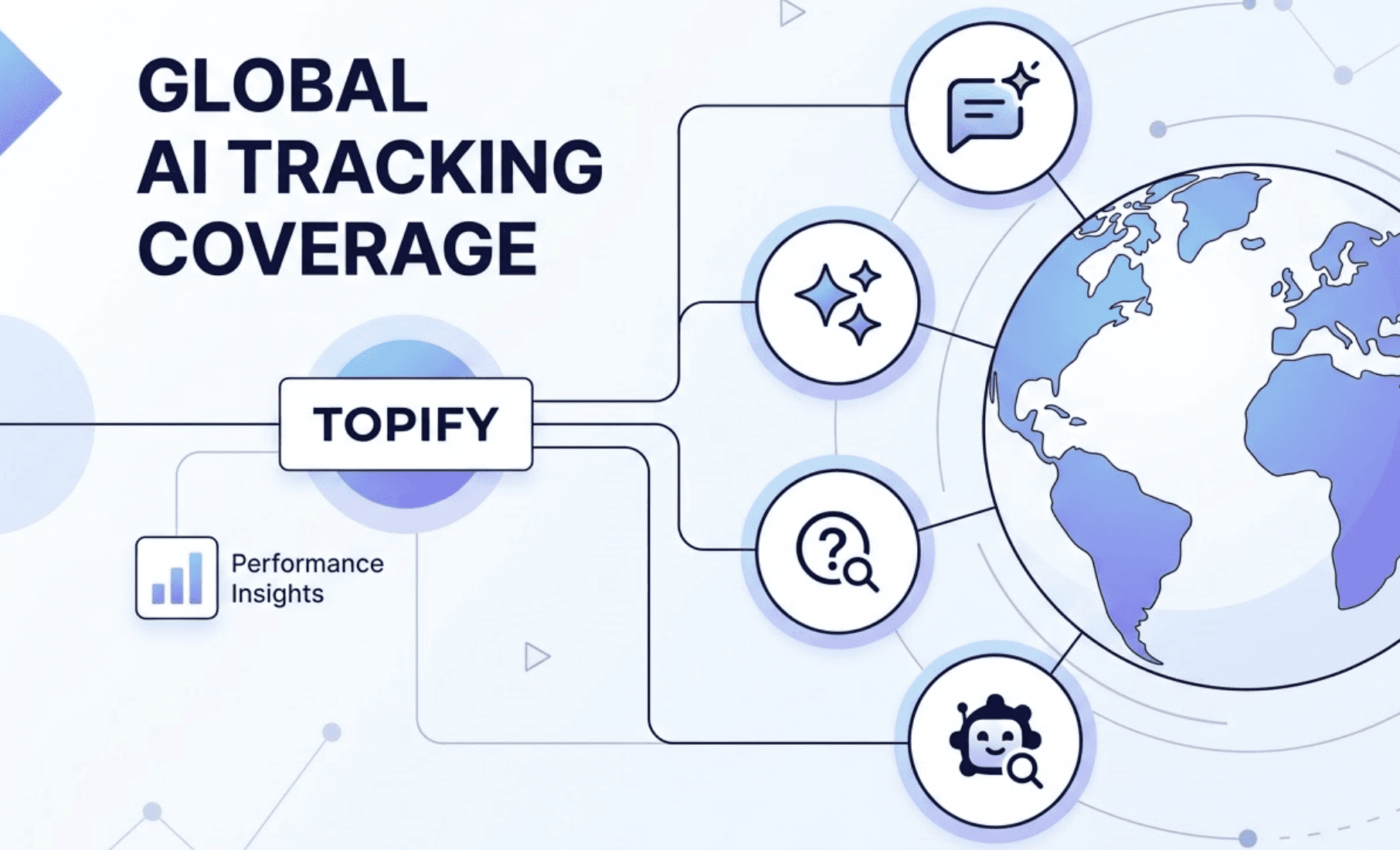
The platform measures seven core metrics: Visibility, Sentiment, Position, Volume, Mentions, Intent, and CVR (Conversion Visibility Rate). In practice, this means you're not just watching a number go up or down. You're seeing which prompts trigger your brand, where you rank relative to competitors within those answers, and whether the AI is describing you in a way that drives action or introduces friction.
Topify's Competitor Monitoring is worth calling out separately. It automatically detects which competitors appear alongside your brand and tracks their Visibility, Sentiment, and Position in real time. In categories where top brands capture the majority of AI citations, knowing exactly which competitors are gaining share—and why—is the difference between responding and planning.
Source Analysis adds another layer. It identifies the exact domains and URLs that AI platforms cite when they recommend brands in your category. You can see whether competitors are benefiting from a Reddit thread you missed, an industry report you weren't quoted in, or a niche blog that's become unexpectedly authoritative with AI crawlers.
The feature that separates Topify from pure monitoring tools is One-Click Execution. Define your visibility goals in plain English, review the proposed GEO strategy, and deploy with a single click. No manual workflow required. For marketing teams that are already managing too many tools, this matters more than most vendors will admit.
Topify's pricing starts at $99/month for the Basic plan (100 prompts, 9,000 AI answer analyses, 4 projects, 4 seats). The Pro plan at $199/month covers 250 prompts and 22,500 AI answer analyses across 10 seats. Enterprise plans start from $499/month with a dedicated account manager and custom configurations.
Get started with Topify if you need AI search tracking that connects data to action—not just data to a dashboard.
#2 Profound AI: Best for Enterprise Prompt Intelligence
Profound AI is built for brands that need statistical depth, not just monitoring. The platform analyzes over 200 million real user prompts, giving enterprise teams confidence in the search demand signals they're measuring. Its Conversation Explorer surfaces volume data for AI-driven queries, a metric that was largely a black box for marketers before 2025.
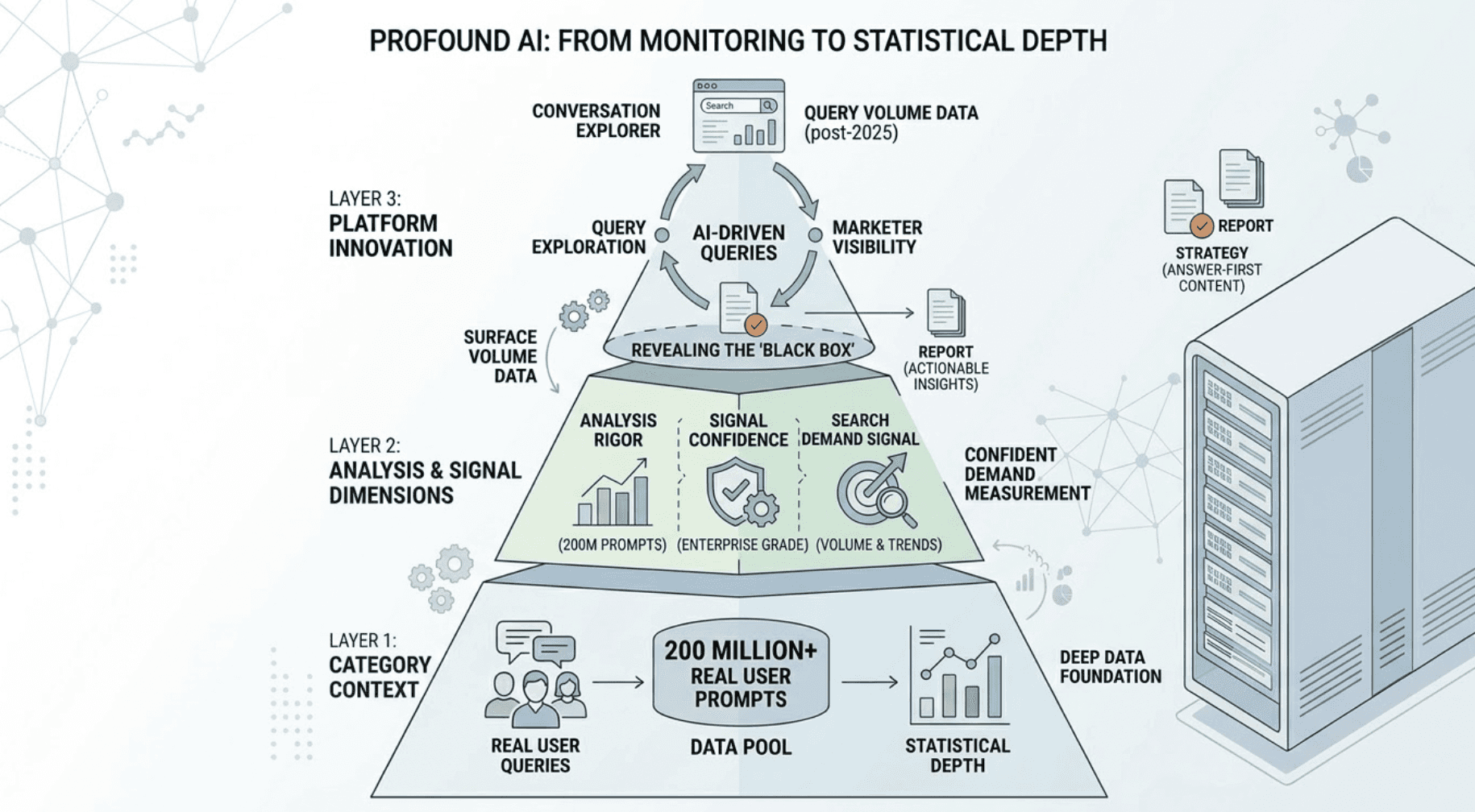
For very large organizations with complex competitive landscapes and deep analytics requirements, Profound is a serious option. The platform has documented AI referral traffic increases of up to 700% for enterprise clients by identifying and filling citation gaps. That said, its pricing reflects the focus: the Growth plan starts at $399/month, and full enterprise functionality covering 10+ engines runs $2,000 to $5,000+ per month. The $99 Starter plan only covers ChatGPT—so the headline price is somewhat misleading for teams that need multi-engine coverage.
#3 BrightEdge AI Catalyst: Best for Enterprise Teams Already in the BrightEdge Ecosystem
BrightEdge's core strength is integrating AI visibility into an existing enterprise SEO stack. Its research on Google's AI Overviews is some of the most granular available: by early 2026, AI Overviews appear on nearly 48% of tracked queries, up 58% year-over-year. Its Sentiment Risk Monitoring, which distinguishes between AIO and ChatGPT negativity patterns, is a genuinely useful signal for brand safety teams.
The limitation is availability. BrightEdge AI Catalyst is not a standalone product—it's an add-on for existing enterprise BrightEdge contracts. Teams that don't already rely on the BrightEdge SEO suite will find the cost-to-value ratio difficult to justify.
#4 SE Ranking (SE Visible): Best for Agencies
SE Ranking's SE Visible module covers ChatGPT, Perplexity, Gemini, AI Overviews, and Google AI Mode with daily updates and historical trend analysis. Its white-labeling and multi-client management features make it a practical choice for agencies that need to report AI search performance to multiple clients from a single interface. Starting at $189/month, it sits at a reasonable price point for agency workflows.
The trade-off is execution depth. SE Visible produces solid competitive benchmarking and source analysis, but it doesn't offer the strategic execution layer that more comprehensive platforms provide.
#5 Otterly.AI: Best Entry-Level Option
At $29/month, Otterly offers the lowest entry price in the market for automated AI tracking. Its Query Fan-Out Analyzer—which tracks visibility across the sub-queries AI engines generate when processing complex questions—is a technically interesting feature for teams that want to optimize the full conversational journey, not just top-level prompts.
Worth noting: Gemini and Google AI Mode require paid add-ons ranging from $9 to $149/month depending on the plan. Multi-engine coverage at Otterly is available, but the effective cost climbs faster than the headline price suggests.
#6 Ahrefs Brand Radar: Best for Authority-First Teams
Ahrefs Brand Radar layers AI tracking on top of Ahrefs' established link intelligence database, drawing from 286 million monthly prompts across Google AI Overviews, ChatGPT, Perplexity, and Gemini. For teams that already use Ahrefs for backlink and authority analysis, the connection between domain authority and AI citation behavior adds useful context.
It's less suited for teams whose primary need is competitive brand monitoring or GEO strategy execution, since the platform's strengths lean toward research rather than action.
5 Things to Check Before Choosing an AI Search Tracking Tool
Run any tool through these criteria before committing to a plan:
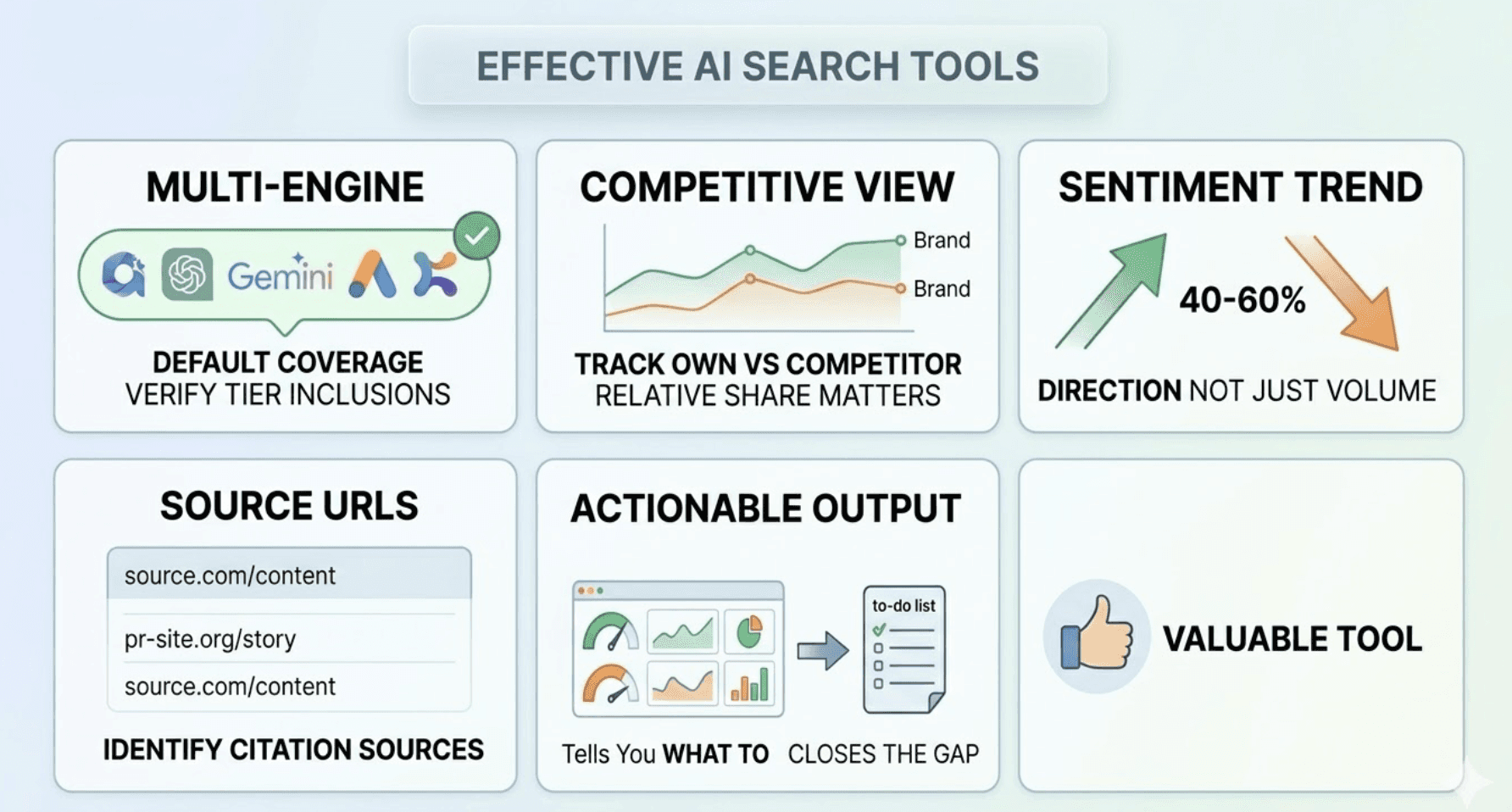
Multi-engine coverage by default. Verify which engines are included at your price tier, not just on paper. Tools that include ChatGPT at the base plan but require expensive add-ons for Gemini and AI Mode have a very different actual cost.
Competitive monitoring built in. Tracking your own visibility without tracking competitors' produces an incomplete picture. In categories where AI citations are concentrated among 2-3 brands, relative share is the metric that matters most.
Sentiment direction, not just volume. A spike in mentions can be positive or negative. Citation patterns drift 40-60% month over month in AI search—knowing whether that drift is working for or against your brand requires sentiment tracking.
Source attribution, not just brand mentions. Without knowing which URLs AI engines cite in your category, you can't identify where to invest in content or PR.
Actionable output. A dashboard that shows you where you stand without helping you close the gap has limited operational value. Evaluate tools on what they tell you to do, not just what they tell you.
Common Mistakes Brands Make with AI Search Tracking
Tracking only one engine. ChatGPT commands roughly 60% of AI search volume. The other 40% is distributed across platforms with distinct citation behaviors. A single-engine baseline is a partial baseline.
Optimizing for static prompts only. AI usage is conversational and fluid. A slight wording change—"best project management tool" vs "top project management software for remote teams"—can trigger entirely different retrieval patterns. Use tracking prompts as benchmarks, not fixed targets.
Ignoring competitor visibility data. In most categories, top brands capture the majority of AI citations. Knowing your own visibility without knowing where competitors rank leaves out the context that makes the data meaningful.
Siloing AI tracking within the SEO team. AI models cite Reddit threads, niche industry publications, and news coverage—not just brand-owned pages. Reddit accounts for roughly 6.6% of Perplexity citations. Getting that coverage requires PR and community teams working from the same data as SEO.
Treating model-generated answers the same as grounded answers. Some AI responses come from pre-trained model weights. Others are retrieved live from the web. These require fundamentally different optimization approaches. Optimizing for static model knowledge wastes resources on answers that won't change until the next model update.
How to Build a Strategy Around AI Search Tracking Data
Tracking data is useful only if it connects to action. Here's the practical loop.
Start with a multi-engine baseline: Visibility Rate, Position, and Sentiment across at least three AI platforms. Without a baseline, you can't measure improvement or account for the 40-60% monthly drift in citation patterns.
Use Source Attribution data to find where AI engines are sourcing information about your category. If competitors are being cited from an industry report you're not quoted in, that's a PR opportunity. If a Reddit thread is consistently surfacing in Perplexity citations, that's a signal about where community investment pays off.
Structure content for fan-out. When users ask complex questions, AI platforms break them into 2-4 simpler sub-queries. Brands that only optimize for top-level questions miss the full logic chain. Ensure you have content that answers the constituent questions, not just the headline prompt.
Track sentiment as a leading indicator. Citation volume can stay flat while sentiment shifts negative—often because an older controversy gets recycled. Catching sentiment changes early gives you time to respond before conversion impact shows up in revenue data.
For teams using Topify, the One-Click Execution feature closes the loop between insight and action. Once you've identified a visibility gap or competitive threat, you can define the response goal and deploy without building a manual workflow from scratch. That matters when citation patterns change faster than weekly reporting cycles.
Conclusion
AI search tracking in 2026 isn't a supplement to your existing SEO stack. It's a separate measurement discipline, because only 17% of top Google rankings overlap with what AI engines actually cite. The data you've relied on doesn't transfer.
The tools in this list cover the full range: from enterprise-scale intelligence platforms to entry-level monitors. If you're evaluating options, start with multi-engine coverage, then work through competitive monitoring, sentiment analysis, and source attribution. The right tool answers those questions for the specific AI platforms your audience uses—and then tells you what to do next.
FAQ
Q: What is an AI search tracking tool?
A: An AI search tracking tool monitors how and whether a brand appears in AI-generated search responses. Unlike traditional rank trackers that measure keyword positions in a list of links, these platforms query AI engines directly, analyzing metrics like Visibility Rate, Sentiment, Position, and Source Attribution across platforms including ChatGPT, Gemini, and Perplexity.
Q: How much does an AI search tracking tool cost?
A: Pricing ranges from $29/month for entry-level monitoring to $2,000-$5,000+/month for full enterprise platforms. Topify starts at $99/month for 100 prompts across 4 projects and 4 seats, with the Pro plan at $199/month covering 250 prompts and 22,500 AI answer analyses. Most tools have a significant gap between their headline price and the cost of full multi-engine coverage, so verify what's included at each tier before committing.
Q: How do I measure whether my AI search tracking is working?
A: Track three signals over time: Visibility Rate (are you appearing more often in relevant prompts?), Sentiment direction (is the AI's description of your brand improving or drifting?), and Source Attribution changes (are the domains citing your brand becoming more authoritative?). Because citation patterns drift 40-60% monthly, establish a baseline first and review at least monthly rather than quarterly.
Q: What are the best tools for AI search tracking?
A: The leading options in 2026 are Topify (best for full-funnel visibility tracking and GEO execution), Profound AI (best for enterprise prompt intelligence at scale), BrightEdge AI Catalyst (best for enterprise teams already using BrightEdge's SEO suite), SE Ranking's SE Visible (best for agencies), Otterly.AI (best entry-level option), and Ahrefs Brand Radar (best for teams focused on authority-based citation analysis).