
Search "best GEO tool" and you'll find a dozen platforms claiming to track AI search visibility. Most of them surface a single number: how often your brand gets mentioned. That's a starting point, not a strategy.
The real problem is that AI-driven search now accounts for roughly 30% of all interactions, up from less than 10% in 2023, and the gap between what tools report and what users actually see keeps widening. Mention rate tells you nothing about whether you're recommended first, described accurately, or cited by the sources that AI platforms trust most. Those distinctions are where brand visibility is actually won or lost.
Most GEO Tracking Tools Measure the Same Thing. The Gaps Are What Matter.
Most platforms in this space were built around one question: "Is my brand being mentioned?" That's the wrong question for 2026.
Generative search doesn't work like a link list. Platforms like ChatGPT and Perplexity synthesize multi-source answers through a retrieval-augmented generation process: they retrieve relevant documents, evaluate them for authority, rerank them by relevance to the specific prompt, and then build a narrative response. Being "mentioned" somewhere in that answer is not the same as being recommended first, or being described as the definitive choice.
Three gaps consistently separate tools that surface real intelligence from tools that surface noise:
Platform coverage. ChatGPT holds between 60% and 80% of global AI search traffic, with 800 million weekly active users. But Gemini, Perplexity, DeepSeek, and Copilot each command meaningful share in different segments and regions. A tool that only tracks ChatGPT leaves you blind to how your brand is presented everywhere else your audience is searching.
Sentiment and position data. Your brand can be mentioned in every response and still be losing. If the AI consistently describes you as "a budget option" when your positioning is enterprise, or lists you third after two competitors, mention rate tells you none of that.
Source attribution. Knowing that AI cited you is useful. Knowing which domains and URLs drove that citation is actionable. That's the difference between a report and a roadmap.
The tools worth using track all three dimensions. Here's how the current field lines up.
The 5 Best Generative Engine Optimization Tracking Tools in 2026
Tool | Core Strength | Best For | Starting Price |
|---|---|---|---|
Topify | 7-metric GEO tracking + one-click execution | Marketing teams, agencies, SaaS | $99/mo |
Profound | Enterprise-scale citation monitoring | Fortune 500, compliance-heavy teams | $99/mo (ChatGPT only) |
Peec AI | Mid-market analytics + citation gap analysis | B2B teams, regional tracking | €89/mo |
Otterly.AI | GEO audit + affordable entry-level tracking | Solo marketers, small agencies | $29/mo |
Daydream | Programmatic content scaling for GEO | E-commerce, startups with high page volume | Custom |
#1 Topify: Full-Spectrum Generative Engine Optimization Tracking Across 7 Metrics
Topify covers the widest range of AI platforms in this comparison: ChatGPT, Gemini, Perplexity, DeepSeek, Doubao, Qwen, and others. That global coverage matters because AI search behavior varies significantly by region and audience, and a visibility gap in one platform can mask completely different dynamics in another.
Where Topify separates from monitoring-only tools is its seven-metric tracking system: visibility, sentiment, position, volume, mentions, intent, and CVR. Each metric maps to a different layer of the customer journey, so you're not just seeing whether your brand appeared, but whether it appeared in a way that drives commercial outcomes.
The Source Analysis feature tracks the exact domains and URLs that AI platforms cite when recommending your brand. This creates a direct link between your content strategy and your AI visibility. If a competitor is being cited because they published on three high-authority domains you're not on, you'll see it in the data.
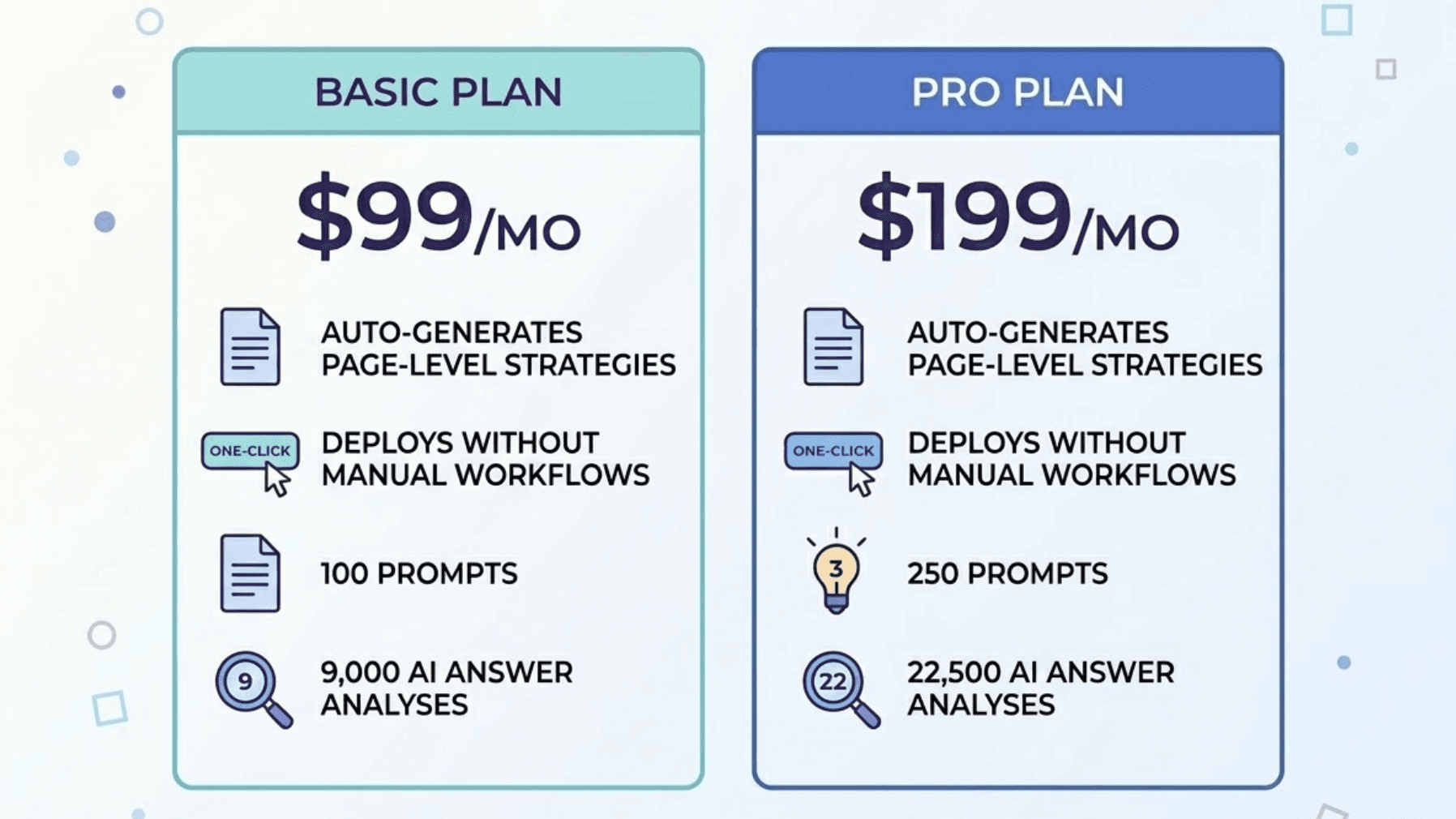
For teams that want to move from insight to execution, Topify's One-Click Agent Execution auto-generates page-level strategies for visibility gaps and deploys them without manual workflows. The Basic plan starts at $99/month with 100 prompts and 9,000 AI answer analyses. The Pro plan scales to 250 prompts and 22,500 analyses at $199/month.
The platform is built by founding researchers from OpenAI and champion Google SEO practitioners, which shows in the depth of the algorithm. Get started with Topify for a 30-day trial.
#2 Profound: Enterprise-Grade AI Search Surveillance
Profound is the platform most commonly deployed at Fortune 500 companies. It processes over 5 million citations dailyand tracks more than 4 million AI crawler visits, which gives enterprise teams the data volume needed for statistically defensible reporting.
Its Answer Engine Insights module covers ChatGPT, Perplexity, Gemini, and Copilot. The Conversation Explorer tool digs into a dataset of over 400 million real-world AI search conversations, a genuine differentiator for teams doing deep audience research. Profound also meets enterprise security requirements: SOC 2 Type II, HIPAA certification, and SSO/SAML integration.
The trade-off is price and scope. Full multi-platform coverage starts at $499/month on the Lite plan, and the $99 Starter tier tracks ChatGPT only. Teams also frequently note that Profound excels at surfacing gaps but doesn't provide the execution layer to close them.
#3 Peec AI: Mid-Market Depth with Regional Segmentation
Peec AI is purpose-built for B2B teams that need more analytical depth than entry-level tools provide, without the enterprise price point. It tracks visibility, position, and sentiment across ChatGPT, Gemini, Perplexity, Claude, and Copilot, with the ability to segment results by geographic IP address and custom prompt tags.
The Citation Gap Analysis is a standout feature. It identifies specific URLs where competitors are appearing but your brand isn't, giving content and digital PR teams a concrete to-do list rather than a general recommendation to "publish more."
Peec AI uses browser-level rendering rather than API calls, which is important. API data is often sanitized and cached, and it can miss what practitioners call "competitor hijacking," where a brand appears correctly in an API response but is buried or replaced in the actual interface users see. Starting price is €89/month.
#4 Otterly.AI: Accessible GEO Auditing for Smaller Teams
Otterly.ai targets solo marketers and small agencies with a $29/month entry point. It tracks mentions and citations across ChatGPT, Google AI Overviews, Perplexity, and Copilot, and generates a "Share of AI Voice" metric that shows your citation percentage relative to competitors on high-intent queries.
The GEO Audit Tool analyzes over 25 on-page factors, covering technical crawlability, structured data implementation, and content gaps that may be preventing AI platforms from citing your site. For teams earlier in their generative engine optimization journey, this kind of diagnostic is a practical starting point.
Coverage depth and analytics are more limited compared to Peec AI, and Gemini and Claude tracking aren't included at the entry tier. But for budget-conscious teams that need a clear starting point, Otterly is the most accessible option in the market.
#5 Daydream: Programmatic Scaling for High-Volume Content
Daydream is less of a traditional tracking tool and more of a content engine for GEO. It's designed for e-commerce brands and startups that need to scale structured content across hundreds or thousands of pages to earn AI citations at volume.
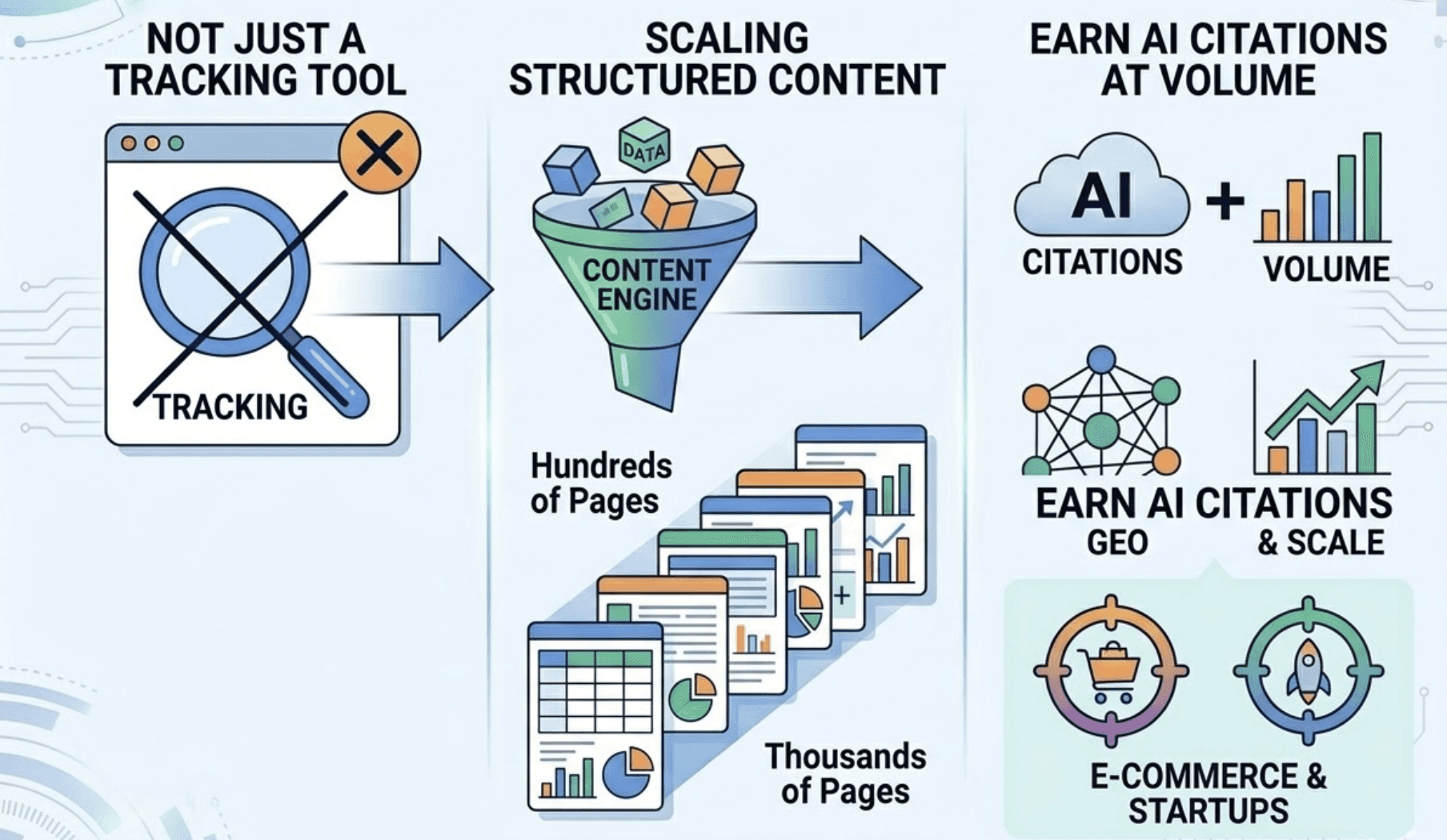
Its Comet v2 engine identifies long-tail query patterns with commercial intent and generates content optimized for AI extraction. The Reviewer Agent performs automated quality checks before publication. For brands with large product catalogs or location-based pages, this programmatic approach can dramatically accelerate the content surface area available for AI citation.
Daydream doesn't offer the real-time sentiment monitoring or competitor benchmarking that Topify or Profound provide. It's best suited as a content execution layer rather than a standalone generative engine optimization tracking software.
What to Look for in a Generative Engine Optimization Tracking Software
Three criteria tend to separate platforms that generate reports from platforms that drive decisions.
Multi-platform coverage is non-negotiable. Over 70% of Gen Z and Millennial users now use AI search regularly, and they're distributed across ChatGPT, Gemini, Perplexity, and others depending on their use case. A tool that tracks one platform while your audience uses four gives you a distorted picture. Prioritize platforms that cover at least ChatGPT, Gemini, Perplexity, and Copilot as a baseline.
Sentiment and position data change the analysis entirely. AI-referred traffic from ChatGPT converts at 14.2%, compared to 2.8% for traditional organic. That premium exists because AI recommendations carry implicit endorsements. But only if those recommendations are positive and prominent. Tracking whether your brand is described as the first-choice expert versus a "budget alternative" is what turns monitoring data into brand strategy.
Source attribution closes the loop. Knowing which domains AI platforms cite when recommending your category tells you exactly where to publish content, build partnerships, or pursue digital PR coverage. Without source-level data, content strategy is guesswork.
Generative engine optimization tracking tools that hit all three criteria typically share one more characteristic: they're built on browser-level rendering rather than API-only data. The gap between what an API returns and what a user actually sees can be significant, and for high-value queries, that gap directly affects revenue.
How Generative Engine Optimization Tracking Tools Connect to Your Existing Workflow
GEO tracking doesn't replace your SEO stack. In practice, it extends it.
Traditional SEO tools tell you how you rank and how much traffic flows through. A generative engine optimization tracking tool tells you whether that authority is transferring into the AI systems your audience increasingly uses for product research. These are related but distinct signals, and teams that treat them as the same thing tend to miss the 30% of search interactions that are now happening conversationally.
The workflow that compounds fastest looks like this: use GEO tracking to identify where your brand is absent or mischaracterized in AI answers, trace that back to source attribution data, close the content gap on the domains that AI platforms actually cite, then re-track to confirm the change registered. One documented case study using this method saw an 8,337% increase in ChatGPT referrals over 90 days through 42 pages optimized for semantic coverage.
For marketing teams using Topify, this cycle is built directly into the platform. Source Analysis surfaces the citation gap, the strategy tool auto-generates page-level action plans, and One-Click Execution deploys the changes. What would typically require three separate tools and manual handoffs runs in a single workflow.
That operational efficiency matters, especially for agencies managing multiple clients. Topify's Pro plan supports 10 seats and 8 projects at $199/month, which makes the economics work at scale in a way that enterprise-only platforms don't.
Conclusion
Generative engine optimization tracking is not about knowing whether your brand got mentioned. It's about understanding whether the AI systems your buyers use are recommending you, describing you accurately, and citing the content you've built as authority.
The tools in this list serve different needs at different scales. Topify covers the most ground for teams that need real-time tracking across multiple platforms, competitive benchmarking, and an execution layer in one place. Profound serves enterprise compliance requirements. Peec AI goes deeper on analytics for mid-market B2B teams. Otterly gives smaller teams an accessible starting point. Daydream handles content volume at scale.
If you're building a GEO practice from scratch, the highest-leverage starting point is a platform that tracks sentiment and source attribution, not just mention count. Get started with Topify to see where your brand stands across AI platforms today.
FAQ
Q: What is generative engine optimization (GEO) tracking?
A: Generative engine optimization (GEO) tracking is the practice of monitoring how AI search platforms like ChatGPT, Gemini, and Perplexity mention, describe, and recommend a brand in response to relevant prompts. Unlike traditional SEO tracking, which measures keyword rankings and click-through rates, GEO tracking measures metrics like visibility rate, sentiment, position within AI answers, and which source domains are driving AI citations. The goal is to understand and improve how AI systems present your brand to users who are searching conversationally.
Q: What's the difference between GEO tracking tools and traditional SEO tools?
A: Traditional SEO tools measure rankings, backlinks, and organic traffic from search engines like Google. GEO tracking tools measure how AI systems cite, describe, and recommend brands in conversational search responses. The key difference is that traditional SEO success metrics like domain authority and keyword position don't directly translate to AI search visibility. A brand with strong SEO can still be invisible in ChatGPT if it hasn't earned citations from the domains that LLMs trust for its category. The two tool sets are complementary, not interchangeable.
Q: Which generative engine optimization tracking software is best for agencies?
A: For agencies managing multiple client brands, Topify's Pro plan (up to 10 seats, 8 projects at $199/month) tends to offer the best balance of coverage depth, competitive benchmarking, and operational scalability. Profound's Agency Growth tier ($1,499/month) is built for larger agencies that need consolidated billing and pitch workspaces. For smaller agencies working with limited budgets, Peec AI's Pitch Workspaces feature and Otterly's affordable pricing are practical starting points.
Q: How many AI platforms should a GEO tracking tool cover?
A: At minimum, a generative engine optimization tracking tool should cover ChatGPT, Gemini, Perplexity, and Copilot, as these four platforms account for the large majority of conversational AI search traffic in most markets. Platforms that also cover DeepSeek, Claude, and regional models like Doubao or Qwen are better suited for brands with global audiences or audiences in markets where these platforms have meaningful share. Tracking only ChatGPT, while common among entry-level tools, creates a significant visibility blind spot.